Out with the old and in with the new, as the saying goes. Yet, the rising popularity of all that is archival and vintage is teaching us otherwise. Now more than ever, we’re pivoting back to the past for inspiration—and our homes have been no exception. For many a homeowner, thrifting and antiquing holds more promise than a trip to Ikea: one-off gems, nostalgic finds, and pieces with personality.
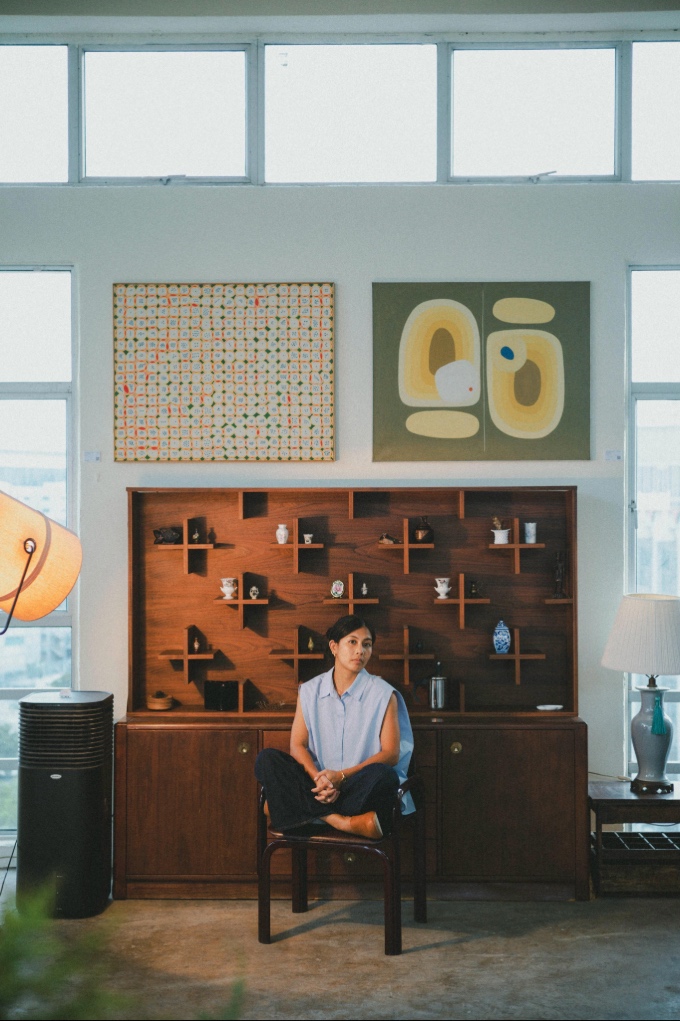
Objects.re, a local vintage homegoods store, has been helping Singaporeans do just that. Curating and selling items ranging from Carl Hansen chairs to Franz porcelain teapots, the local gem has been welcoming a steady buzz of interested buyers—both veteran collectors as well as new homeowners—through its front doors. Equipped with esoteric knowledge as well as a discerning eye for rare finds, it’s easy to see why her store has become a go-to for folks who want to furnish their home anew. Whilst the world of antiquing may seem out of reach at first, Objects.re founder Najwa Jumali is amongst those that would like to provide a community for making it as accessible as possible. Naturally, we asked after her expertise on how to get started on one’s antiquing journey, including what to look out for.
View this post on Instagram
Understanding antiques
In a world where resemanticisation is constant, the definition of the term ‘antique’ has remained steadfast. Najwa clarifies that an antique needs to be at least 100 years old to be properly considered a real antique. “Anything younger than that is ‘vintage’ even if it’s 60-70 years old,” she says.
Of course, age is nothing but a number in the face of furniture that has a story. A chest of drawers from Kyoto, country decor from the streets of Paris, and a touch of Rococo from Scandinavia—each with a different narrative, yet all storing memories for the owner. “What actually makes a good antique is that the construction and material tell you something true about how it was made. It survived this long because it was made well enough to survive,” Najwa says. She compares natural materials to synthetics, hand joinery to machine uniformity, and solid wood to veneer, highlighting just how much an antique has to say.

Taking time to curate
Interior design is no stranger to the trend cycle. For younger homeowners hoping to renovate, consider the current zeitgeist: curating. “Younger homeowners are moving away from that fully matched showroom look and want their spaces to feel collected over time instead—layered, a little imperfect, personal. Skilfully decorating a space takes time and iterations,” Najwa explains.

She elucidates further, saying that customers are turning to digital tools to visualise a piece of furniture in their actual homes, searching for just the right fit.
The appeal of secondhand
A plethora of reasons argue for the secondhand market, and Najwa has them at the tips of her fingers. She begins by telling us about an antique’s lifespan, a trait that contemporary furniture cannot hold a candle to. While antiques span generations, passing down through the family, modern decor lasts merely a fraction of the time. If you’re in the market for a potential heirloom for your next-of-kin, step into Objects.re for a quick peek.
View this post on Instagram
Naturally, antiques end up with imperfections that give them its character. Najwa reminds us that regardless of design, mass-manufactured furniture will make your space look less personable. Antiquing, on the other hand, sets the stage for singular experiences, where you’re unlikely to chance upon identical pieces. Even if you’re looking for a specific design style, underestimating the secondhand market would be to err. She tells us, “Vintage and antiques offer cosiness to a space that cannot really be achieved by new objects. In an era of fast furniture and replicas, wouldn’t you want your home looking different from the next?”
Antiquing isn’t just about your home either. As we shift into a paradigm focusing on mindfulness and slowing down, the practice morphs into the art of patience. An inherently serendipitous activity, the gratification upon scoring a true antique in the style you’re looking for cannot be replicated. As you browse through a hole-in-the-wall store, or barter at a local flea market, ditch the clock and take your time.
Mixing the old with the new
With maximalism making its comeback, it’s intuitive to want statement piece after statement piece—but if you struggle to visualise how the item fits into your home, then you may be teetering on the edge of a serious faux pas. “Think of antiques as anchor points, not a whole theme. Two to five pieces do more than a room full of ‘old’ things fighting each other,” Najwa advises. She recommends an antique rug or two, touting them as the easiest way to set a cosy, intimate atmosphere, while grounding the room and creating cohesion.
View this post on Instagram
It’s worth noting that the scale of your furniture carry more importance than their visual compatibility. Pieces scattered around a room feel like unnecessary clutter, even if they’re the same style or aesthetic. “A big antique hutch or coffee table could anchor a room of sleek modern furniture as long as the proportions feel intentional,” says Najwa.
How to get started
So how is one of Singapore’s most prominent curators hunting for her antiques? What does it take to identify and select an antique that is of good quality, and is authentic?
“You probably need to go see the item for yourself. Flip the piece over, look underneath, feel the material and observe the patina,” Najwa recommends, especially for those checking to see if the item is a reproduction of an original—the antique’s provenance is just as pertinent as its condition. Purchasing from an original owner’s estate sale, or from a dealer at a market could be the difference between the priceless antique of your dreams, or a hastily-assembled dupe.
When sourcing for antiques herself, Najwa is strict about her process, “Condition first, construction second, story last.” Finding pieces that will last her a lifetime is key, and that means pieces in as impeccable a condition as possible. “Pieces don’t need to be perfect, and I actually like some wear. What I avoid is damage that’s practically irreparable, or a piece that’s been over-restored to the point where it’s lost its original surface or character,” she says.

She explains that pieces in good condition are likely to be well-constructed as well, and that such pieces tend to be handmade with high-quality materials. Turning back to rugs, she suggests paying close attention to knot density, the materials used to make the rug, and whether it’s been dyed naturally or synthetically. Synthetics are a major indicator of poorer quality so to prevent the emotional damage of your rug falling apart on you in the wash, stick to the wools and silks.
While the story of the piece does add to its character, she clarifies that an antique with no story is perfectly acceptable in her books. She says, “I know it’s been loved before, cared for by someone else and worthy enough to be resold. That’s good enough for me.”
Knowing your priorities (before deciding where to go)
It would be delightfully utopian to spy your wishlist piece in a storefront display, stroll in, and double-click for Apple Pay. Unfortunately, antiquing means working for your pieces, but the validation of knowing you have the most thoughtfully curated and envy-inducing home in the friend group is well worth it. In an attempt to give you a head start, Najwa reveals where to go.
Local and international auction houses provide proper documentation and condition reports, although quality and price may vary. If the price tag isn’t a concern, then head down to an established antique store instead: “a good dealer has already done the authentication work for you, so the markup is worth it,” says Najwa.
With local estate sales, a lack in curation is the price you pay for the lack of markups—steel yourself for a day of inhaling dust as you check out the selection. To avoid a potential allergy flare-up however, online marketplaces might be the solution. Online communities reign supreme for research and specific categories, alongside convenience. “The risk is high,” Najwa warns, “photographs only tell you so much.”
At the end of the day, it boils down to what you prioritise. The effort it takes to antique and discover good finds—so you don’t have to—is severely underrated, but a good part of the joy is embarking on the journey yourself. For many around town who are just starting out however, your antiquing journey might just start in a space like Objects.re, where Najwa also takes in sourcing requests and more personalised shopping experiences.