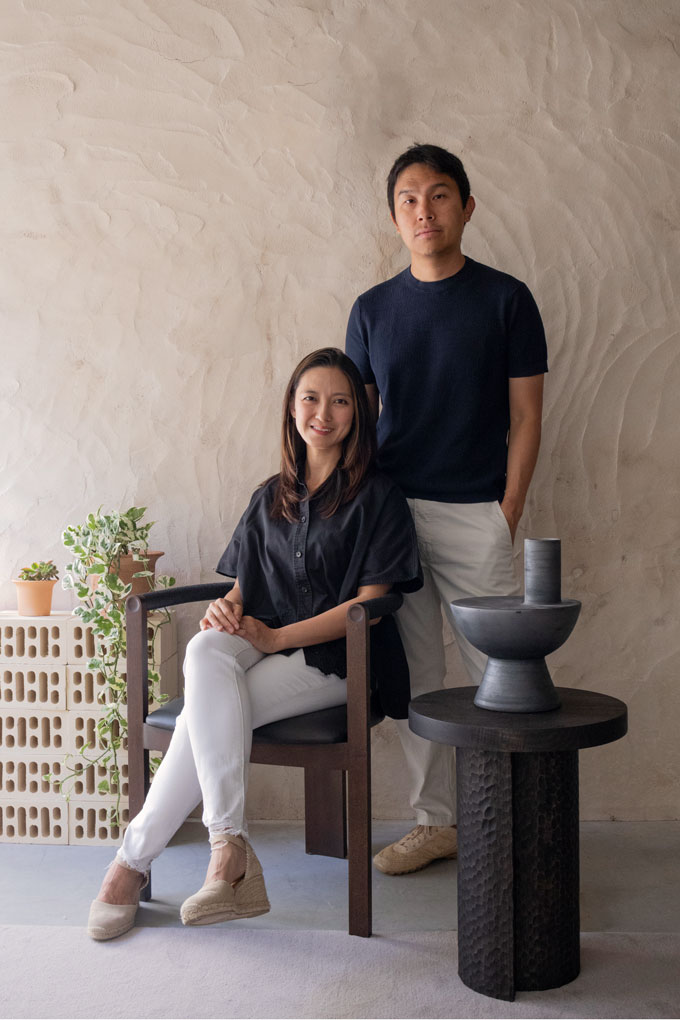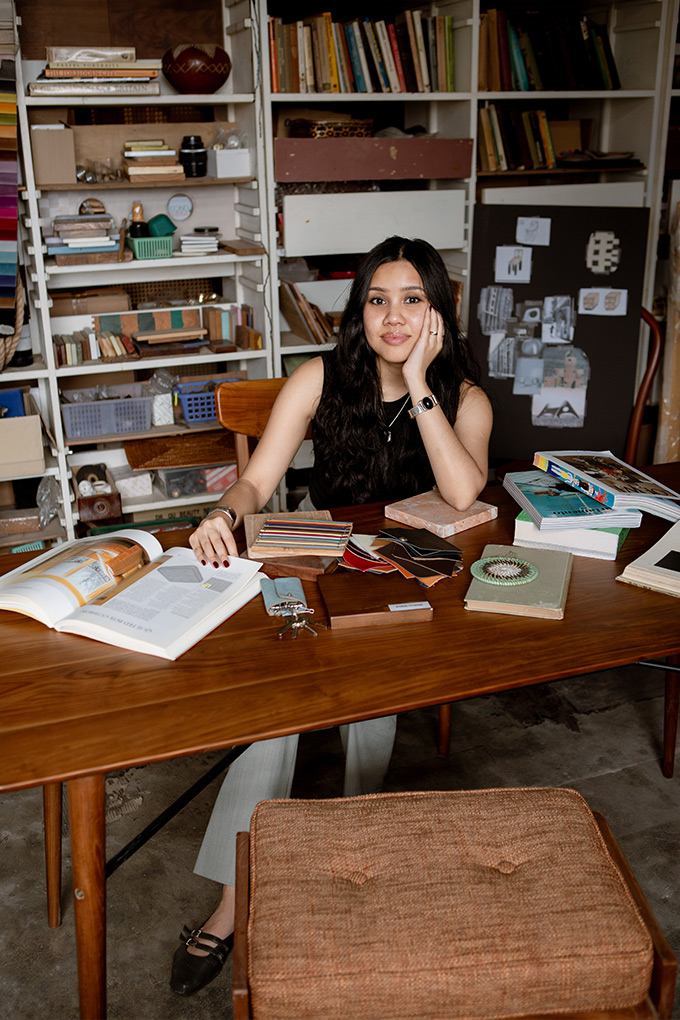
A mirror framed by ondeh ondeh, a coffee table shaped like a biscuit, and a side table with a checkerboard cookie facade for the drawers. These are just some of the pieces you’ll find at Studio Kallang, a Singapore- and Seattle-based project by designer Faezah Shaharuddin.
“Eclectic and playful with undertones of nostalgia” is how Faezah describes her designs and it’s a style that has resonated with many. Striking the perfect balance between fun and chic, the sculptural forms and beautiful textures of her works make them perfect statement pieces. You’ll spot custom pieces from Studio Kallang in places such as Diptyque’s Singapore flagship at Raffles City. Earlier this year, Faezah was a part of DesignSingapore Council’s exhibition at the prestigious Milan Design Week.
Here, she opens up about her design journey and her favourite creations, and shares styling tips for those looking to add a Studio Kallang piece in their home.

Tell us how your journey as a designer began. What inspired you to start Studio Kallang?
My mother had a vintage furniture business that turned into furniture manufacturing. Being in that environment made me hyper-attuned to different design eras and trends, and gave me my initial exposure to the design industry. My father is an academic who loves the arts. He exposed me to tons of revolutionary literature and music growing up, which is what gives my practice its contemplative elements. Eventually, I went to design school in the US [School of Art + Art History + Design at the University of Washington], which allowed me to deepen my design knowledge and hone my sensibilities. Studio Kallang was born out of a desire to reconcile my experiences living between those two worlds and to translate them into something comprehensible and tangible.
Where do you find the inspiration for your designs?
I like to see them as a collage of different things that resonate with me, whether bad or good, historic or current. I keep tabs on what people are paying attention to at the moment—that could be news, pop culture, music or fashion—and combine them with references from the past. That helps the work feel relevant. I also have a tendency to be overstimulated by my environment, but distilling it all into something comprehensible and humorous is my way of pushing through the chaos in a productive fashion.
What were some of the challenges you faced along the way as a designer?
Navigating the professional creative industry and the art world was intimidating at first. I knew nothing about the PR machine, press releases or contracts with stockists and galleries. I’m sure I made a ton of faux pas in the beginning but learnt a lot. One of the trickiest aspects of being an independent design studio is maintaining the precarious balance between the creative work and the business side. As much as I would prefer to sketch, read and ideate all day, the reality is having to keep up with emails, invoices, manufacturing, timelines and logistics to keep things running.

You showcased your work at Milan Design Week for the first time this year. What was that like for you?
I texted a friend that I was choking on beauty—that’s how it felt. It was fascinating to discover how high-profile shows are curated and executed, and the insane amount of work that goes on behind the scenes. It was inspiring to be around so many people at the top of their field.
Out of all your pieces, is there one that is your favourite?
It was one of the first few pieces I designed, but I still love the Onde Mirror the most. I love how it feels interactive— like a frame for life. I love seeing it in different spaces reflecting all kinds of different people who resonate with my work somehow.
How has your design style evolved over the years?
I think it has matured a little bit. When I first started design school, it was all over the place since I was still trying to find my voice. But looking back, it’s always had this loud, contrarian energy. I think my practice still retains that, but it’s a little more curated, restrained and focused now while still not taking itself too seriously.
What is something you hope to see more of in the Singapore design scene?
The design scene in Singapore has grown a lot in the past few years; I’ve noticed more people taking risks and making some really interesting stuff. I hope to see more irreverent work that goes against Western-centric design sensibilities and embraces the unique, colourful, cultural chaos of the region. I would love to see more collaborative work between Singaporean designers and our neighbours too.

Faezah’s styling tips
- Your home should tell the unique story of who you are and where you come from. Books are my go-to. I love to put them on side tables like the Mamun or Coklat. They warm up a space and add personality.
- Don’t be afraid to use colour. Bold colours when used intentionally can be tasteful and add visual interest to a space. I’ve had clients request custom pieces in bold colours as statement pieces, such as a Mamun with blue knobs and a yellow base, while keeping the rest of their home mellow.
- Pay attention to the light. Since our pieces are sculptural, I like to put them near windows so that they create dramatic shadows at certain times of the day.
The October anniversary ‘Community’ issue of Vogue Singapore is available for sale online and in-store now.