It’s the year 1983. The soon-to-be-classic TV show Knight Rider has made waves around the world, and David Hasselhoff is immortalised in toy form by Kenner Products.
It’s the year 2026. The now-classic TV show Knight Rider hasn’t aired in 40 years, but David Hasselhoff is still being immortalised in toy form—except this time, it’s by Singaporean toymaker Ramen Toy.
The proudly local brand was founded by Noel Lee, also known as ‘Ace’, in the middle of Covid-19, in 2021. After a short career selling insurance policies, a trip to Japan and a stint working at a Hong Kong e-commerce toy retailer re-ignited his passion for vintage toys.

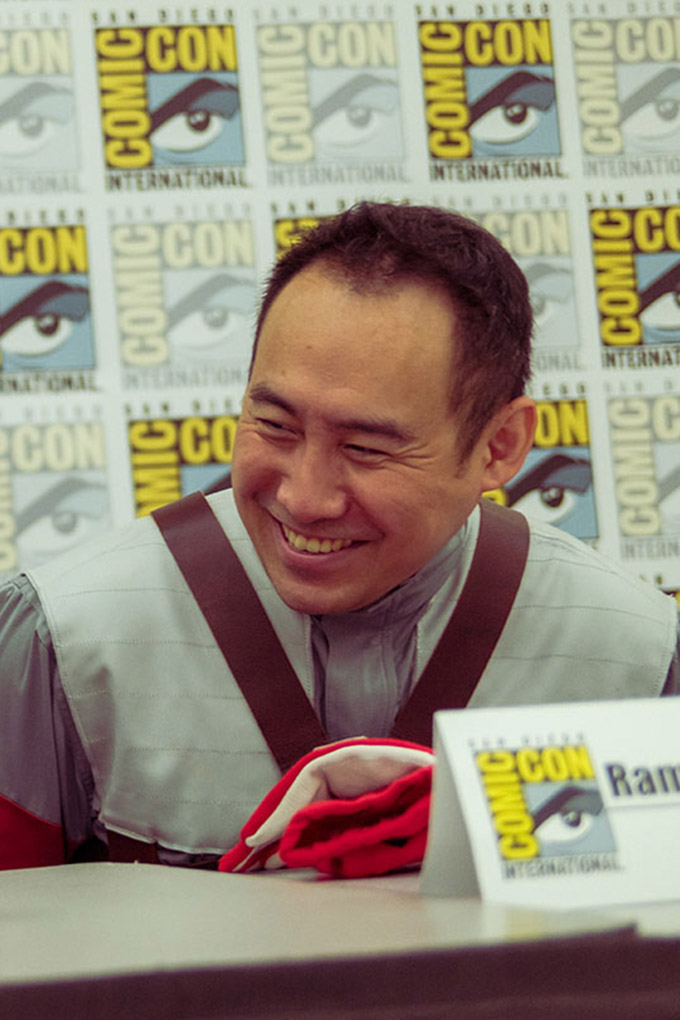
The inspiration for Ramen Toy can be attributed to the phrase ‘Retro Artistic Modern Eighties Nostalgia’. Initially, the toymaker dabbled in clever rebrands of classic franchises from the ‘80s—take, for example, his ‘Aces of Aviation’ collection, inspired by 1986’s Top Gun. Now, Lee’s products have expanded to cover official Intellectual Property (IPS) including the likes of Gatchaman and Knight Rider, winning the hearts and minds of fans at home and abroad. His work is, undoubtedly, the real deal: he is now a regular at conventions around the world, including San Diego Comic-Con, the very heart of nerddom on planet earth.
To learn more about Lee’s unconventional journey over the years, his relationship with nostalgia and why his brand is named after Japan’s iconic noodle dish, Vogue Singapore sat down with the toymaker for a conversation that brimmed with some good, old-fashioned fun.

How did you get started as a toymaker? What inspired you to pursue this career?
My first job after National Service was selling insurance policies, but that wasn’t very successful, so I fell back on selling the toys and model kits I bought as a teenager. When I ran out, I went to Japan to replenish my supply of vintage toys. One thing led to another and I found myself in Hong Kong working for an e-commerce site selling action figures, which led me to a factory in mainland China where I learned about the licensing and manufacturing process. During Covid-19, the only connection I had was with the factory, so I created Ramen Toy. It’s been five years since, and I guess I’m a toymaker now.
What are some of your favourite toys you’ve made, and why?
That’s a tough question because I have affection for every toy I’ve made—there’s a story behind them all. But if I had to pick, it would be the ‘Ramen Racer’ because there’s so much history behind it. The car was inspired by a failed Hasbro project I saw so many people wanted to support but it didn’t get crowdfunded. So I thought we could supply these collectors with a similar product, and now Ramen Racer is the most successful product in Ramen Toy’s history.

Is there a collaboration you’d love to work on, but haven’t yet?
Since young, I’ve always been a Masters of the Universe fan. One of my best, earliest memories was going down to Orchard Road with my mother, who got me a He-Man action figure. It would definitely be a dream to obtain the license or collaborate with an existing license to work on that property.
What’s been the biggest highlight of your time as Ramen Toy?
The biggest highlight is that we’ve made it—five years later. In fact, I’ve not actually had five years of doing something where I felt so fulfilled and satisfied. When I attend conventions and meet our fans and supporters, and they come up to me and say, “Hey, you know, Ace, I love what you’re doing. Thank you for this, I got my ‘Makina’, I got my ‘Marshall’, I got my ‘Ramen Racer’.” It’s so satisfying to provide customers with what they want—seeing their reactions means the world to me.

Why the 1980s, why nostalgia? And what does ‘Retro Artistic Modern Eighties Nostalgia’ mean?
My slogan, ‘Retro Artistic Modern Eighties Nostalgia’, is actually an acronym for ‘ramen’. When I was in Tokyo attending Wonder Festival, I bought a ‘Macross’ garage kit from a sculptor named Tan Men, which I found out meant ‘tang mian soup noodles’. Because I love Japanese ramen, I thought: “Maybe we could also name our toy brand ‘Ramen’.” There’s more to it, of course, because ramen isn’t just the instant kind—chefs take years to learn how to make the dish, to come up with their own flavour, and when they serve it it’s very nicely decorated. I thought that would translate into our efforts to make products that are well-crafted and well-packaged.
The ‘80s was also such a nostalgic period, representing the world’s transition to modernisation. But nostalgia is more than thinking about where you come from, it’s the memories that you had. The most important thing is to remember them—if you can’t remember something, I don’t think it’s nostalgia. When you see something that immediately triggers a memory, there’s so much connection to it; that time was uniquely yours, and that’s your own nostalgia.
How do you think toys can help us feel more grounded and connected to the real world?
I’ve been looking hard for the answer to this question. Albert Einstein once said: “Play is the highest form of research.” I hope there’s a resurgence in toys to make younger generations see the importance of that.
View this post on Instagram
I’m sure you’ve gotten this before, but what would you tell someone who might say that toys are for children?
There are many kinds of toys. The DJI Osmo that I capture content on is a toy to videographers and camera enthusiasts. Cars are toys to collectors and people who love driving. It’s shallow-minded to think toys are only for children. Like Einstein said, if play is the highest form of research—of learning—let’s have some toys and learn.
Singapore’s not an easy place to live in if you don’t fit the cultural mold. What advice would you give to other creatives or craftspeople struggling to pursue their passion here?
Make a plan. Assess what you want to do, how much it’s going to take to do it and whether or not it requires you to be in a different place to do it. When things are written down, it’s easier to execute. That’s all easier said than done, of course, but it’s important to have the mentality of ‘just do it’. I’ve been through my fair share of struggles, but struggling is a part of success.