Maju means to move forward in Bahasa Melayu. It is also the root word for where Singapore’s National Anthem, ‘Majulah Singapura’, finds resonance; one would often hear ‘Onward Singapore’ when translating its meaning in English. The core idea, being the notion of progress.
Progress; a topic that has been sitting at the centre of many conversations over the past few weeks. Early on in July, the Housing Development Board (HDB) announced its plans to develop lands in the Clementi Sunset Way area, including Gilman Barracks and Maju Forest, for new homes. Since news of this was released, the response from the public has been a mixed bag. Between our green spaces and biodiversity, there is plenty that we stand to lose, with 15ha out of 23ha earmarked for redevelopment. This was further confirmed in Parliament on 4 August, when Alvin Tan, Minister of State for National Development, confirmed that the sites for Sunset Way and Gilman Barracks had already been zoned for residential use, and set aside for housing. To quote part of his response: “We will proceed, but how we build is important.”
Beyond just conservationists or activists, many started hurtling towards a similar question: Is there really a need to bulldoze yet another greenfield—meaning untouched or undeveloped land—for the sake of our growing residential needs? It is a difficult question to answer, and the “trade-offs” for development—be it greenfield or brownfield lands—are immense. So we mine again, for what ‘progress’ means today.
If left untouched, a forest grows and grows. It will be lush and abundant—like what some might consider Maju Forest to be, despite its classification as a mature, secondary forest. If we’re just talking numbers, more than 90% of our primeval forest cover has already been lost to deforestation. What makes up most of our green spaces today then, are the secondary forests.
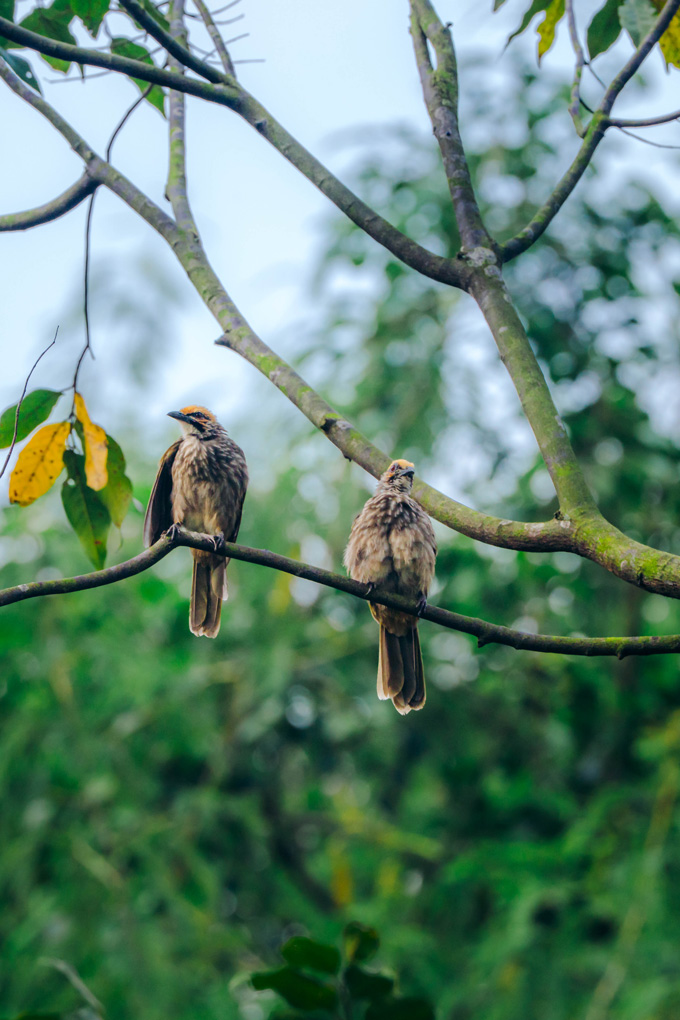
Not only does Maju Forest act as a wildlife corridor for animals’ safe passage between Clementi Forest and the Rail Corridor, the forest is also home to a marvellous range of wildlife, some of which are rare or endangered species. A longtime resident of the forest is the Sunda pangolin, considered to be one of the most poached and trafficked mammals in the trade. According to the International Union for Conservation of Nature (IUCN) Red List, it has been classified as a critically endangered species. Meanwhile, with less than 2000 to its name, the straw-headed bulbul is a petite songbird that is often sought after for its lyrical song. As far as biodiversity goes, the list goes on, with 286 plant species and 113 animal species that consider the forest their home. “A forest teaches you that things can grow on their own will, at their own pace. We think we need to have hands in it for things to progress, but forests cannot regrow so soon. It might not grow the same way, animals would lose their homes, and forest areas would be more fractured,” elucidates, Ila, a multimedia artist who dabbles across audio, sound, archival material, poetry and writing, with a recent research focus of hers being mangrove forests.
The build feels certain—and with the impending threat to our ecology, there’s a blanket sentiment that seems to fall heavy on many of us: grief for something we had only begun to know; and despair for a problem that might feel far-reaching, slipping out of our control.
There is however, a compelling truth. Over the years, efforts to save our green spaces have been more than a handful; some, like the petition to save Dover Forest, saw partial success, even. Similarly, amidst the potential loss of Maju Forest and Gillman Barracks, locals have also been proving more engaged than ever, finding community in the like-minded; going out to nature walks to the parks together, listening to what can be done, and spreading the word online.
What has been taking shape is a collective desire. More and more individuals of the public have been responding with not just acceptance to the status quo, but a desire to learn, connect and care for the forests. For the green spaces which have cradled our homes, and lined the edges of our concrete.
There is hope yet—and plenty more chapters have to be written before we can form the narrative of ‘progress’ that we wish to tell. Yet as we grapple with the inevitable loss of yet another forest, perhaps there is no one better placed to offer their two cents than the very people who are constantly working the ground—to show us the beauty of the environment that we live in. Here, we speak to Safiah and Cedric, the storyteller duo behind production studio 4one.sg; Kah Mun Chan, an adventure storyteller, sustainability advocate and founder of How Light Falls; Nikki Tan, a conservation filmmaker; Ila, a multimedia artist and researcher of mangrove forests; as well as Jovena Loon; a forest therapy guide and founder of Gentle Walks—each one uniquely placed with their own connection to the forest—to hear more about how they’re feeling, and how grief can be turned into something constructive, empowering and heartening to see.

1 / 15
Safiah and Cedric, nature storytellers and founders of 4one.sg
Could you share more about what you do in relation to nature specifically, and why you love it?
Safiah: With 4one.sg, we show familiar places but through a different lens. Our lens often focuses on stories about wildlife, slow travel, and culture. On our own time, we unwind in green spaces, go on nature walks, and look for birds, insects, and all other wildlife that might appear. Nature has taught me so much about being human, about the ebbs and flows, about challenges and overcoming them, and about how all of these difficulties and wins are equally important in the fabric of life. I often take these emotions and write about the juxtaposition between nature and the human condition, often tying in women’s issues and childhood pains.
Cedric: We love it because we think the world has become increasingly disconnected, and we believe storytelling told by humans for humans is the only way to spark real connections. Our goal isn’t to lecture anyone into caring. It’s to frame a creature, a place, a culture beautifully enough that you feel something. And once you feel that connection, it’s tough not to remember it. And when you remember something, you understand and care for it. That’s the whole reason we do what we do: to inspire, appreciate, and showcase nature, and to do what we can, while we can.
Can you share what the forests mean to you and your connection to forests?
Safiah: Forests are prehistoric, whereas we’ve only existed for less than 0.01% of the Earth’s history. They’re self-regulating, self-sufficient, self-recovering; all the things we strive to be. Many Aboriginal and Indigenous people learned from the forest, worked with Her, and lived as a part of Her. There’s a wisdom there that I want to learn more about. It’s so grounding to slow down, sitting on the forest floor, or a patch of green, completely away from any artificial noise. I hear the calls of different birds and insects; I get to smell the earth and feel the damp soil. In an era where everything demands immediate response, the forest brings me back to myself, where I only need to respond to my senses.
Cedric: A forest is one of the few places that feel like it’s running on its own time, often without thanks yet it benefits everyone. And that, for us, is humbling in the best way. The forest forces me to slow down, to be quiet, and to earn what you see rather than demand it. There are days where you can sit for hours and get nothing, and then the forest presents you with a single moment that makes everything worth it. I feel like they’ve shaped how we see everything else; they’ve taught us that the most important things rarely announce themselves, and that if you’re not paying attention, you’ll miss them entirely.

2 / 15
Safiah and Cedric, nature storytellers and founders of 4one.sg
With the potential, impending loss of Maju Forest, what do we stand to lose?
Safiah: Well, other than the clear loss of hectares of forest, we stand to lose collective care. So I would like to focus on what we’ve won. We won new connections through this cause; we uncovered a community that cares, we learned so much together, and had meaningful conversations. The passion we saw from everyone, those who went out to the parks, who joined nature walks, engaged in events about sustainability, and spread joy of being in nature, whether newly-discovered or reignited—that shouldn’t be put out with Maju or Gillman. That care is worth keeping alive. Let’s not lose that.
Cedric: Most can read about the ecological loss through the reports, like how it is home to 286 plant species and 113 animal species, and several with conservation significance. Pangolins, Straw-headed bulbuls, buffy fish-owl, changeable hawk-eagle, and oriental magpie-robin. What I feel we really stand to lose is a space that still feels untouched, that has quietly grown up with us. When we spent time in Maju, what struck us wasn’t just the biodiversity; it was how a mature forest completely takes you away from the city space. That to us feels rare. Once it’s gone, it doesn’t just grow back; even if we try to replant it, it may not be quick enough for our children to experience that feeling. You can plant trees, but you can’t fast-track a forest.

3 / 15
Safiah and Cedric, nature storytellers and founders of 4one.sg
Does the idea of eco-grief resonate with you?
Safiah: I appreciate this word, because it gives a name to something I was unable to describe before. I have written about the long-tailed shrikes that I hardly see around anymore, but used to be more abundant. I think this emotion isn’t new—in 2019, many shared their sorrows about 50-year-old rain trees being cut down in Queenstown. I want to believe that many people notice the quiet disappearance of these animals and plants, but it’s a displaced sadness, so it’s not talked about as much. Which is why coming together and having conversations is so important. Together we can turn grief into something beautiful.
Cedric: It does, and deeply. For me, eco-grief feels like the love for something that has nowhere to land. We feel that you only grieve something you’re attached to, so the grief itself is proof that the connection still exists. But we try not to focus on that emotion, because sadness feels paralysing and it doesn’t make us create pieces that re-spark that connection and drive hope. So, we’re excited to turn grief into better pieces of work, into showing people what’s still here on this planet and still worth loving, while it’s here. For us, hope isn’t a feeling you wait to arrive. It’s choosing, again and again, to point the camera at what’s beautiful and say: look, this still exists, and it’s yours to protect.
What is one tactical action that you think people living in Singapore can take, to better understand the state of our ‘green’ city today?
Safiah: It took me a long time to realise this, embarrassingly enough. But I think it all starts with conversation and engaging with one another. Reading, researching, analysing, asking questions, joining experiences that expose us to different perspectives, and coming to an independent conclusion. And once that happens, I try to keep learning, because that’s the only way understanding deepens. We can all be aware of available resources and join public feedback sessions. Disappointment may be part of the process, but diluting inaction with effective action takes time and continuous sustainable effort.
Cedric: To us, it is simple: go and experience it. You can’t understand something you’ve never actually met or felt. Pick one green space near you, it can be a park, a community garden even, and physically be there to disconnect. Listen to the sounds it makes, learn the names of things you see. Once something has a name and a face for you, once it gives you a feeling, connection builds. It stops being something foreign, and you start caring about what’s happening to it. I feel like truly appreciating our “green city” starts the moment you stop treating nature as scenery and start treating it as an environment you’re actually a part of.

4 / 15
Nikki Tan, conservation filmmaker
Could you share more about what you do—in relation to nature specifically—and why this is your choice of medium and topic?
I’m a conservation filmmaker using film to spotlight climate issues and the stories that shape our relationship with the natural world. I’ve always believed in the power of storytelling as a tool for impact and education, and have always hoped to use my craft to create a meaningful impact.
Environmental issues can often feel distant or confined to echo chambers, making it hard for people to connect or care deeply. I don’t claim to have all the answers, but I believe film can help bridge that gap by engaging audiences emotionally and making these stories feel more immediate, human, and relatable. Storytelling can inform, educate and influence change.
Can you share what the forests mean to you and your connection to forests?
Through the lens of a conservation filmmaker, forests and natural spaces are deeply precious to me. They are places of inspiration, and I see them almost as a living library of stories, wildlife, and quiet moments that continually shape the way I see the world. Trees, in particular, hold profound meaning for me. I love looking at trees. Their towering height, the millennia of history they hold, how each one looks and feels so different. The forests carry so much heritage and narratives, whether about the biodiversity and the wildlife, the land, the insects, or the people whose lives are intertwined with it.
On a personal level, these green spaces have always been places of refuge. They have quietly guided me throughout my career, becoming a constant source of perspective and reassurance. Four years ago, when I was just beginning this journey, I wrote a simple note on my phone planning my next steps in my career, with one of it being to make a documentary about trees. Two years ago, I made one of my first films in a forest, and landed my first wildlife filmmaking assignment there as well.

5 / 15
Nikki Tan, conservation filmmaker
With the potential, impending loss of Maju Forest, what do we stand to lose?
Only 0.3 per cent of Singapore, once an island almost entirely covered in rainforest, is now classified as primary forest. According to a 2020 study, Singapore has lost at least 35 per cent of its plant species over the past 200 years. An earlier study estimated that the country has lost up to 73 per cent of its native plants and animals, including 234 fish species, 111 reptiles, 91 mammals and 61 forest bird species.
Whatever remains of our forests should be treated as irreplaceable and given the highest priority for protection. The loss of Maju Forest threatens not only another patch of greenery, but another chapter of Singapore’s biodiversity. Without a rich diversity of plants, animals and microorganisms, ecosystems become weaker and more vulnerable. Forests also act as vital carbon sinks while providing essential ecosystem services such as filtering our air and water. Singapore currently sets aside around 10 per cent of its land for conservation and aims to increase this to 12 per cent under the Singapore Green Plan. Yet, as development pressures continue, every remaining tract of primary and mature forest becomes increasingly valuable, not only for the species that depend on it, but for the resilience of our nation as a whole.
The loss of biodiversity is also the loss of our natural heritage. A country without its natural heritage loses part of its identity. Our roots are not found only in our history books or our buildings; they are embedded in the forests that have stood here long before us. These landscapes hold stories, memories and connections that cannot be recreated once they are gone.

6 / 15
Nikki Tan, conservation filmmaker
Does the idea of eco-grief resonate with you?
A mix of anxiety, grief and, at times, resignation. There is the anxiety that we are losing more than we can truly comprehend, and the grief that development so often comes at the expense of nature. Resignation that maybe this is the reality of our nation. In a land-scarce country like Singapore, is deforestation an inevitable trade-off? Some suggest the alternative option of building on brownfield sites instead, but that could mean displacing families or erasing places of cultural significance. It makes me wonder whether we are merely delaying the inevitable.
At the same time, I don’t want eco-grief to end with despair. It has also become a source of motivation. It reminds me why I do the work I do to document the natural heritage we still have, before more of it disappears. With the impending Long Island Project, I am also kickstarting a new citizen film project. Titled My Island Home, it will be a documentation of the changing coastlines of the East Coast, from what it is now, to the preparatory works, and eventually into a reservoir. Every forest, every natural space and every species holds stories, not just about the natural world, but about who we are as a nation. If those places are eventually lost, I hope the stories they carried won’t be lost with them.
What is one tactical action that you think people living in Singapore can take—to better understand the state of our ‘green’ city today?
To be a ‘city in nature’, we need to change from the inside, not just change the city physically. One of the simplest yet most meaningful things people in Singapore can do is to step outside and spend time in nature. Nature doesn’t always have to be appreciated on a grand, dramatic scale.
Singaporeans have been divorced from nature. When residents think of nature here, they think of a manicured version; lush greenery, flowers and butterflies. They like the aesthetic of nature, but are uncomfortable with insects, lizards and snakes that come with a real ecosystem. This discomfort, sometimes described as biophobia, can become a barrier to conservation. If forests are seen primarily as places of danger or inconvenience, people are less likely to value and protect them. Biophobia often comes from a lack of exposure to the non-urban environment.
Nature cannot be treated as a commodity to be consumed or a backdrop to be admired from a distance. We have to experience it fully, to walk through a forest, listen to its sounds, notice its complexity and understand our place within it. Genuine appreciation grows from direct experience, and with appreciation comes a sense of responsibility.

7 / 15
Jovena Loon, forest therapy guide and founder of Gentle Walks
Could you share more about what you do in relation to nature specifically-and why you love it?
I’m Jovena, and I’m a certified forest bathing guide. I started Gentle Walks in 2022 to nurture a deeper relationship between humans and nature, and to support the restoration of planetary health through heart-led nature immersions. Living in such a fast-paced city, I was often driven to exhaustion, and even when I was resting, my mind could not stop racing. I found peace whenever I took walks in nature, which helped me cope with the anxiety and languishing I was experiencing at the time.
However, the real transformation happened through forest bathing, when I started to remember that I am nature too. I began to notice how all our kin in the forest could restore joy and life in us through their own unique gifts—birds and their songs, trees and their steadiness, and the wind and her lightness. Over time, I relearned the forest’s language, which most modern-day humans have come to forget. This has inevitably disconnected us from the web of life and its rich well of healing. My role as a guide is to help people remember this language—it is innate in all of us.
Can you share what the forests mean to you and your connection to forests?
The forest is family. We are all part of nature, and we depend on it just as it depends on us. I remember this when I walk barefoot on the earth and feel all my weariness melt away almost immediately. I trust it when a small jumping spider refuses to leave my hand, even after several attempts to return it to the soil. And I know it when a moth visits me in solace after my father’s passing.
So, the forest is not merely a beautiful place that exists; it is medicine. Our health evolves within it, not outside of it. Apart from the many physical benefits we receive from spending time in nature, I believe it holds the antidote to many of the modern afflictions we experience today, especially loneliness, restlessness and apathy.

8 / 15
Jovena Loon, forest therapy guide and founder of Gentle Walks
With the potential, impending loss of Maju Forest, what do we stand to lose?
We are at a critical crossroads in Singapore’s development—not only in terms of infrastructure, but also in the evolution of our society and its values. The decisions that are made today, will showcase what it values and shape the mindset of many.
Anyone can readily read about the significant ecological losses thoughtfully gathered by nature conservationists online, but the conversation around Maju Forest feels like it is about something more: our hope for the future. Through the resounding voices of the nature community and the wider public, it is evident that we have reached a point where more Singaporeans regard the lives of our wild kins as equally precious as ours, and we care deeply about protecting them.
We hope the government hears us when we say that forests are essential to a good life in Singapore. We depend on them for liveable temperatures, for our mental and emotional health, and for our sense of belonging to the land and the community. We cannot uproot a forest and make it up by planting a young tree elsewhere. A loss is a loss, and it is oftentimes irreversible.

9 / 15
Jovena Loon, forest therapy guide and founder of Gentle Walks
Does the idea of eco-grief resonate with you?
Eco-grief is simply a term that helps us name the devastation we feel when nature is destroyed. But to me, it is no different from losing a family member. When I see trees being cut down, or animals being abused or killed, I feel it in every fibre of my being. In nature, there is always an exchange—a giving and receiving, and a participation in the circle of life. Yet the way humans treat forests today is measured in dollars and cents. It is extractive rather than regenerative and reciprocative. When we witness such decisions by our own kind, grief deepens into disappointment and hopelessness.
It also does not help that our algorithms serve us a daily dose of devastating news about forests and oceans across the globe. This means that I experience some degree of this grief almost every day. I do not think this is unique to me. I believe it has a profound impact on our youth, many of whom do not feel particularly hopeful about the future. In grief, we must come together in strength and harness that energy to take action and contribute meaningfully where we can—especially when it is happening right in our own backyard.

10 / 15
Ila, multimedia artist and archivist
Could you share more about what you do in relation to nature specifically-and why you love it?
I work across mediums: visual, lens-based, audio, sound, archival material, poetry, writing. I always feel like I am creating different worlds, and I’m always asking what the visual, sound or performative element of my work is. I’ve been working solely and fully in Singapore, and my work looks at different environments, different seascapes and landscapes of Singapore, like environmental spaces. So not just forests. I spend some time looking at coastlines, looking at urbanisation. So things that have to do with the Land Acquisition act, for example. I was looking at shrines as well, in one period. Right now, I’m actually looking very deeply into mangrove forests specifically. But I have done a lot of research on forests and how colonisation has impacted the forests. Coming from a visual background, I also see myself as a kind of archivist. I work a lot with archival material, so there’s always this frustration when you want to access something. If I want to make a work about Singapore in the 1930s let’s say, there’s not so much an understanding of what the landscape looked like or what the landscapes look like. Apart from maps, there’s no visual reference; there are descriptions from oral history interviews, but you don’t really get an essence of what it looks like.
Can you share what the forests mean to you and your connection to forests?
My relationship to the forest has always been a tenuous one, in terms of comfort. Being in a forest always makes me feel uncomfortable at the start, but gradually, as I get more familiar in the spaces, I feel like I’ve grown very attuned and actually enjoy being in the forest because it’s quiet. Sometimes, if you’re lucky, there’s no one that you encounter. You can just walk endlessly off-route, and enjoy whatever you find.
On a deeper sense, I feel like I needed space to have that familiarity. So I imagine if we keep killing forests, we won’t have forests to go to, and that familiarity cannot be built. So when I hear, oh shoot, they’re removing another forest for development, the first thing I feel is you’re killing a forest. It will take a while to grow, in the same ways, like all these different trees, different birds, different animals, gathering there. The biodiversity would be gone. It takes a long time to grow a forest, but it takes such a short time to kill a forest. So, the frustration is there. Like, why would you want to do this? Why can’t we preserve something?

11 / 15
Ila, multimedia artist and archivist
With the potential, impending loss of Maju Forest, what do we stand to lose?
A forest grows itself, and the forest needs space and time to grow. Being in the forest makes me realise that they’ve been around longer than any of us. They’ve been witnesses of all the things that have been happening, and they kind of regrow. Like Bukit Batok has this one forest that used to be a park, and then it became a forest again. The plants all just grow on this old park which was like a Japanese park. And they’ve just been growing over. The mangrove forests do that too; and I feel like if you leave it alone, it will be lush and it will be you know like abundant. But we don’t have that thinking. We think that we need to have hands in it for things to progress. So a forest teaches you that things can grow on their own will, at their own, you know, at their own pace, in essence. Forests cannot regrow so soon, and then it might not grow again at all. It might not grow the same ways, and the animals would be lost. They would lose their homes, or they would die, and forest areas would be more fractured.

12 / 15
Ila, multimedia artist and archivist
Does the idea of eco-grief resonate with you?
I want to share a story because I learned a very big lesson from this person. I wanted to interview her for a project, and I was telling her, “Oh, you know, my work is going to look at grief, you know, the idea of loss, how we are losing so many things at the moment, and or all our lives, and we are not taking stock of it, and like everything feels like a losing battle.” But she reminded me that grief and loss is not all there is. That loneliness; that isolation we feel when we lose so much of our biodiversity—it can spark a yearning to reconnect to the loss and fight for it. That’s important too: the work that is being put in to conserve these places, the collective desire to work towards something together.
I was thinking through it a lot, and then I came across this book by this author Laura Marris, who writes essays. It’s called Age of Loneliness, and it surfaces the idea of being lonely or isolated. There’s also the idea of a desolate landscape. So there’s a two way thing to it; the more you take from the environment, the lonelier you get because you you won’t know how a forest sounds like. For example, you cannot discern birds. You can’t recognise trees. You only know your human self and your human world.
What is one tactical action that you think people living in Singapore can take—to better understand the state of our ‘green’ city today?
I think people cannot forget that there’s impact in groundswell. History has shown that if a lot more people speak up, then patches of forest can be safe and can be conserved, so the first thing to do is just sign a petition, put your name on it, write to your MPs, tell them how this matters to you, because that’s the one almost easy thing you can do. Then just be informed, and talk to others about it, because there’s also a responsibility to share it with people who may not know what is happening.

13 / 15
Kah Mun Chan, sustainability advocate and founder of How Light Falls
Could you share more about what you do in relation to nature specifically—and why you love it?
Well as human, I exist in nature and am because of her, so to be in nature and feel her deeply is the first natural practice. Then as a creative, nature is my eternal muse, I love capturing her through photographs, video, writing. I have found great connection through sharing that sense of wonder with others, and it has been so meaningful to know that my work has inspired changes in perspectives and behaviours of others for the better. In this digital world I have also been intentional in cultivating the awe of nature tangibly, hence I started my humble studio How Light Falls and project of Postcards Purposed, to bring scenes of the great outdoors into homes and hands, and to also be a medium for more community connection.
Can you share what the forests mean to you and your connection to forests?
Singapore is a land that has transformed a lot from its origin, and while we have lost over 90% of our primary forest, our secondary forests are still proof of life before concrete. Especially here, our forests hold deep meaning because they are the rare havens of wildness that has has been mostly designed out of our urban spaces. Life often does not follow the clean grid logic of a masterplanned city, and it is in our wilder green spaces (not just the manicured gardens), that we see ourselves mirrored in nature’s creative chaos and messy unfurling. Forests teach us that everyone can be just as they are, where every layer is important & necessary, unique yet contributing to the shared ecosystem. The lesson here, is that we do not have to be the same to belong. In a society like Singapore, I believe forests inspire us with courage to choose the path less taken.

14 / 15
Kah Mun Chan, sustainability advocate and founder of How Light Falls
With the potential, impending loss of Maju Forest, what do we stand to lose?
If we keep covering our soil with concrete how will we ever learn about our roots? While yes, Singapore invests great effort into being a Garden City, the truth is that a hundred iterations of Gardens by the Bay just won’t be the same as one forest. If you really pause to think about it, living your whole life in a school, a mall, a tuition room and then an office is not natural. Every wild green space matters, especially in a city so dense. For the child who needs to learn they are a part of nature, to an adult who needs grounding from stress, or to retirees who seek fulfilment in new hobbies. Every choice we make is sending a message to future generations. We need to protect our biodiverse habitats as having intrinsic value to ecology, humanity and our heritage history.

15 / 15
Kah Mun Chan, sustainability advocate and founder of How Light Falls
Does the idea of eco-grief resonate with you?
I grew up in Northeast Singapore and even in my short life, have had to say farewell to so many fields and too many trees that have been cleared for public & private housing. It comes to a point when you walk around with anticipatory grief, because now I wonder if any of my favourite childhood places will still be around for my future children. It feels like we’re giving into to this collective amnesia, with how Singaporeans cope with the constant and accelerated pace of this city self-metabolising. Eco-grief is a heavy weight to carry and can feel isolating when the mainstream defines success in ways sometimes counter-nature. I shared my sentiments online too and if anything, it showed that there are many who feel the same, and we need to band together. Not only to protect both our terrestrial and marine ecosystems, but also, to protect the connection to nature in our hearts.
What is one tactical action that you think people living in Singapore can take—to better understand the state of our ‘green’ city today?
Dare to get your hands dirty in soil. We are known as the clean city but that cleanliness has come at the cost of disconnection. So start small with exposure, go for guided walks by green groups like The Untamed Paths, explore your neighbourhood parks—both small and big. Then be curious, ask questions and learn about local experts and conservation efforts yielding hope like how the critically endangered Raffles’ Banded Langur, one of our three native primates, has returned to Bukit Timah Nature Reserve after it was reconnected to the Central Catchment Reserve with eco-bridges (they are separated by a highway).
Importantly, contribute in any way you can: use your voice on social media, give your time to volunteer at urban farms like Ground Up Initiative or Habitat Collective, donate your money if you are able to, and dedicate energy to raise these issues in everyday conversations. Be the candle that lights another, and when you inspire others, I promise you’ll also find your community.