Singapore is widely recognised as a major Asian hub for business, technology and innovation, with fast-growing sectors spanning finance, fintech, logistics, advanced manufacturing and research. Alongside this economic momentum, the city-state has also cultivated a dynamic retail and fashion landscape. From global luxury houses and international high-street brands to independent local designers, Singapore’s shopping scene is both diverse and continually evolving in response to changing consumer preferences.
While Orchard Road remains synonymous with Singapore retail, there has been a noticeable shift towards homegrown brands that offer distinctive, design-led perspectives. Retail concepts like Rye, known for its thoughtful curation of independent labels, have built a dedicated following alongside local success stories such as Love, Bonito. Together, they reflect a growing appetite for brands that combine strong aesthetic direction with an authentic sense of place and identity.

Among the labels that have helped define Singapore’s contemporary fashion landscape is In Good Company. Since its founding in 2012, the brand has cultivated a loyal customer base through a refined, understated design language and an unwavering commitment to quality craftsmanship. Rather than pursuing fleeting trends, it has built a distinct identity around timeless design, everyday functionality and pieces intended to integrate seamlessly into the rhythms of daily dressing.
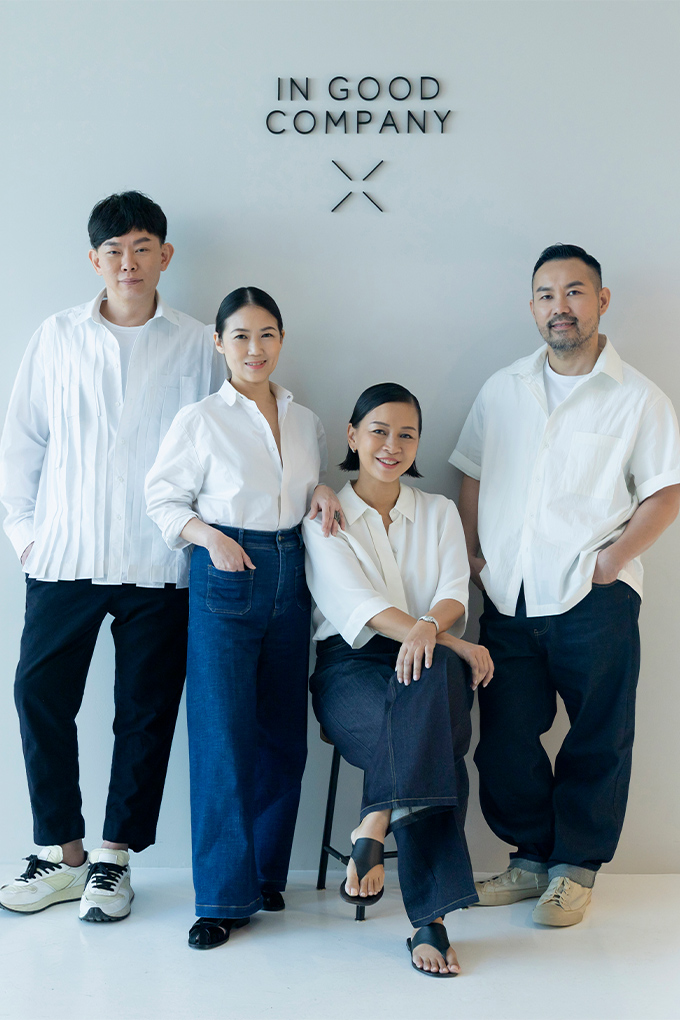
Founded by four friends—Kane Tan, Sven Tan, Jaclyn Teo and Julene Aw—who left womenswear label Alldressedup to establish the business, In Good Company quickly became a destination for thoughtfully designed wardrobe essentials. Each founder brings a distinct perspective to the venture: Kane serves as co-founder and head of design, Sven as co-founder and creative director, Aw as co-founder and operations director, and Teo as co-founder and managing director. Together, their complementary roles have shaped the label’s balance of creative restraint and commercial clarity, underpinning its steady evolution over more than a decade.

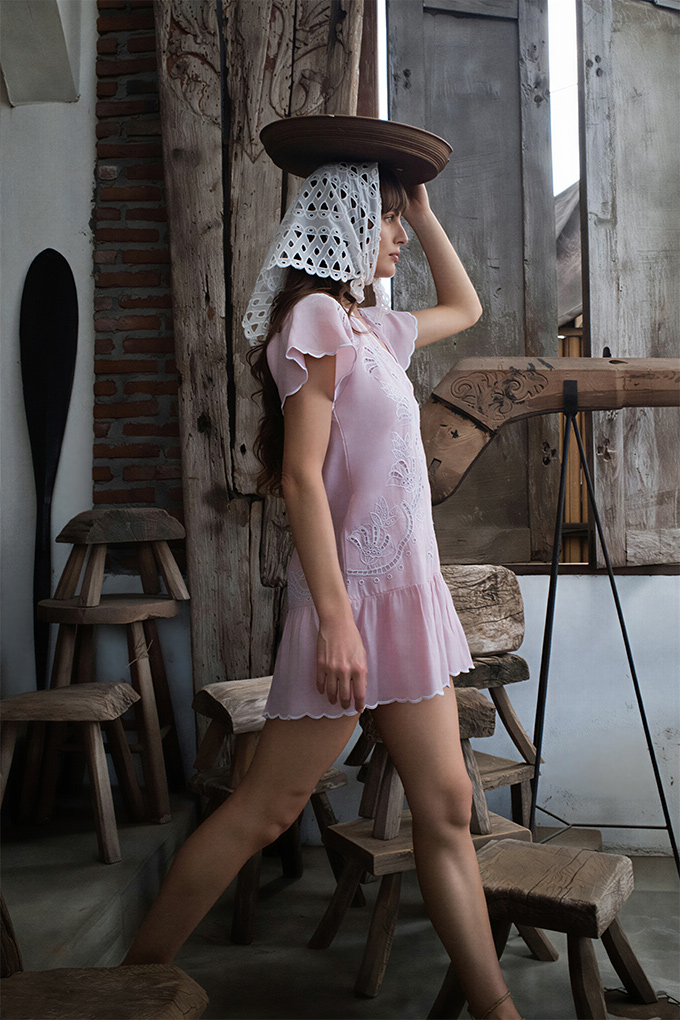
Today, In Good Company operates stores at Ion Orchard and Tangs at Tang Plaza, with the Ion location currently undergoing relocation and a new Joo Chiat store set to open in July. Beyond Singapore, the brand has established a physical retail presence in Hong Kong and Malaysia, while its online store ships worldwide. Among its most recognisable pieces are the Michela cropped capri pants cut at an angle with an elasticated waistband, inspired by Audrey Hepburn’s portrayal of Sabrina in the 1954 film of the same name. Accessories have also become signature favourites, particularly the Leather Hobo Max, Mini Leather Pouf Bag and Leather Twin Pouch.
“Singapore didn’t have much of a homegrown contemporary fashion scene then. The assumption was that ‘local’ and ‘aspirational’ couldn’t sit in the same sentence. We disagreed. Sven, Kane, Julene and I weren’t trying to prove the market wrong so much as build the brand we wanted to wear and couldn’t find. The risk was real, but so was the gap. We weren’t chasing trends or trying to out-shout international labels. We wanted a more considered approach: clothes with good construction, a clear point of view and a sense of restraint. Knowing our craft and exactly what we wanted to make made the leap feel less reckless than it might have looked from the outside,” shares Teo in reflecting on the risk and confidence it took to establish the brand.
“There’s a certain script you’re handed growing up here: a sensible path, a stable profession, a clear measure of success that usually comes with a number attached. Choosing a creative life was, in its own understated way, a refusal of that script. Not a loud rebellion, but a quiet one. We never set out to make a statement about it. We just weren’t willing to let pragmatism alone decide what our lives would look like. There’s nothing wrong with stability, but stability chased for its own sake, or money pursued as the only goal, felt like a narrow way to spend a life. We wanted to make something we believed in, something with a point of view, even if it was harder and slower and less certain than the alternatives.”
“There’s a certain script you’re handed growing up here: a sensible path, a stable profession, a clear measure of success that usually comes with a number attached. Choosing a creative life was, in its own understated way, a refusal of that script.”
Adds Sven: “Operating in Singapore has probably made us more disciplined as founders. Resources are finite, competition is intense and consumers are discerning. That environment teaches you to be thoughtful about every decision. Rather than seeing pragmatism as a limitation, we learnt to use it as a grounding framework that allowed creativity to endure. Creative freedom is often sustained by practical discipline.”
That balance between creativity and discipline has underpinned a series of milestones over the past decade. Early achievements included securing a retail presence at Tangs at Tang Plaza and establishing a flagship concept at Ion, which served as the brand’s home for a decade. As the business matured, In Good Company expanded beyond clothing through collaborations with local names including Plain Vanilla and Birds of Paradise, while steadily building the team and operational structure required to support long-term growth. The brand also successfully navigated the challenges of the COVID-19 pandemic, a period that tested retailers worldwide and ultimately reinforced its resilience and adaptability. More recently, regional expansion into Malaysia and the opening of its new Joo Chiat flagship signal the next phase of the brand’s evolution.
Another defining moment came with the presentation of In Between Light & Form at National Gallery Singapore, the brand’s first runway show and a celebration of its journey to date. More than a showcase of 70 looks, the presentation reflected In Good Company’s longstanding commitment to thoughtful collaboration and community, bringing together creative partners including Studio Karyn Lim, jewellery designer Rui of Days of Ever, and ITE students who contributed textural motifs to the collection. The result was a distinctly Singaporean expression of the brand’s values, demonstrating how local craftsmanship and creative exchange continue to shape its evolving identity.

Yet alongside the milestones and accolades lies the less visible reality of building a fashion business. For the founders, sustaining a creative practice has always required navigating commercial realities without compromising the brand’s core identity.
“The compromises have usually been practical ones. A fabric we loved that didn’t make commercial sense at scale. A collection idea trimmed back to meet a margin. Timelines, pricing, the realities of retail space and seasonal demand. These are the everyday concessions of running a brand rather than indulging a fantasy. We’ve made our peace with them. They’re not failures of vision; they’re the cost of staying in business long enough to keep expressing it.
“What we don’t compromise on is the point of view. The restraint, the intelligence, the sense that an In Good Company piece is considered rather than loud. That’s the spine of everything and we’ve turned down opportunities that would have blurred it. The line is crossed when a decision begins to dilute who we are rather than simply constrain how we operate. The way we decide is simple, even when it isn’t easy. Does this change how we do something or what we fundamentally are? The first is just business. The second is identity, and identity isn’t for sale,” shares Teo. So simply put, with a dwindling number of independent fashion brands and designers in Singapore, what wisdom do they pass down?

“The certainty you’re waiting for doesn’t exist and waiting for it is just a comfortable way of not starting,” Teo urges. “You don’t arrive at confidence and then act; you act and confidence assembles itself behind you. Every answer you’re hoping to have in advance can only be found along the way. The plan you make before you start is never the one that carries you through. That gets written in motion. Bring everything you have to it: your skills, your preparation, your seriousness. But preparation and certainty aren’t the same thing. At some point, you simply have to begin before the picture is complete and trust yourself to figure out the rest. So start before you’re ready. And stumbling, it turns out, is just how you learn to walk. There’s no other way it’s ever done.”