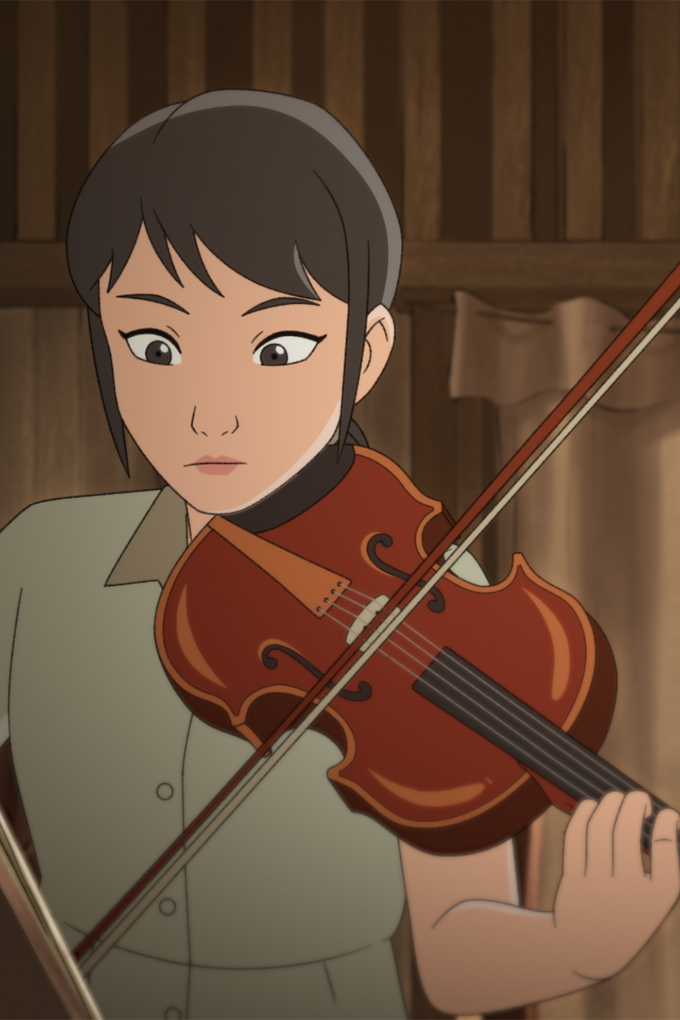
In many ways, The Violinist is a tale of perseverance. For co-directors Ervin Han and Raul García, the film has been a decade in the making, gathering a team of collaborators from Singapore, Spain and Japan. On-screen, the story spans 80 years, tracing a fated tale underscored by the enduring power of music.
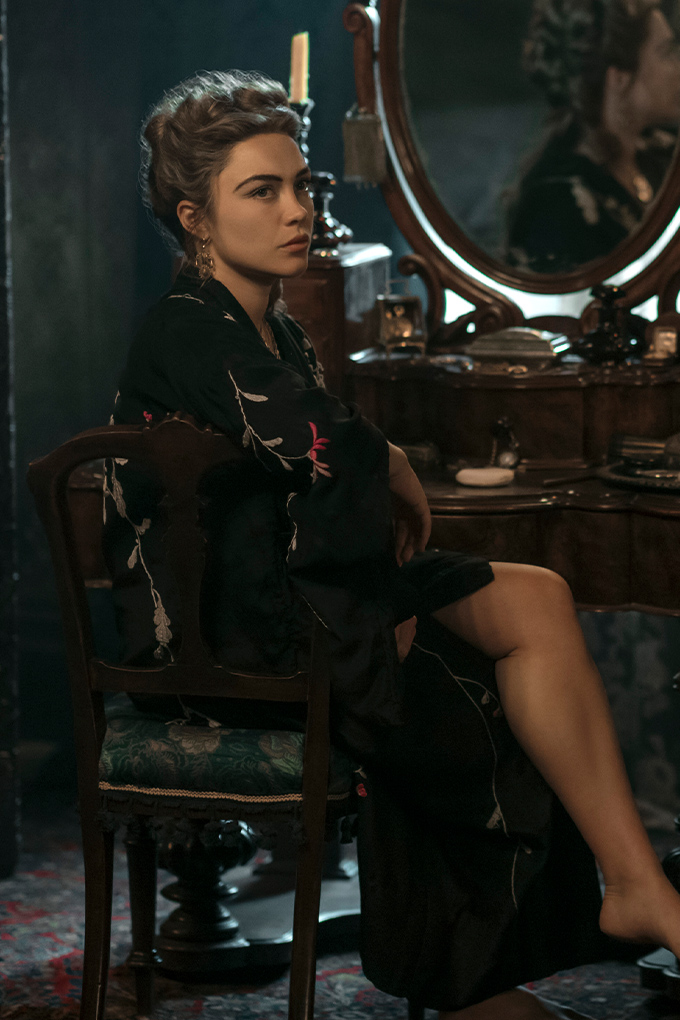
The Violinist begins in 1930s Singapore. It follows the journey of childhood friends Fei and Kai, bound by their shared love for music. As war and the Japanese occupation breaks out across the region, their lives are forcibly torn apart when Kai joins the resistance. He makes a promise to return while Fei waits in anticipation, growing to be a celebrated violinist yet haunted by her past.
It goes without saying that the violin plays an integral role in the film. The instrument is a character of its own right, following the duo from beginning to end, outlining every scene with a captivating melody. The score was created by award-winning composers Ricky Ho and Isabel Latorre, brought to life by homegrown musician Joyy. The journey was no easy one: the arrangement took over a year to complete, accompanied by endless rounds of practice and recording. Every note was carefully contemplated to convey the nuances of grief, joy and the tensions of war perfectly.
Sweeping the Cristal Award at the Annecy International Animation Film Festival and the SACEM award for best original soundtrack, The Violinist is testament that classical never dies. Below, Vogue Singapore speaks to Ho and Joyy on the film’s musical process, the magic of the violin and the enduring power of music.

How did it feel seeing the music and animation all come together for the first time?
Joyy: It was very moving. I recorded it one year ago, so seeing it come to life, I thought, “Oh wow, it’s everything I imagined!” When I recorded it there were no visuals, so I was going off the script and trying to imagine it all. I was really surprised at the opening scene—showing the Esplanade theatre and Marina Bay skyline was really special. I think Singapore has not had an animation like that. To see your own home and familiar places in your city drawn to such detail feels magical.

Take us through the process of composing the score.
Ricky Ho: I did a lot of research before writing the music. Especially because this is a historical film, it had to be accurate. I needed to know the right styles they played during the 1930s and ’40s. What did musicians at the time like? What did they listen to? I’d actually never composed classical music before in my career until I got this project. So I started listening to classical music every day. It took awhile to get used to it, but I really had to immerse myself in that era again.
To me, the melody was the most important part. It couldn’t be something complicated, it had to be simple enough to represent the movie. That’s why I spent a lot of time on the main melody itself. I did more research about the details of the Japanese occupation—they had their own orchestra and I wanted to know what they played at the time. I think they were into Wagner then, they liked German composers because of how patriotic it sounded. So that’s why I wrote a similar piece for the Japanese orchestra scene. And I spent a lot of time on the Sunset Sonata because that’s the main theme. I really wanted something that would make people tear up the moment they hear it. That’s also the instruction Ervin gave: that it had to evoke emotion. I changed it a lot during the process but in the end, I’m really satisfied with this. I think this melody is the best I’ve ever written for an emotional piece.

Tell us more about your experience learning and playing the soundtrack.
J: I had to learn classical violin from a young age, and I used to come here [to Victoria Hall] every weekend to rehearse orchestra here, but subsequently I haven’t played classical music in a very long time. Coming back to this, I found this score was an interesting one to play because it’s fully classical and it’s quite different from playing pop. One thing that jumped out to me from the script was this one line where it said “the violin is the closest to a human voice.” I think that was said by Kai in the movie. I have always had this line with me for a very long time, even before this film. Once, I heard that a violin can mimic a person crying. That was where it all began—not so much for the fanfare or the virtuoso of it, but personally, I like to perform music that connects with the listener and the audience. The violin has that timbre and texture to emote and mimic a person crying. So, I think that was what stood out to me going into The Violinist.
I read the script many times, and obviously practised it a lot. Even in the process of writing parts and a bit of the concerto, I read the script to understand how the music would fit in. I’m quite visual, so I like the music to paint a story. I first sketched out what I imagined the colours of the scenery would be before diving into trying to write what should be appropriate for that moment.

You collaborated closely on the score. What were your takeaways working together?
J: I definitely learned a lot from Ricky. I was very privileged to be able to work alongside him. I think understanding the process, even of him writing that one melodic motive, I remember waiting for the material. He sent me a few different versions, but he still wasn’t happy with it. The persistence to really get what would be the best product, I think that was really admirable and something to learn from. Sometimes when it gets difficult, people tend to give up more easily. But you really have to persevere through this. When I first looked at the arrangement, even the parts that I wrote, I wondered if it was even possible to play. But then you just really work at it, and you realise you actually can. It’s definitely a life lesson. I think playing classical instruments require a lot of tenacity. There’s a certain kind of madness to doing music or any creative pursuit. It’s not for everybody, you need that determination to really go at it.

Which was the most challenging piece to compose and perform?
RH: I think ‘Sunset Sonata’ because that’s the main song. There is another love-themed track somewhere, but the sonata takes over the whole movie. I was very careful with the melody on that track, especially the ending. I wanted it to be a killer piece.
J: Definitely that piece. Everything about this film rests on that one piece, but also I think because the plot of how that particular piece was written also is the crux of the story. I think it was very moving how, instead of writing letters back to Faye, Kai wrote bits and pieces of the piece like a love letter, and then she continues it and her threads get woven in too.

Joyy, how did it feel to play Lee Fei’s character from a musical perspective?
I read and reread the script a lot. I really dived into it to understand the psyche behind what Fei would be feeling at that point in time. I hope I did it justice. It’s very moving because, even though it’s set in a world war setting, it is a universal story that everyone can relate to. It doesn’t end in a necessarily happy way, there’s a bittersweet ending to it, and I think that’s like real life. The highs and the lows, the pain that was weaved into the movie. It’s so poignant.
I see similarities between Fei and myself. She also started playing from a young age. I’ve played on my current violin since I was 12 years old, much like Fei did in the film. I’m sure a lot of violinists would relate to playing at Victoria Concert Hall as well. Seeing these little threads makes all the effort you put in as a child worth it. I always tell a lot of people who learn classical music that maybe our childhood looks different from other kids because we were always at practice. I’m always going from one rehearsal to another, practicing at home while all the kids go down to play. Watching Fei in the film, I personally feel so much gratitude for all those years.
The Violinist is now showing in theatres.