When life gets busy, when everything becomes too much to bear, our most common impulse is to start abandoning ourselves. The diet goes, then sleep, before everything else falls into disarray. We console ourselves with the idea that we might be able to catch up with these things again, when we’ve had a moment to catch a breather. It was certainly the case for me when the excitement of October kept me in its grip; I spent most of it either hunched over a laptop or running from place to place.
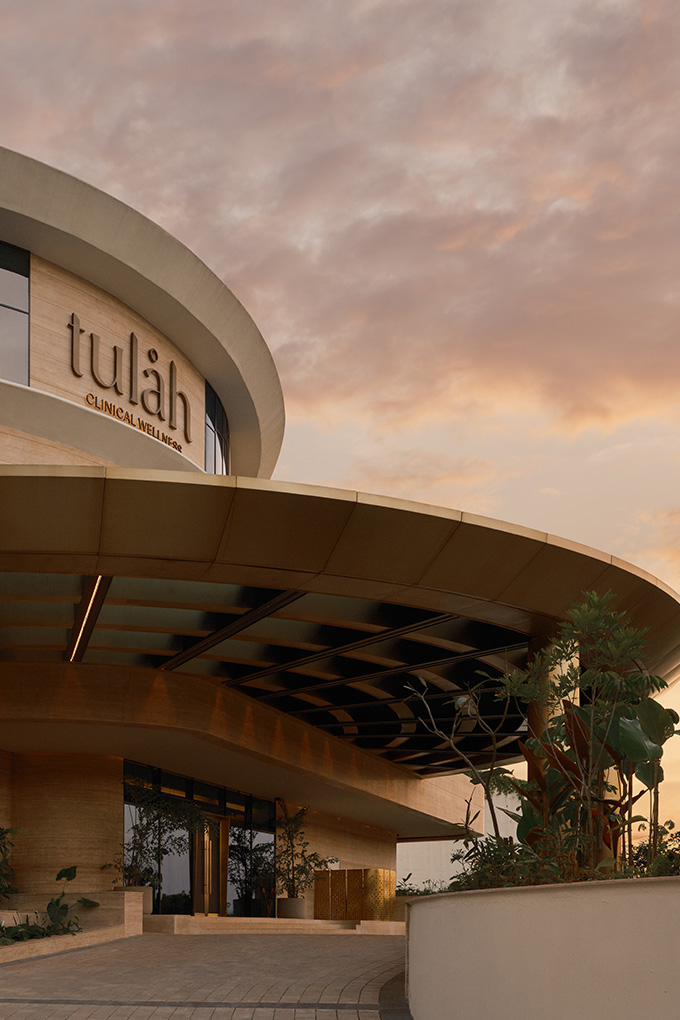
So when the plane landed in Kochi, Kerala, a reset was long overdue. To get to Tulåh Clinical Wellness, the three-hour journey took us through the verdant landscapes and backwaters that have supplied generations with medicinal herbs and earned Kerala its reputation as God’s own country. The same view of the Ghats greeted me every morning—as did Tulåh’s own 30-acre sprawl of medicinal gardens and rewilded forests. Tucked away into the hills, one step into the compound makes the rest of the world disappear completely.
Twilight zone
Maybe it’s the siren call of the flute playing live in the lounges, or maybe it’s the ambient lighting—either way, peace is palpable. The walls curve and wrap around each other in diffused neutrals and natural finishes, their undulating contours an intentional design choice to put the mind at ease. Curated artwork invites pause and reflection. In place of air conditioning—which can often dry out the skin and cause respiratory problems—radiant cooling keeps the tropical heat at bay through rainwater harvesting. The same careful handling extended to the body, where freshly-laundered linen sets became the default attire for the treatments, experiences and healing to come.


South Asia meets West
Before even arriving in Tulåh, the journey has already begun long before. A pre-arrival consultation with a doctor gives every one of its guests an opportunity to discuss their health history, concerns and goals for their time in the sanctuary. Mine was to manage my Polyendocrine Metabolic Ovarian Syndrome (PMOS, previously PCOS) better, as well as to finally learn how to unclench my mind and body from a perpetual state of anxiety. From there, a choice can be made between two paths: the Wellness journey focuses on prevention, optimisation and lifestyle recalibration, while the Clinical journey supports chronic conditions and recovery.
No matter what you end up picking, the care you’ll receive is integrative at its core. ‘Tulåh’ is the Sanskrit word for balance, and that same philosophy applies to the way the treatments are structured. Upon arrival, every guest goes through a full diagnostic scan of their bodies, from bloodwork, pulse analysis and a dental assessment to MRIs and a DEXA scan. From there, the team takes over: doctors and practitioners specialising in Ayurveda, modern medicine, Traditional Chinese Medicine, movement science, nutrition and more convene to put together a personalised programme for the rest of your days there. And everything your body needs, Tulåh furnishes in spades—the sanctuary’s Ayurvedic and medical license allows for an operating theatre, Intensive Care Unit and medical suites to exist on-site, with extended access to over 200 specialists at its sister institution, Meitra Hospital. Located in the same wing are regenerative therapies like hyperbaric oxygen therapy, cryotherapy and photobiomodulation. The options are endless, and they are all within reach of one another.


Temple of devotion
Restoring the body can take on many different forms: yoga, pilates, gymming; but also massages, cupping and moxibustion. At Tulåh, the body is a temple carved out of the finest gold, bestowed with time-honoured wisdom and state-of-the-art innovation. With Kerala being the historic home of Ayurveda, the sanctuary’s wellness offerings draw from its ancient medicinal principles while elevating it with modern touches. Ayurvedic treatments may traditionally be conducted on a wooden table, but Tulåh is venturing beyond that with their very own patented Vichy Shower Bed. Conceived by founder Faizal Kottikollon, the design marries Turkish hammam traditions with Ayurvedic principles—oil massages are first conducted on the ergonomic marble surface, before everything is cleansed off with help from the shower heads above. To remedy my vata-kapha vikriti—an Ayurvedic state of imbalance—I had to be warmed up by way of an abhyanga, or a traditional oil massage. The heated marble made the massage feel all the more relaxing, and getting a proper shower with my eyes closed felt surreal. When it came to my first shirodhara, I could bask in the sensation of the herb-infused oil streaming onto my forehead without worrying about how to clean it off after. Emerging from the treatment room afterwards, I felt reborn.


Yoga may not be new to me, but clinical yoga is a different proposition altogether. In place of sequences and poses, yoga is conducted here as a rehabilitative protocol catering to your exact needs. An assortment of custom wall attachments, props and gear help provide extra support, especially for anyone experiencing tightness, limited mobility or chronic pain. To help with my overall alignment and posture, a cushioned wall attachment made the downward dog position feel more manageable than usual; a total inversion helped decompress my spine entirely. With guidance and supervision from the specialist, even my sleep posture was corrected and improved in real time. If yoga isn’t enough movement for you, there is even the option of reformer pilates, padel or even kayaking across the lake-sized pool.

Beyond the physicality of our bodies, the psychosomatic dimension is equally worthy of tender, loving care. The sanctuary is also home to the world’s largest sound healing dome, specially built and designed to enfold its visitors in restorative vibrations and soothing frequencies. As the sun peeks through the skylight, it illuminates The Sonorium’s spaceship-like interior and its elegant arrangement of plate bells, gongs and precision-tuned instruments. Lying there swaddled in a blanket, my restless spirit finally found solace in a glassophone-inflected realm. At night, the space transforms into the perfect venue for intimate soundscapes—including Sufi concerts and rousing performances.


Mother nurture
As much as these interventions help to restore the body and soul, regulating our internal biorhythms is vital in maintaining our health and wellness long term. Every day at Tulåh starts with a 6.30am morning ritual by the courtyard, and can take shape in the form of pranayama, movement meditation and more. One session, in particular, invited us to seek out our inner children—and ended with everybody dancing and moving freely to our heart’s desires. By rising with the sun and carving out time for mindfulness, it set the mood for a fruitful day.


The same goes for our eating habits, which are very often dysregulated. Across its two dining establishments—one serving all-day fare, and the other pan-Asian fusions—phone use is highly discouraged at the table, which diverted my attention to the conversations at hand and the bites I was taking. Meals became a joyous affair, and my digestion reaped the benefits in full. The food itself was nourishing, thanks to the use of hearty ingredients plucked fresh from the gardens then thoughtfully prepared and presented. Even though a meal plan was prescribed as part of my journey, it hardly felt like one; I still had my fix of rich curries and the occasional guilt-free dessert. With help from my nutritionist, I even learnt how to best space out my meals and pack my plate with as many colours of the rainbow as I can.
The final portrait
As anyone with health anxiety would know, it can feel intimidating having to piece the picture of your health together all on your own. Check-ups and diagnoses often alienate our bodies from ourselves, making it difficult to figure out how we should start making changes. Before I departed, a consultation with the doctors helped break down every metric and reading acquired in my time there—which then informed my Tulåh Life Index. The proprietary assessment measures one’s physical, mental and emotional health in a quantifiable way, making it easier to see what needs to be prioritised or reconfigured. Recommendations accompany the Index, pooled together from the dedicated Tulåh team’s observations and review of my reports and consultations. Extensive as it is, the list seemed overwhelming at first; until my Ayurvedic doctor, Dr Urvashi Naithani, reminded me to take it one step at a time. I have a lifetime, she says, to learn to care for myself. Thinking about our health shouldn’t give us more pain.
There are places that help you reset, and there are places that heal you in the time that you are there. Tulåh Clinical Wellness sets its sights further: the days in the sanctuary incubate your lifestyle and habits, to begin the tedious but necessary work of building a life that will sustain you. Tulåh wraps every one of its visitors in a protective and nourishing cocoon—so we may emerge renewed, lighter, and ready to take on the world again.
Book or inquire about a stay at Tulåh Clinical Wellness here.