What comes to your mind when you think of the spectacle that is the great Indian wedding? Larger-than-life ceremonies, lavish garments, a riot of colours, and, of course, carefully staged photographs, characterised by posed portraits, fixed frames, and familiar templates. Today, that language has changed. Weddings are being captured with a more cinematic eye, where emotion, movement, and details matter as much as the ceremony itself. Modern Indian wedding photography is evolving into a layered experience that reflects the couple’s aesthetic sensibilities and personal story.

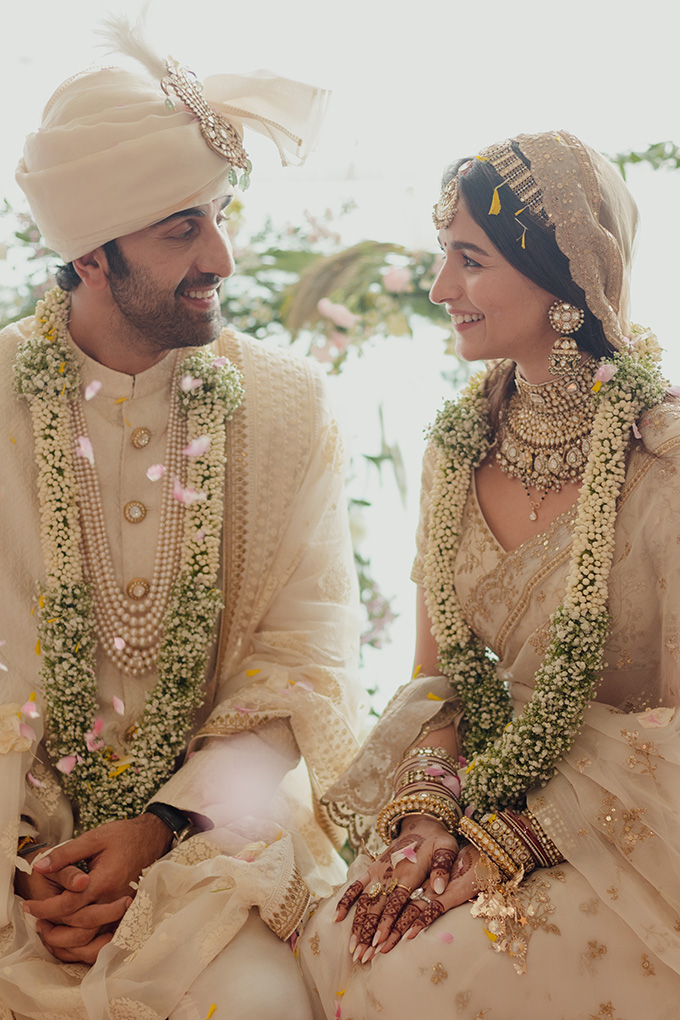
At the heart of this shift is Siddharth Sharma, founder of House on the Clouds, whose dreamy, cinematic images have made him one of the country’s most sought-after wedding photographers. From Ranbir Kapoor and Alia Bhatt to Sidharth Malhotra and Kiara Advani and, most recently, the nuptials of Rashmika Mandanna and Vijay Deverakonda (now the most-liked Instagram post in India and across Asia), Sharma has captured some of India’s most-famous celebrity weddings. Here, in an interview with Vogue Singapore, he talks about the beginnings of his career, the most memorable weddings he’s captured, and how social media is reshaping modern wedding photography.
You actually began in IT before moving into photography. What made you leave that world behind and take this leap into visual storytelling?
I think it began with a certain restlessness. I had spent a large part of my career working in the US, where the work culture was quite different. When I returned to India, I found it difficult to adjust to the way things worked here, and that pushed me to start thinking about what else I could do. At that point, photography was still just a hobby. I had never imagined that I would pursue it full-time, or that it could even become a feasible career in India. Then one of my friends, was getting married and asked me to photograph his wedding. That was really where it started. I loved the entire process of shooting a wedding: finding frames, discovering moments and looking for stories within them. It felt instinctive, exciting and very new to me. That was my foray into the world of weddings.


House on the Clouds has such a distinct visual identity now. When you first started, what did you feel was missing from Indian wedding photography at the time?
At the time, wedding photography was extensively template-driven. There was a certain way photographs were expected to be taken, and a certain way they were meant to be presented. Not many people were really breaking away from those formats. The profession itself was still evolving into something people could view as a serious creative career. Since I came from a completely different field, and I was already bored there, I was very clear that I did not want to enter photography only to feel drained again. I did not want to do it just for money, or simply because I wanted a different profession. I wanted to do things in my own way.
My travels and exposure had given me a slightly more modern outlook, especially when it came to colour, framing and aesthetics. I watched a lot of Western films, so my visual language was shaped by that sensibility. I wanted to see how that could sit within the Indian wedding landscape. In my first year, I shot almost 30 weddings. That gave me the confidence that this approach could work, and it helped shape the early identity of House on the Clouds.
You’ve photographed some of the country’s most high-profile weddings. Do celebrity weddings end up shaping the expectations ordinary couples have for their own weddings today?
Definitely. Celebrities have a huge influence on weddings, not just in terms of what people wear or where they get married, but across almost every detail. If one celebrity wears pink, you will see many brides choosing pink. If another chooses red, that begins to influence people too. When we photographed Alia Bhatt’s wedding, I think it changed a lot within the industry. It made people more open to the idea of an intimate wedding at home, inside an apartment, with that sense of warmth and closeness. A lot of couples came to us afterwards saying they wanted something exactly like that. We have to politely explain that every wedding is different, and that you cannot simply recreate someone else’s weddings, it’s a deeply personal and organic process.
But the influence is very real. Celebrities shape the wedding industry more than almost anyone else. It is also important to say that it is not just the celebrity alone. They usually have the best planners, stylists, designers, make-up artists and creative teams around them. When all of those people come together, that collective vision is what creates the influence.

How has social media changed the way weddings are seen or captured, and does that influence your photography in any way?
Yes, social media has definitely influenced the way weddings are photographed. One very simple change is that we now shoot a lot more vertically. Earlier, most frames were horizontal. Now, because of Instagram, the way we think about framing has changed. It also influences colours, trends and decisions. What people see online begins to shape what they want for their own weddings. Some brides choose pastels because they saw a celebrity wear them beautifully. Others choose red because there is a certain conversation around tradition. Social media shapes not only our work, but also the design of weddings, the colours, the clothes and the overall mood. I would not say it influences everyone entirely. There are still people who stay very true to what they believe in. But a large number of couples are definitely influenced by what they see online.
There’s almost a cinematic language entering weddings now: moodboards, narrative arcs, movie-like edits. Why do you think couples are drawn toward this dreamlike aesthetic now?
Couples are definitely drawn to it, but in India, aesthetics are still incredibly diverse. India is almost like a country of many countries. Some people have a very Western aesthetic because of their exposure to fashion, cinema and global culture. Others are deeply traditional and rooted, and want their weddings to reflect that autenticity. This is what makes Indian weddings so exciting for us. In some parts of the world, a particular wedding aesthetic can become very standard. In India, every wedding can look and feel completely different. The colours change, the design changes, the emotions are different, and sometimes even our approach has to shift. There is a more cinematic language entering weddings now, but it does not look the same for everyone. That variety is what keeps the work alive and exciting.

Weddings are deeply personal events. How do you preserve authenticity when couples are also conscious of how everything will look on screen or online?
A lot of it begins with the first conversation we have with the couple. It is our job to explain what works and what does not. One thing we always tell them is that the more they think about the photographs, the worse it usually gets. If you truly want good photographs and honest memories, you have to forget about the camera. You have to trust the photographer. Of course, there is always some anxiety. It is a wedding, there is a certain budget, and there are expectations. So it becomes our responsibility to bring that anxiety down to a level where the couple feels comfortable and present. When couples stop thinking about how everything will look, the final result is always better. It is about guiding them early, building trust and allowing them to be completely be themselves.
What’s the secret to capturing those candid moments and raw emotions so beautifully at weddings?
At this stage, it feels very organic because we have been doing this for a long time. A lot of it comes from being present, understanding the wedding deeply and knowing who is important. You have to know when things are happening, where they are happening and who is likely to react. A lot of it is anticipation, and that comes with experience. It also comes from understanding basic human emotion and knowing what can trigger a certain feeling.
Before we arrive at a wedding, we try to understand it as deeply as possible. We want to know why these two people are getting married, who the important people are, and what the plan is. A wedding is not like a theatre performance where everything happens exactly as expected. Anything can happen. But if you understand the wedding well, you remove a lot of the uncertainty, and you are better prepared for those honest moments.

From Ranbir Kapoor and Alia Bhatt to Sidharth Malhotra and Kiara Advani, if you had to pick one wedding that felt especially unforgettable to you personally, which would it be and why?
Both weddings were very different. One was extremely intimate, while the other had the feeling of a destination wedding. But personally, I would say Alia and Ranbir’s wedding felt especially special. It was because of the proximity of the space. We were shooting very closely, and when you are that close, you feel more connected to everything that is happening. It was also one of our first weddings of that scale, so there was a different level of anxiety. It was the first time we were seeing celebrities from that close, all gathered in one home, and photographing them in such an intimate setting. Even while we were shooting it, we knew it was special. The wedding itself had a very different feeling, and that made it very memorable for us.
Lastly, as a professional wedding photographer, what’s one piece of advice you have for couples who are planning their weddings, or something you hope couples would think more about?
As a photographer, I would give two pieces of advice. The first is to forget about the camera. Trust your photographer and stop chasing a moodboard. It is good to have a vision, and it is good to share that vision with your photographer. But during the wedding, you have to let it go. Some couples give us long lists of photographs they want, but that can take the creativity away from the wedding. Then your wedding begins to look like someone else’s. The more you enjoy your own wedding, the better the photographs will be. It is a very simple formula. If you push too hard to create a certain kind of image, it may look nice, but it will not feel natural.
The second thing is to design the wedding around light. From a photographer’s point of view, light is one of the most overlooked factors in wedding planning. Where the light falls, what time it falls, whether it is harsh or soft, all of this matters. Especially in Indian weddings, where there are so many colours and the schedules are often packed, light should be one of the most important things to think about, from choosing the venue to planning the flow of the day.