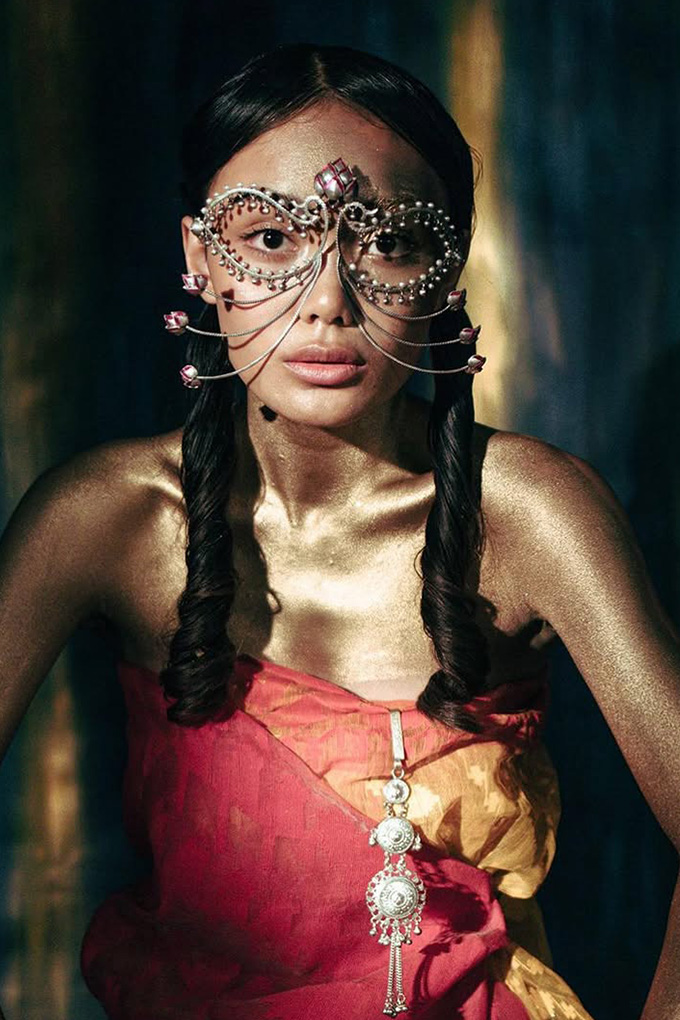
Jewellery is undeniably a vital part of Indian identity, culture, and heritage. Gold and silver heirloom pieces, like bangles and necklaces, have been passed down in families for decades. The practice of wearing ornaments for important festivals and ceremonies, that element of ‘something old,’ has always been a part of Indian history. But the Indian youth of today are seeking ways to stay connected to their cultural roots in ways that feel true to who they are now; for many, jewellery becomes that outlet where they can wear their heritage with pride—the perfect medium for self-expression. Yet the problem remains: traditional Indian jewellery while rich in legacy, often feels too ceremonial for everyday wear, whereas contemporary pieces, though easy to style, lack that Indian touch they so ardently seek. So when Bhavya Ramesh, founder, and creative director of her eponymous label, first began her foray into the world of jewellery production, this was the exact gap she decided to fill in. “Jewellery in India is often bound by tradition. I wanted to break that, to make pieces that feel Indian in soul, but not in form,” she says—and this sentiment lies at the heart of her label.

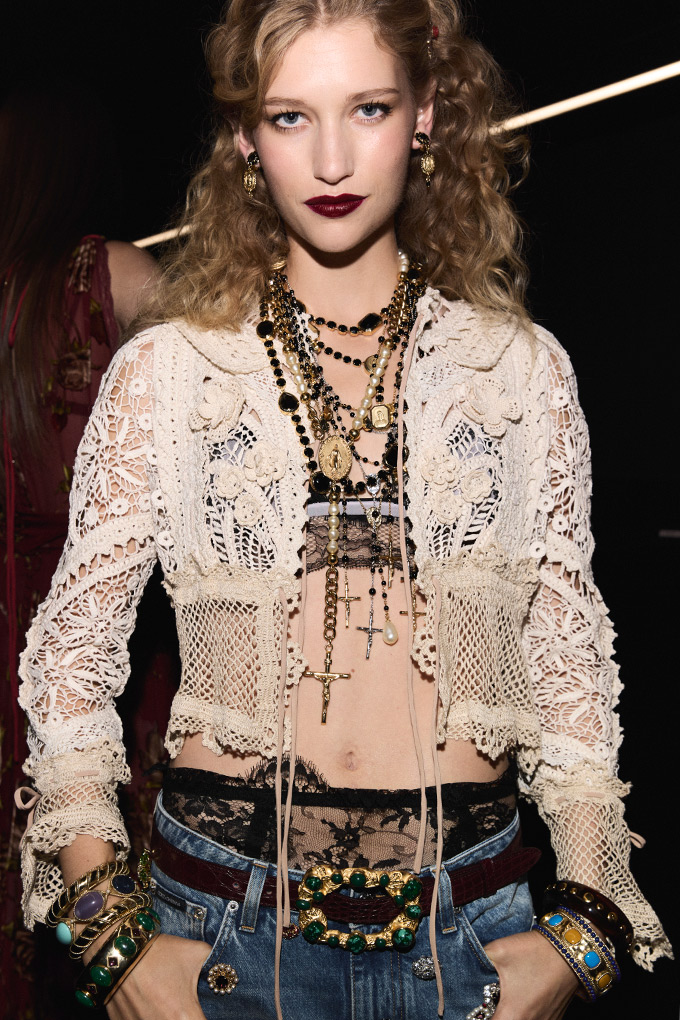
Known for her bold and avant-garde aesthetic, Ramesh’s eccentric designs are downright audacious in form. From silver nail rings that twist into fierce armours, gilded sunglasses that depict peacocks, hair clips shaped like slithering snakes and necklaces that resemble dancing apsaras, most of her collections draw from mythology, science fiction, and fantasy. Though her designs are modern in form, but they still feel unmistakably Indian in soul. By producing in-house, championing ethical practices, and fostering close relationships with artisans in Jaipur, Ramesh ensures that innovation never comes at the cost of integrity.
With a background in engineering, the designer has always gravitated towards creative territory. Today, with her brand headquartered in Mumbai and a growing list of high-profile clients—Ramesh is making traditional silver jewellery cool for a generation that wants to honour its roots without being weighed down by them. In an interview with Vogue Singapore, the Indian designer opens up about her creative process, design ethos and the story behind her eponymous label.

What inspired you to start your own jewellery brand, and how did Bhavya Ramesh the label come to life?
I come from an engineering background, not a design one, but I’ve always believed my pieces are well-engineered. The technical knowledge I carry has deeply shaped how I think about structure, form, and function—which has become the unique signature of the brand. At a crucial point in my life, I knew I wasn’t built to work for someone else. There was a strong voice within me pushing me to create something of my own.
When I began exploring jewellery, I was captivated by the richness of Indian craftsmanship and the traditional art forms we’ve inherited. I felt they deserved a fresh voice—one that could be understood and appreciated globally. Choosing silver as my medium was both a creative and strategic decision. It’s timeless, valuable, and at the time, felt like a smart investment—even if the design journey didn’t take off, I knew the metal itself would hold value. That blend of business instinct, creative expression, and technical grounding is what shaped Bhavya Ramesh into what it is today.
You’ve spoken about sustainability and working with artisans in Jaipur. How do you ensure that your production stays ethical and true to your values as you expand your business?
This was one of my biggest concerns from the very beginning—how to grow without compromising on ethics or integrity. One of the reasons I’ve been able to stay grounded in my values is because all our production is in-house. Nothing is outsourced. That gives us complete control over how things are made, how silver is treated, and how artisans are involved throughout the process. Since we work with metals, there’s a beautiful circularity built into the system—everything can be melted, reworked, and reused. That naturally creates a more efficient and sustainable business model. But beyond that, what really holds it all together is the relationship with our karigars (artisans). They don’t just execute my vision, they are a part of it. There’s a shared purpose, and that emotional investment is what makes each piece not just ethical, but meaningful.

Your designs are often described as bold and unconventional. What influences your aesthetic?
The aesthetic of the brand wasn’t something carefully planned or constructed, it evolved organically. It’s deeply rooted in my personal journey, in a series of life experiences and emotions I felt compelled to express. Over time, that expression shaped a language of its own. From the very beginning, I’ve been driven by the desire to create something that hasn’t been seen before in the jewellery space—especially in a country like India, where jewellery has existed for centuries but is often seen through a traditional or commercial lens. I wanted to break that pattern and bring in a fresh perspective—one that’s raw, emotive, and unafraid to challenge convention.
Can you walk us through your creative process—from ideation to the final product?
My creative process isn’t linear or fixed—it evolves constantly. Ideas often strike unexpectedly: from a passing conversation, a joke, a strong emotion, or just a random observation. That initial spark is where it begins. But once the idea is planted, I begin building a world around it. A big part of my process is the human body itself. The anatomy becomes a framework—the Nail Crown collection, for example, revolved entirely around nails; GlarerKillers explored the eyes; and Poison centred on the movement of fingers. Working hands-on with artisans is where the real magic happens. No matter how imaginative the concept is, its transformation into a tangible piece depends on how well it can be executed. That phase of experimentation—when two minds are in sync trying to bring a wild idea to life—is often where the most iconic pieces are born.

From Ancient Aliens to GilGa, and now Naraka, your collections often feel mythical and cinematic. What’s your process when translating storytelling into your designs?
The story always comes first. I’m constantly drawn to worlds that are a little surreal, a little beyond reality—whether it’s mythology, cosmic fantasy, or reimagined history. I think of these stories almost like scenes from a film: what would these characters look like? What would they wear? Ancient Aliens, for example, started with the thought: what if the gods we see in mythology were actually otherworldly beings? That led me to create pieces like headgears—bold, other-dimensional designs that aren’t worn in everyday life but feel absolutely right in a mythical context. Jewellery in India is often bound by tradition. I wanted to break that, to make pieces that feel Indian in soul, but not in form. When someone wears one of these pieces, I want them to feel like they’re stepping into a different version of themselves. That ability to liberate and transform through design is what I constantly chase.

Tell us about a memorable celebrity encounter.
One of the very first moments that truly stayed with me was when Aarti, the lead vocalist of Hiatus Kaiyote, messaged us. She was nominated for the Grammys and wanted to wear our nail blades. I remember being stunned, this incredibly powerful and genre-defying artist discovering our work and choosing to wear it for such a monumental occasion. That was my first brush with realising that something I created could travel so far, both literally and emotionally. Then there was Wisdom Kaye-W-I-S-D-M Kaye, who personally messaged us to say he loved the brand. He’s known for his razor-sharp fashion sense and wears some of the most iconic designers worldwide. For him to not only see my work but want to buy it was surreal. I had to read the message twice. That kind of validation when someone you admire connects with your imagination is deeply empowering.
You come from a non-fashion background and are self-taught. In your experience, is it necessary to formally study fashion or design in order to succeed in the industry today?
It’s a debatable question, honestly. I have a lot of respect for formal education, and I know it brings a strong foundation. But I also come from an engineering background, and that has given me analytical tools, technical understanding, and even the ability to build my own website and structure my business. That said, I don’t believe a formal degree is the only way to succeed. Passion, vision, and a unique voice can take you just as far. I’ve seen many creatives thrive in spaces they were never formally trained in, simply because it was a calling. One advantage of being self-taught is that your creative process isn’t shaped by any rigid structure, you build it from scratch, which makes it more personal. But yes, the journey also comes with mistakes and learnings that maybe a formal education could have streamlined. In the end, it’s the drive that matters most—not the diploma.

Most of Bhavya Ramesh items are sterling silver. How can we avoid our pieces from tarnishing, especially in more harsh, humid climates like Singapore?
All my jewellery is made from solid sterling silver and that’s a very intentional choice. Silver is a precious metal, an investment, and something I’ve committed to staying true to despite the challenges it brings, especially while scaling a business. Silver naturally tarnishes over time, particularly in humid climates like Singapore. But for me, that aging process is part of its charm; much like leather, it gains character. That said, for those who prefer a polished look, we include a silver cleaning cloth with every piece. A gentle wipe brings the shine right back. For care, I recommend storing the pieces in airtight pouches, keeping them away from moisture, and using anti-tarnish strips if needed.
What’s next for Bhavya Ramesh? Is there a new direction you’re excited to explore?
Opening our first retail store was a defining moment for me. It marked the transition from being an online-only brand to creating a physical experience. This year, we’re planning to open at least three new stores, and each one will be entirely different. Every location will tell a different story, drawing from regional craftsmanship, cultural narratives, and unique interior techniques. We’re committed to keeping the ethos of the brand intact-rooted, expressive, and experimental. I’m especially excited about the idea of bringing Bhavya Ramesh to Singapore someday. We have a beautiful clientele there, and I’d love to create a space that feels like an extension of the brand’s world. This year is all about storytelling through space, silver, and soul.
Shop Bhavya Ramesh here.