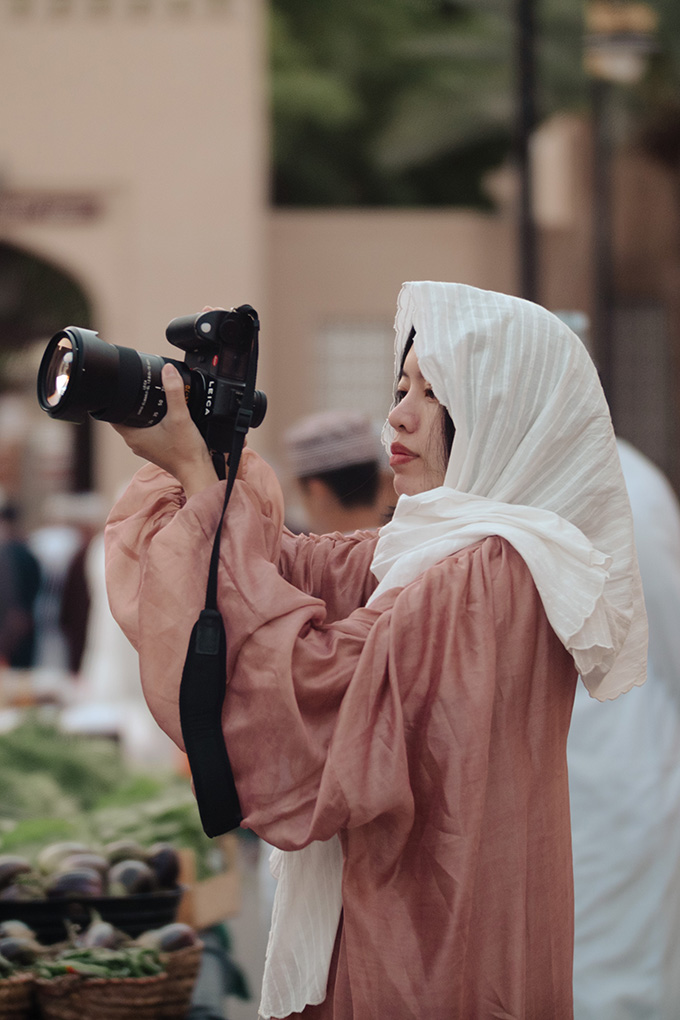
If the people shape a place, what will it look like when they’re gone? That’s what Prestine Davekhaw, creator of Instagram profile Disappearing Cultures, set out to tackle. The photographer captures striking portraits of people from different cultures, professions and trades that are gradually fading. From the gruelling labour of charcoal workers to Pasola battles in Sumba, Indonesia, Davekhaw realised it wasn’t the job that she was fascinated with, but the people behind it. Her camera lens is a tool to capture the soul and heritage behind each trade, dignifying the worker behind the labour.

Davekhaw encounters people purely by chance. On her travels, she roams around the streets to see what the city has to offer and discover the people who build it. Once someone catches her eye, she strikes up a conversation. It can be daunting to be in front of the camera. The challenge often lies in seeking consent and creating a connection with a stranger. Davekhaw focuses on first asking about their lives and forming a narrative that is authentically theirs before placing them in the focus of her lens. It’s a process of listening first and shooting second, ensuring the final portrait is a culmination of true understanding.

Pursuing Disappearing Cultures only made the documentarian more aware of her surroundings—that the world was bigger than her lived reality and more complex than any of the digital bubbles she inhabited. Now, it has become a habit for her to push beyond her comfort zone into typically unventured territories for tourists. She seeks places that have yet to be developed for mass tourism and where life is not polished for a visitor’s gaze.


Though the purpose of Disappearing Cultures is to spotlight dying practices, for Davekhaw, it is not imperative that it continues. “When a culture is forced to ‘act out’ its traditions to survive in a modern tourist economy, I would rather see it disappear softly with time. I believe there is more dignity in a quiet, natural end than in a forced, hollowed-out preservation,” she observes.


As a founder of an early-stage human resources technology start-up, Davekhaw’s life is consumed by efficiency, scalability and digital evolution. So, Disappearing Cultures allows her to slip away to other countries, giving her a breath of fresh air and a counterbalance that keeps her human. “It’s quite funny that my professional life is about building what’s next and my creative life is about honouring what was,” she notes. With the current energy crisis, Davekhaw plans to focus on local and regional destinations. She shares: “When you stay close to home, you have to look much deeper to find the ‘untapped’ narratives. I’m quite nervous for this new challenge!”
In the grander scheme of things, Davekhaw is working towards something tangible: a coffee-table book. “I want readers to be able to sit with these images, feel the weight of a gaze and the depth of a story without the distraction of a scrolling feed,” she explains. Beyond the book, she also hopes to launch a travelling exhibition across multiple countries, sparking a global dialogue surrounding dignity, labour and heritage, where the individuals are ‘liked’ beyond the screen and honoured in the physical world.
The May 2026 ‘Nomad’ issue of Vogue Singapore is available online and on newsstands.