At any major sporting event, while the crowd holds its breath and the athletes push their limits, there’s a different kind of choreography unfolding just beyond the spotlight. A line of photographers crouch at the edge of the arena, with fingers poised and waiting, for a split second that will define the moment.
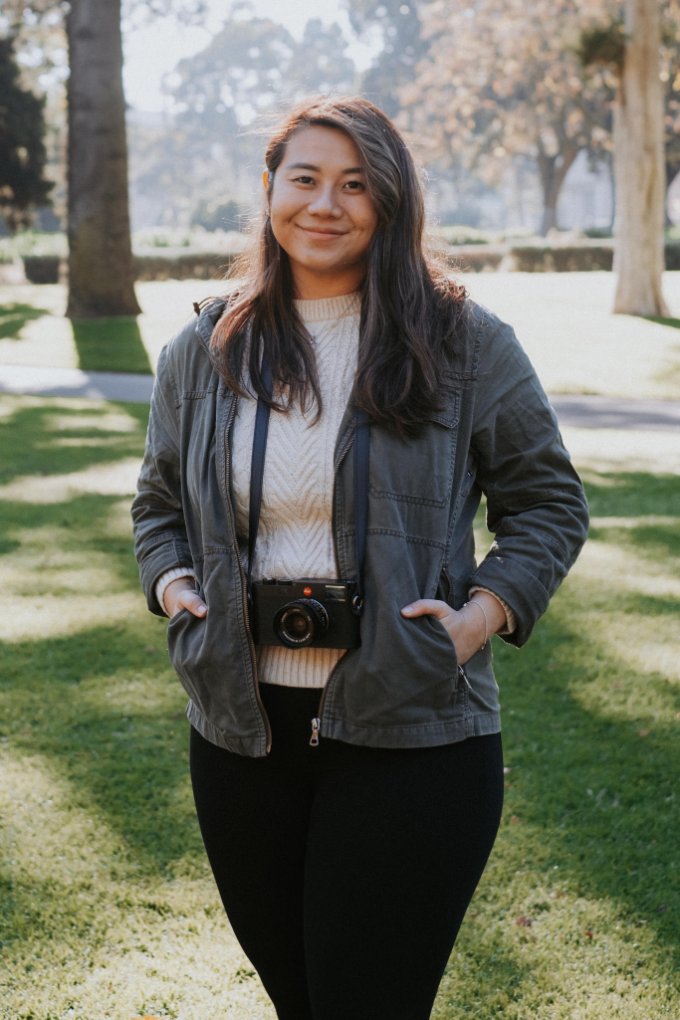
How does someone earn a place there—right where history happens? For Annice Lyn, that question is rife with personal significance. “My photography journey is deeply rooted in the different worlds I grew up navigating,” she shares.
In childhood, Lyn found herself exposed to concepts of privilege and humanity, thanks to her parents, who were deeply involved in social work. “Conversations about dignity, access, and inequality were normal at our dinner table. Witnessing vulnerability at such a young age quietly shaped my moral compass,” Lyn tells us.
Then, it was architecture. In college, Lyn explored the rich world of spatial design, opening her eyes to light, balance and tension. Yet, something was still missing. She confesses, “While I was designing spaces, I found myself more drawn to the people who inhabited them and their stories.”
And long before she took her position behind the lens at international sporting events, Lyn was on the ice herself. A former national figure skater from Malaysia, she learnt early on what it meant to perform under pressure. “Figure skating taught me discipline, precision and emotional expression—how to tell a story through movement,” she reflects.
“Photography became the intersection of all these influences: sport’s discipline, architecture’s visual sensitivity, and social work’s human consciousness,” offers the photojournalist. It makes perfect sense, then, that in 2020, she co-founded Women Photographers Malaysia (WPM), a female-led photography collective for emerging talents in the region. Here, Lyn opens up about the intention behind creating WPM, the importance of female voices in a male-dominated industry and wielding empathy behind the lens.

What is the biggest life lesson you’ve learnt as a photojournalist?
Humility. When you enter someone’s space, whether it’s an athlete at the peak of their career, a family navigating hardship, or a community carrying generational memories, you are stepping into a reality that existed long before you arrived and will continue long after you leave. The camera does not give you power. It gives you responsibility.
I’ve learnt that access is a privilege, not an entitlement. Trust is earned quietly. Sometimes the most important photographs happen not because you pressed the shutter quickly, but because you listened first.
What about the sporting industry draws you in, and what type of story do you wish to tell with your work?
What draws me into the sporting industry is its emotional honesty. Sport doesn’t allow you to hide. Years of discipline collapse into seconds, and the outcome is visible to the world. That intensity fascinates me. It’s one of the few arenas where ambition, politics, identity, and vulnerability coexist so visibly. As a former national athlete, I’m especially drawn to the unseen layers behind the spectacle. Early mornings, the financial strain, the injuries, the loneliness of elite training, and the weight of carrying a flag on your chest.
Female athletes are often framed within narrow narratives—grace, beauty, emotion, for instance—while their technical mastery and endurance are overlooked. As a woman behind the lens, I want to challenge that. I want young girls to see images of women who are fierce, disciplined, and unapologetically competitive. I want their stories archived with the same weight as their male counterparts.

As a former national figure skater yourself, how has your journey—from athlete to photographer—been?
Returning to the rink as a photographer has been deeply emotional for me. The ice was once my entire world. It shaped my discipline, my identity, and my understanding of performance. Now, I stand on a completely different side of the board. Instead of waiting for my music to start, I’m positioning myself along the rink barrier, camera ready, anticipating the skater’s moment. That physical shift, from being inside the ice to being outside it, mirrors the mental shift as well.
As an athlete, I was immersed in execution. As a photographer, it’s about observation. Because I’ve lived it, I can anticipate the rhythm of a programme: when fatigue sets in, when adrenaline peaks, when relief washes over a skater’s face. Standing on the other side of the board has given me distance, but it hasn’t taken away the connection. If anything, it has deepened it. I may no longer compete under the spotlight, but I’m still part of the story, preserving it from the edge of the ice.

You co-founded Women Photographers Malaysia, alongside fellow photographer Aisha Nazar, during the COVID-19 pandemic. What motivated you to kickstart your own female-led photography collective?
The pandemic was a period of reflection for many of us; it exposed gaps in opportunity, representation, and support. In the photography world, I had long noticed how few women were visible in leadership roles, assignments, and decision-making spaces. I’d also spent the early part of my career navigating a male-dominated space where I faced on-ground harassment and bullying from veteran photographers for nearly five years. It was isolating, exhausting, and, at times, discouraging.
Our motivation was with WPM simple: representation matters. By coming together, Aisha and I could provide mentorship, collaboration, and visibility in an industry that often overlooks women. Beyond community, it’s also about professional opportunities, collaborating with brands, running workshops, and highlighting female talent.
In your view, what value does the female perspective bring to a male-dominated field like photography?
The female perspective brings empathy, nuance, and attention to often-overlooked details. Women notice layers of emotion, context, and power dynamics that shape a story. It also allows us to highlight underrepresented experiences, from female athletes’ strength and strategy to the realities of motherhood and balancing personal life with professional ambition.
“The camera does not give you power. It gives you responsibility.”
What has been the most fulfilling part of your career thus far?
From working on the Time Magazine cover “Climate Is Everything” by Red Hong Yi, where the teamwork and creative camaraderie were incredibly energising, to covering the Olympics and supporting smaller National Olympic Committees that need more visibility, I’ve found the greatest meaning in amplifying stories that might otherwise go unseen.
Beyond major events, building WPM and creating opportunities for other women have been equally rewarding. Ultimately, what fulfils me most is knowing the work goes beyond aesthetics; it creates impact, representation, and community.
What is one piece of advice you would give to a budding photographer from Southeast Asia trying to make it on the global stage?
For aspiring Malaysians looking to follow their dreams, I always go back to the 5Ws and 1H: know who you are, what you need to work on, when you will begin, where you are starting from, why you’re doing it, and how you plan to get there. Master your craft, stay disciplined, and build real relationships. And most importantly, never belittle others to lift yourself up. Success is about lifting each other and staying true to who you are.
What do you hope to see more of in the photography and photojournalism industries going forward?
I hope to see more equity, not just in who gets assignments, but in who gets trusted with important stories. That means more women in leadership roles, more photographers from Southeast Asia and the Global South being commissioned internationally, and more diverse voices shaping narratives rather than just contributing to them.
I also hope to see greater respect for ethical storytelling. In a fast-paced digital world, speed often overrides sensitivity. I want to see photojournalism return to depth, context, dignity, and long-term engagement with the communities we document.