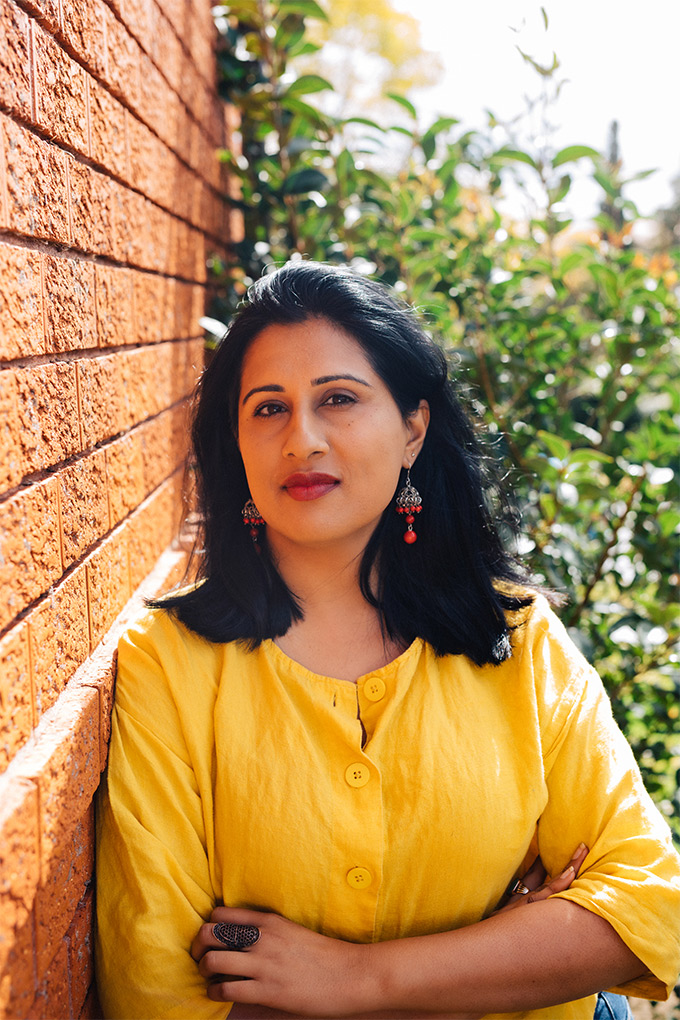
Walkley Award-winning Australian investigative journalist and author Sarah Malik has worked in the media for 17 years—no small feat given the tumultuous changes the industry has seen in as much time. “I feel like a veteran who has really gone through the trenches,” Malik laughs, in town for the 2024 edition of the Singapore Writers Festival.
Malik’s first job in the media was in a part-time broadcast journalism role as a student, in the wake of the September 11 attacks in the United States. Immediately, she witnessed first-hand the kind of power journalists hold in influencing the narratives that shape society. “I worked on a TV show that did some kind of segment about Muslims on pretty much a weekly basis,” she says. “This was a progressive organisation, but even they were problematising the Muslim community for ratings. Seeing that identity weaponised—and then having to potentially participate in it—was really stressful for me as a young person.”
As a Muslim, Pakistani-Australian woman from a working-class background, Malik’s natural inclination towards writing and journalism then developed a political importance. “Suddenly people who looked like me, or who shared my identity, were attracting suspicion and being surveilled. There were all these conversations in the public sphere about Muslims, their allegiances and their ability to be trusted. I felt like it only made sense to be part of an industry where you got to not just be talked about, but instead do the talking.”

Earning her stripes in the industry as a versatile reporter and journalist, Malik rose through the ranks and decided to pursue the kind of stories she personally found meaningful. Exploring stories about immigration, race, gender and belonging, she gained recognition for making headway in a media industry that was largely homogenous and lacked a diversity of voices.
Today, she is known not only for her stellar journalistic work, but also her two books. Her critically acclaimed debut memoir, Desi Girl: On Feminism, Race, Faith and Belonging, was a confessional and enlightening compilation of life lessons. Then came Safar: Muslim Women’s Stories of Travel and Transformation, a second title exploring the joys and stories of Muslim women around the world through the lens of travel.
Here, Malik opens up about the ups and downs of her career, her best advice for budding journalists, and the healing powers of storytelling.
What was an early highlight of your career?
My big break came at 26, when I was offered a cadetship with the Australian Associated Press. This was a very prestigious program—only four of us get picked nationwide. You go through rotations, so I got to travel to Adelaide and become a court reporter. Then I was shipped off to Melbourne and spent a year there. So I was traveling for work, going to press conferences and breaking news. It was a dream job.
That sounds incredible. Fast forward a few years and you were working as a freelance writing and journalist. How did that change come about, and what has it been like being a freelancer?
I’ve realised that redundancies are part of life in the media industry. On the eve of turning 30, I lost my dream job in a redundancy which was devastating at the time. But I soon realised that being a freelancer had its pros and cons too. I really came into my own as a freelancer, because that’s when I had the chance to pursue the stories that I truly wanted to. This was now the Trump era, and the Black Lives Matter movement was at the forefront. That’s when I started working on stories about asylum and detention in Australia, and doing long form documentaries on race. These were stories I’d pursued myself, when no one else was really doing it.
“Minority journalists are subject to double standards that other journalists would not be.White journalists are often seen as the invisible standard.”
What, in your opinion, is the power of journalism, storytelling, and the media at large?
The narratives we perpetuate and stories we write are integral in shaping how we relate to one other as human beings. Stories that promote bigotry can have a profound impact, and the opposite is also true. Stories can bridge divides in understanding and develop self-worth in young people. But of course, the journalism industry itself is often guilty of the very inequalities that it seeks to correct in society.
That’s a crucial point—how do you think these systemic inequalities manifest within the industry itself?
In the western world, the very makeup of the industry tends to be largely white, middle class and very monocultural. That often leads to a lot of group think and the replicating of certain perspectives and views and in ways that are unconscious. It can be a challenge for a journalist of colour entering into that sphere. You might want to make a difference, but how do you begin to do that, especially if you’re junior?
How did you cope with this sort of media climate as a young journalist?
I made the decision early on that I just wanted to be a good journalist. I didn’t want to talk about my identity because I didn’t want to be limited by it. This was despite the fact that in the back of my mind, I very much felt like there were things that needed to be said from a social justice perspective. Often, I saw that people would be pigeonholed into being the Muslim spokesperson which sometimes almost mitigated their expertise. They were seen as native informants or as if they could only speak about that one issue.
“We’ve seen the limitations of journalistic organisations now, with the coverage of Gaza and how various corporate media operate.”
There are evolving ideas about what good journalism means today. But there is an older school of thought which believes that to be a good journalist, you have to be almost identity-agnostic. What are your thoughts on that?
That absolutely is a trap that minority journalists often get caught in. We are subject to double standards that other journalists would not be. White journalists are often seen as the invisible standard and the status quo. It’s almost like if you have a non-white identity, it automatically makes you biased in some way because you’re different.
You talked earlier about redundancies being a part of the media roulette. What are some other pitfalls of the industry you have dealt with, particularly as a woman of colour?
Often, there was a struggle to be credited and paid for the work I did. I have had my work stolen and my bylines taken off. These experiences were extremely devastating, and they happened even while working with progressive organisations and progressive white women. These are the tensions that are very hard to articulate as women of colour and it’s something that I talk about in my memoir, Desi Girl. I have a whole chapter called ‘Media World’ which highlights a lot of these experiences.
Drawing from your wealth of personal experience, what is some advice you have for young journalists entering the industry now?
I have learnt that you need to mind your self-care, your financial life and a lot of practical issues which I often feel women don’t talk about. We may be scared to demand or vocalise our needs because talking about money is seen as taboo. I’ve had to understand that even though I love what I do, the response that I get from readers, and the impact that I’m making, there are ultimately going to be other factors at play that influence my longevity and desire to stay in the business. I don’t want to dissuade people from this industry and this work, because it ultimately is so valuable. But for me, the journey has been in learning to be a lot more assertive in my interactions and protecting my work.
The media landscape is rapidly changing and long-form journalism is increasingly in competition for attention with bite-sized content. 17 years into your journey, what keeps you going as a journalist—and what’s next for you?
I think any journalist will tell you that it’s some impetus from within that pushes us to do what we do. For me, it’s always been about freedom of expression and telling the stories that need to be told. One important thing for me is to own a story and shape the direction of how it’s expressed, which is something that you can’t always do when you’re working in an organisation. We’ve seen the limitations of that now, with the coverage of Gaza, and various corporate media and how they function.
I am now looking forward to new forms of storytelling—maybe starting my own production company at some point, where I would make shows or podcasts about themes that I’ve always been interested in, like immigration, gender, race and belonging, but maybe in more personal and creative ways. Hopefully those stories make a difference, even if they seem like a small nick in the huge artifice of power. Stories are everything; I truly believe they are how you promote a better society.