Remember when comedy specials were all the rage on Netflix? It feels like an age ago. Granted, specials are still a thing—streaming hasn’t gone anywhere. But the shape of comedy in 2026 is different, its ongoing metamorphosis bridging the long-held divide between your living room’s television screen and the screen that you may very well be reading this on. Now, everything’s on social media.
Short-form videos have reigned supreme for some time. Since Covid-19, we’ve all been subjected to an unprecedented torrent of vertically framed content. Today, coverage on the likes of TikTok or Instagram is as exhaustive as it gets: content creators dole out fashion advice, recommend beauty tips, discuss political theory and even touch on more niche subjects, like historical European martial arts. To no one’s surprise, comedy hasn’t gone unnoticed—by the algorithm, or its audience.
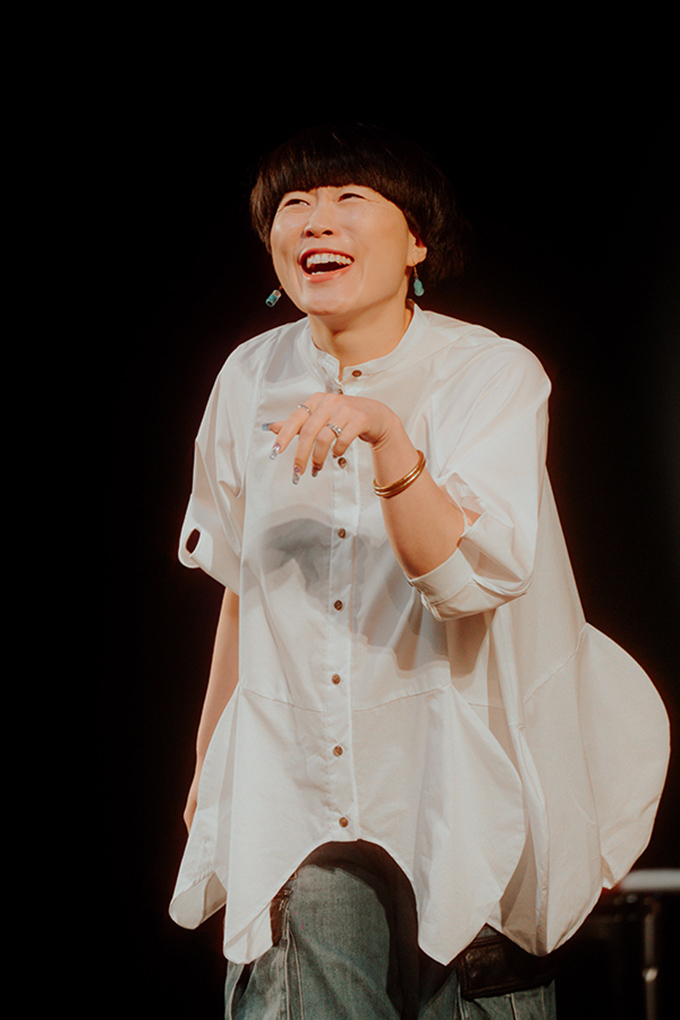
In this regard, stand-up comedian and the industry’s resident lover of whimsy Atsuko Okatsuka has her finger on the pulse. “Comedy has become the people’s art again, and has become even more international because of social media,” she notes. “I sell out shows in places like Jakarta, Taipei, Kuala Lumpur and Tokyo—even Reykjavik and Mexico City! These aren’t typical places that Americans usually go to with English-speaking stand-up. It’s all possible now because of social media.”
View this post on Instagram
For industry veterans like Jessica Kirson, social media is a key to a door that never existed before the proliferation of the internet, much less short-form content. The comic, whose acerbic wit is only amplified by her ‘I’m-too-old-for-this’ vibe, recalls: “We used to only reach out to fans through mailing lists. I’ve been posting videos and content since 2010, which is a long time compared to most comedians.” Ironically, things turned around because of Covid-19.
“I posted something every day during the pandemic. After Covid-19, online content became more and more important to gain fans and get people to buy tickets to shows. It’s an amazing way to grow your fan base, but it needs to be consistent, and the content needs to be strong. Now, comedians can post a good clip—that looks great and is edited well—and they can grow a big fan base from that.”
View this post on Instagram
Unfortunately, in the eyes of the algorithm, not all comedy is made equal. The kicker is in the kind of laughter that’s popular on social media today. Cue the laugh track for ‘crowd work’.
A crowd work performance stands out because the audience is in on the joke, figuratively and literally. Crowd work thrives precisely because the comic ‘works the crowd’, directly asking audience members often mundane questions in the hopes they’ll pull a laugh-worthy moment of magic out of thin air.

The format has exploded in popularity online in recent years—unsurprising given the people-centred dynamic that gives crowd work its wings. “People like raw and realness out of content these days for a sense of connection, and real life crowd work provides that,” remarks Okatsuka. “Also, crowd work creates the ultimate tension-and-release, which is what comedy is!”
In a typical stand-up routine, the comic is in full control: they pose the question and give the answer. However, in crowd work, the comic has the question—and the audience answers. What happens when the answer isn’t what the performer had in mind? All the better for everyone else—all the better for subverting expectations. What makes the format engaging is the comic’s willingness to let fate take the wheel.

One of the most popular comics today is Gianmarco Soresi: lanky, defiantly flamboyant and the comedic equivalent of a special forces sniper. To him, the magic of crowd work is in its spontaneity—and he rarely misses the opportunity to make the most of an impromptu exchange. “You’re able to just capture the magic of a spontaneous moment. I love live improv. It’s really tough to make clips out of it, but stand-up is all kind of self-contained. It just feels exciting. You’re witnessing a high-wire act, and you can get crazy stories.” If you don’t believe him, just peruse his social media accounts for a few minutes—you’ll know that the stories do, indeed, get wild.
There’s nothing quite like it. The audience themselves are the crux (and, at times, the butt) of the joke. Once they’ve bought into that conceit, something truly magical takes place: authentic, spontaneous human interaction. It’s not like the audience isn’t incentivised to take the bait, either. Kirson observes: “I think so many people love good crowd work because it feels like they’re watching a conversation and it’s more organic.”
Crowd work isn’t a new invention, though. Like the best comics on this beat today, Shapel Lacey is a master of observation and navigating the unexpected—his work expertly dances between the boldly brash and the surprisingly sensitive. But because of his time on the circuit, he’s hesitant to label the current craze of crowd work pure novelty.
View this post on Instagram
“Crowd work has always been a thing in comedy,” he points out. “Martin Lawrence was always messing with the crowd back in the Def Comedy Jam days. Comedians have always been doing it. When it comes to the online world, I’ve seen a crowd work moment blow up and I’ve also seen a well-crafted bit blow up. I’ve had both happen and I think both are still very entertaining.”
It doesn’t matter how long you’ve been in the game—live performance is like walking on a knife’s edge. It takes a certain kind of bravery to risk getting cut in the pursuit of laughs. But the same machine that empowers our entertainment—social media—is also what lets many comics feel in control of their work.

“We’re performing for multiple audiences. The binary of performing for the people in the room, and very often performing for the camera and for clips, can detract from your work. It’s almost unfair,” Soresi reflects. “There is a positive, though: you get to control your own destiny. You can be more niche and find people who maybe have the background that would allow you to talk specifically in a way that you couldn’t before.”
Great minds think alike—Lacey has the same outlook. In his view: “We live in a time where the artist has full control over their path. They don’t have to wait for approval from a suit to release the art that they love and believe in.”

Control is a funny thing. While we all crave it, it’s never guaranteed, especially if you’re a comic on-stage putting your reputation (and dignity) on the line. It takes guts to relinquish control, as much as it takes a clever mind to craft a funny bit. Even if a comic’s joke doesn’t land quite the way they intended it to—crowd work can be a toss-up, after all—at least they’ve put their work where it matters: in human hands.