It’s safe to say Michael Jackson has left an indelible mark on this world. An icon in his own right, he had dreamy vocals, enigmatic dance moves and was a sartorial trendsetter, his career immortalised through entertainment, pop culture and beyond. The pop singer constantly broke the mould on what it meant to be a musician and performer. Beyond the melodies, the choreography and the single white rhinestone glove, it was his music videos that were a true game changer.

Once Jackson had a vision, trust him and his team would stop at nothing to bring it to life. That was evident in his music videos as it demonstrated cutting-edge techniques that were ahead of its time. One of his first solo videos ‘Don’t Stop ‘Til You Get Enough’ portrayed the young performer singing and dancing, his figure masked over vivid, abstract backgrounds. In a time before sophisticated editing software existed, it was a pioneer for motion graphics. But it didn’t stop there: his video for ‘Black or White’ in 1991 featured face-morphing scenes at the end, seamlessly transforming one face into another. The nine-minute short film for ‘Remember The Time’ was treated with an array of special illusion effects that teleported the viewer right into an Ancient Egyptian palace.
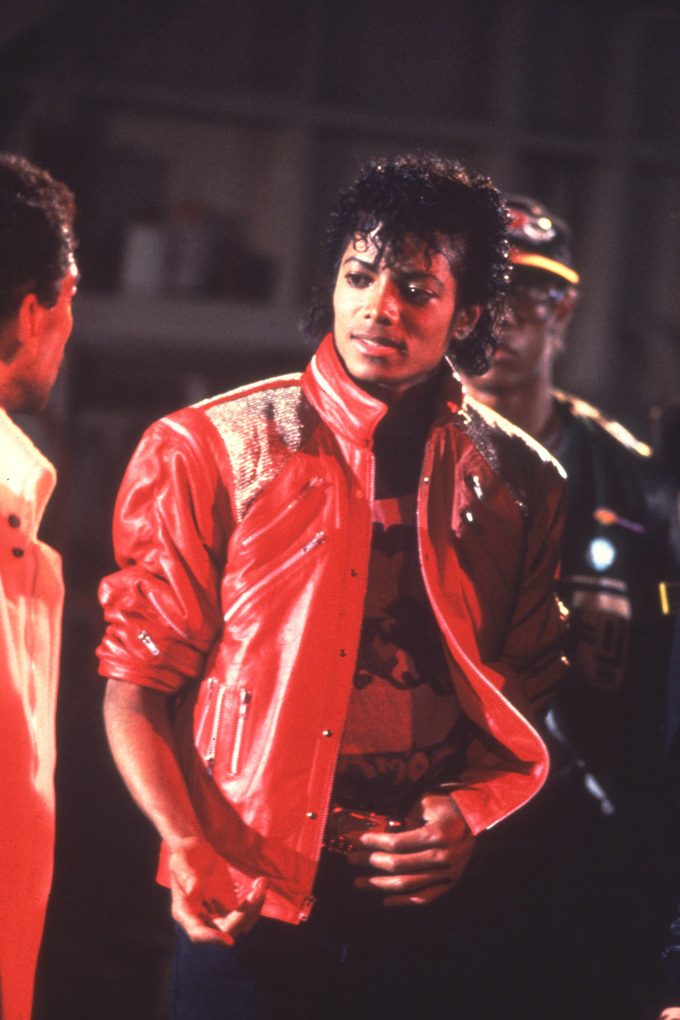
And then there was ‘Thriller’, of course. Timeless, theatrical and a defining moment in pop culture. Jackson worked with director John Landis to create, arguably, one of the most iconic music videos of all time. In all its hair-raising zombified glory, the video’s storyline came to life when Jackson told Landis he wanted to transform into a monster, just for the sake of it. With his commercial success cemented, the work of ‘Thriller’ was creative freedom at its finest, as Jackson experimented with the storyline, choreography, costumes and even camera angles. Every part is deliberate, a clear sign of Jackson’s hand in it.

When Michael was released, I couldn’t help but find myself at the cinema. I was instantly transported back in time, witnessing the production of his tracks and videography in real time. Jaafar Jackson’s portrayal of his uncle was near immaculate, but what I savoured the most going behind the scenes of his music videos was the pure artistry of it all. His creativity knew no limits, and the sheer attention Jackson had to detail was what transformed the traditional music video into an inventive medium. In his eyes, there were no boundaries in performing art. He was known to partner with film directors for his ‘short films’, pulling the viewer in from the first second with star-studded appearances, show-stopping stagecraft and hypnotic moves on stage that seemed impossible (‘Smooth Criminal’ anti-gravity lean, we’re looking at you). The videos were an extension of his music, unleashing his creative direction and potential beyond the lyrics and melody.


Of course, the King of Pop isn’t the only one adept in doing so. The fellow queen Madonna rightfully sits alongside on her throne, her videos going against the grain as an homage to the arts itself, where tenets of film and dance often intertwined. Spotlighting an underground ballroom dance subculture, the ‘Vogue’ music video is still as chic and provocative as ever. As music stepped into the new millennium, Lady Gaga took originality to new heights. Her ‘Paparazzi’ music video is an exaggerated tale of a desperate climb to fame, pulling all production stops. A Hollywood actor appearance, eye-catching costumes and choreography, and a tragic story to tell? Check, check and check. Clocking in at over a billion views, ‘Bad Romance’ is arguably one of modern pop’s most memorable music videos, where the clinical, sterile set design made way for Mother Monster’s signature avant-garde hysteria unfurled in full glory.
Across the other side of the world, music videos echoed a similar language, courtesy of K-pop artists. Within this sphere, music videos weren’t just supplementary to the songs but the crux of a group’s visual identity and concept. From the brooding folklore of ‘Wolf’ to the disillusioned continuum in ‘Overdose’, EXO’s music videos opened the doors to an alternate sci-fi universe, each video a different chapter in the mystical journey the members embarked on. Meanwhile, idols like BTS and G-Dragon were no strangers to symbolism and captivating imagery. The former often referenced literary classics, paintings and philosophies in their videography while the latter layered his videos with allegories that went in hand with his candid lyricism. ‘Coup D’etat’, the leading track from the rapper’s second solo album, captured a dramatic tale of rebirth and the mark of a new era for the rapper. With surreal visuals, crisp dance moves and experimental rhythms, K-pop music videos were truly a feast for the senses.
Artists like them consistently pushed the envelope of mainstream music. Their music videos represented an alternate universe created by the artist that none could replicate. It was vivid, alluring and a breath of fresh air. One click instantly transported you to another dimension, where song came to life and no limit to what the mind could imagine and realise.
Fast forward to 2026, and music videos haven’t been the same. With the current landscape set against a rapidly evolving market shift and the death of traditional media formats, the language of music videos have only evolved. Perhaps it’s the way music videos have become an alternative method to generating revenue, or the ever-shortening attention economy that doesn’t let us sit still for more than 10 seconds. The master formula for getting eyeballs seems to include visually arresting sets, point dance moves and artist face time, but once constantly replicated creates an unexpected homogeny that falls flat.
View this post on Instagram
Is this the end-all be-all for music videos as we know it? There’s still a case to be made. While Jackson or Gaga’s elaborate storylines and cinematic perspective of music videos are now a rare sight, the creative soul remains. The stars of our time undoubtedly inject soul into their work, running wild with all the creative freedom they’ve got. IU’s ‘Love Wins All’ was produced with director Um Tae-hwa, starring fellow idol V as her star-crossed lover against a post-apocalyptic backdrop. Super Bowl star Bad Bunny puts Puerto Rico on the map, his videos leaning into the visual history and culture of his roots.
Sure, it’s no ‘Thriller’, but it doesn’t need to be. The new language of music videos recognises the need for human connection, innovating new ways to make you feel something in the oversaturated world it’s up against. Perhaps today’s era where technology sits centre stage and AI continues to ominously loom over us, is where music videos can thrive best again. It’s a form of artistic rebellion only humans can wield.