With our modern music-listening habits, you would be forgiven for thinking we possess more agency than ever before. There are artists around the world on speed dial at each hour of every day, thanks to music-streaming platforms like Spotify. We have but to lazily extend the tips of our fingers and carelessly swipe at our touchscreens. Voilà, satisfaction guaranteed. However, even as we effortlessly pick our top songs from our Release Radar line-up, perhaps we should ask ourselves: what kind of Faustian bargain of convenience are we accepting in ignorant bliss?
Technology has made our lives simpler and more convenient, streamlining daily life in ways our ancestors could never have dreamt of. It’s also responsible for helping turn parts of our brains off with disturbing ease. Many people think that’s a good thing, but the cost is steeper than you probably think.
Engagement is top of mind for streaming platforms, with algorithms that don’t do your personal taste any favours. Many brilliant musicians are hard to find because they aren’t topping charts. To discover them, you need to dig deep and do the research yourself. There is even a moral argument for properly supporting artists.
Streaming platforms are infamous for paying musicians literal pennies, after all. Beyond that, we aren’t even getting the best audio experience most of the time. Spotify, the world’s most widely used music streaming service, relegates its highest bitrate and audio quality to premium users and requires inordinately large amounts of network bandwidth.
So what are we even doing if the experience of listening to music—in a way that broadens our taste and delivers audio quality—is subpar? Is there a way to have our cake and eat it too?
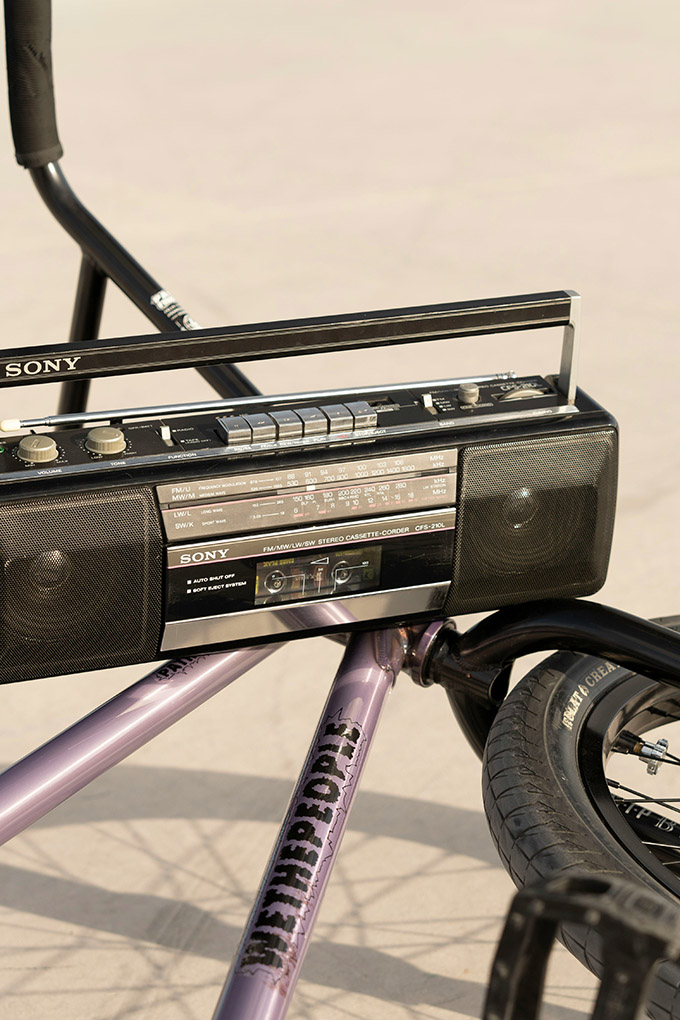
The answer might be one that’s been around for decades. Not to be a Luddite about things, but there is a beauty to tangible objects. There used to be a time when we had to fumble around with physical buttons, holding that Sony Walkman steady lest the car hit a speed bump and the CD skipped a beat. You listened to a record in full, not necessarily because you wanted to, but because you had to.
Even if digital pioneers like the OG iPod weren’t fully analogue, they were self-contained. There was no other choice. You were stuck with all the music you would ever be able to listen to at any given time. And now, more than ever, that might be a good thing.
In a world where we let moments pass us by without a second thought, there’s something special about being forced to sit with an experience for more than a minute, even if cables can be a hassle. It’s a way of listening to and engaging with the music you already know and love, of giving the quest of discovery more meaning than those supplied by faceless, automated suggestions.
So let Vogue Singapore grant you a glimpse beyond the streaming veil. From the physical to the digital, these mediums of listening to music provide a wonderful, new (old?) way to enjoying your favourite artists on the go, removed from the reach of that pesky algorithm.
The (Physical) Primordial
Want to inject your lifestyle with a touch of the tangible? There are plenty of spots around Singapore that are still upholding the sacred responsibility of stocking quality records, cassette tapes and everything in between. Look to Red Point Record Warehouse, The Analog Vault, Curated Records and Roxy Records & Trading.

Cassette tape: The heyday of cassette tapes in the ’80s are long over, but there’s a warm nostalgia to be found in the listening experience behind these chunky cartridges. And there’s simply no denying the immense satisfaction you get from slotting the tape into the player, slapping the housing shut and pushing play.

CD-ROM: Like vinyl records, CDs are back in a big way. Relatively cheap, especially compared to vinyl, easy to store and a great way to show off your music collection—what’s not to love?

MiniDisc: These little known miniature cousins of the hallowed CD never quite hit their stride. Intended to supersede the cassette tape, they struggled to gain traction because of the emergence of MP3 players. Still, there are a few niche communities that continue to champion this format with fervour.
The (Digital) Pioneers
Want to hold on to convenience while ditching the algorithm? Outside of retro options like the iPod and Zune, digital audio players (DAPs) are still produced today, offering far better audio quality than streaming apps.

iPod: The granddaddy of mainstream MP3 players. From the OG iPod to the Mini, Shuffle, Nano, Touch and Classic, Apple’s game-changer set the tone for music players as a stylish, trendy must-have. The iPod’s varied line-up meant there was something for everyone. Maybe there still is, if you’re lucky enough to find one on eBay at a reasonable price.

Zune: The cool kids had iPods. But the cooler kids had Zunes. Bigger screens, better UI and an eye-catching design made these MP3 players stand out from the crowd, even if their users were ridiculed for being hipsters. While Zunes are discontinued, their spirit lives on in the wide world of DAPs that they helped inspire.

DAPs: Akin to an MP3 player on steroids, these devices combine style and higher quality audio at once. The HiBy R4 is a good place to start, though hardcore audiophiles might take to the Astell&Kern SP4000.
The April issue of Vogue Singapore—themed ‘Retrofuture’—is available to pre-order online.