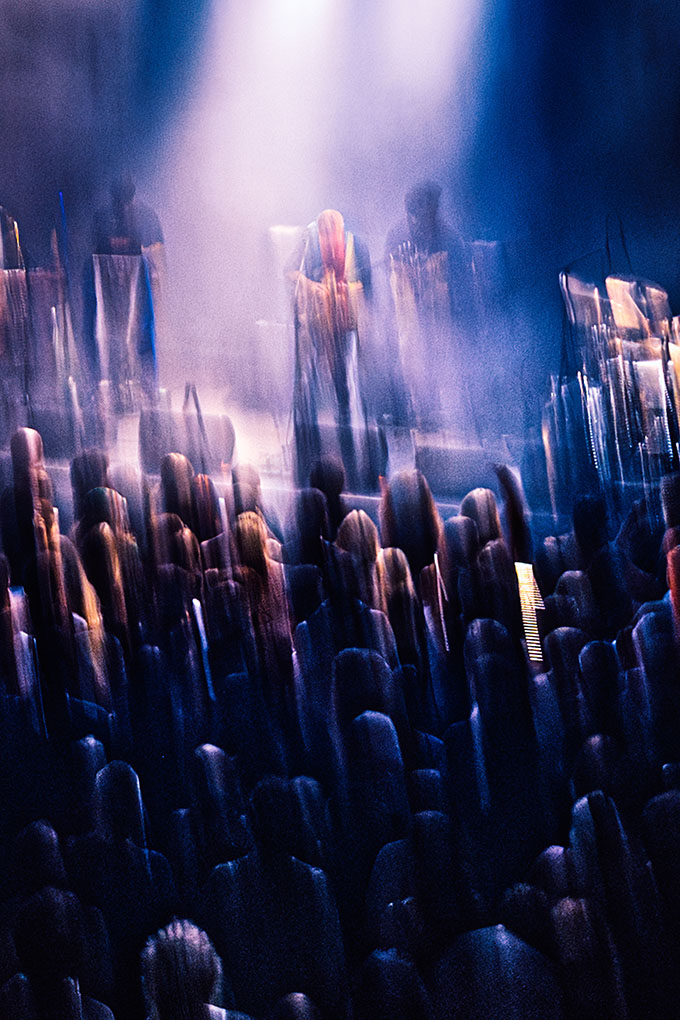
An ocean wave builds momentum and swells, crashing and breaking in sonic ecstasy. The setting sun blankets the horizon with fiery hues, infusing the day’s end with equal parts nostalgia and melancholy. Cosmic dust swirls around a distant heavenly body, emitting a storm of obscure infrared fuzz. When it comes to shoegaze, the metaphor is the dealer’s choice, so long as emotion flows freely and your senses are pushed to their limits. Early practitioners inspired the term by how they hung their heads on stage and glued their eyes to their pedalboards—gazing at their shoes in the spiritual pursuit of aural euphoria.
The subgenre’s sound profile is singular and transportive in its power. Ethereal vocals whisper lyrics that are almost indiscernible amid a tempest of heavily distorted guitars. Volume dials get turned all the way to 100 (and then some) to construct an unrelenting, all-encompassing wall of sound. Shoegaze artists treat effects pedals like a long-lost lover, processing as much of everything as physically possible to overwhelm, enrapture and seduce the senses.
All it takes to see their vision at work is to hit play. As the first notes shimmer into existence, look down to engage in a holy mimetic ritual. Close your eyes and allow your mind, body and soul to float in a boundless sea of deafening sound. In happiness, smile. In sadness, shed a tear. In these moments, nothing else matters. What more could you ask for in music but to fully embrace all the emotions that give shape and texture to our humanity?
The pioneers of this intimate tryst between sound and stage hailed from the UK some 40-odd years ago, rising from the primordial ooze of ’60s psychedelia, ’70s alternative and early ’80s indie. Artists like My Bloody Valentine, Slowdive and Chapterhouse borrowed from predecessor and peer alike to paint an acoustic canvas lush with an uncompromising atmosphere. In the decades that followed, their progeny would grow in abundance and transcend a multitude of cultural, geographical and stylistic barriers. Music is, after all, an art and the rules of art are never set in stone. Just as much as they may be followed, those rules can be warped, shattered and formed anew.
Kick the overdrive pedal into next gear and lean into the screamed fury and aggression of black metal-adjacent artists like Alcest from France, and Sadness and Deafheaven from the US. Or flip the switch and relax on gossamer currents of trebly reverb with dream pop-driven Sunsick Daisy from Australia, Luby Sparks from Japan and The Radio Dept from Sweden. Whichever flavour of shoegaze catches your fancy, the subgenre serves as one of music’s most empathetic and empowering experiences.
Fast forward to today and shoegaze stands at a crossroads. This is no bad thing, however, especially for the once-niche subgenre that was infamous for being ‘the scene that celebrates itself’. In the past, shoegaze musicians would attend shoegaze concerts and shoegaze listeners would argue with shoegaze critics. In some ways, the community felt as solitary and insular as its practitioners looked performing on stage. Now, its popularity has skyrocketed and it finds itself curiously in the limelight.
Social media platforms have given rise to a new generation of shoegaze superstars. Like every artist traversing the endless expanse of the internet, their music is accessible by everyone with a smartphone and 60 seconds of spare time. Virality is always just one click away. For example, 21-year-old San Francisco-native Wisp garnered over three million monthly listeners on Spotify over the span of just two years after her debut single, ‘Your Face’, caught fire on TikTok. It is one thing to go viral, though, and another thing entirely to maintain that meteoric rise to fame.
In an age when everything moves at the speed of light, Wisp and her peers seem to understand that their pedalboards are not going anywhere. They are bringing all their talent, skill and, most importantly, hard work to bear in order to channel the most cherished tenets of shoegaze. Their music still builds momentum and unleashes emotion; they are still creating whole worlds full of space to wander and wonder (best experienced, of course, at full volume). In the mad rush of life, amid all its mundane and magnificent moments, the current crop of shoegaze artists appear to have found the time to sit and seek the quiet moments for inspiration—so they can be themselves and simply rock out to really loud music.
The next chapter
Decades after shoegaze reimagined the extraordinary act of fashioning emotion out of an overwhelming wash of sound, its quintessential spirit endures, well and truly alive. Today, these eight artists are among the many crossing cultures, bending genres and carrying forward the thundering torch of shoegaze.

1 / 8
To See the Next Part of the Dream by Parannoul (Korea)
No one knows the name of this bedroom artist, but he has carved out a special slice of the scene with his disarmingly earnest approach to lo-fi production. Bolstered by his anonymity, Parannoul murmurs, sings and shouts with raw defiance, creating mesmerising soundscapes that are laced with gleaming silver linings of hope.

2 / 8
Cielos Desconocidos by Celest (Mexico)
This four-piece from Mexico City fashions walls of sound through a captivating filter of indie and alternative rock. Singer Florencia Quinteros’ feathery voice frames guitar, bass and drum arrangements that serve sublime anthems, equally at home playing on a quiet summer night as they are blasting through the speakers of a car driving down an open road.

3 / 8
Deceiver by Diiv (the US)
Zachary Cole Smith and company are shoegaze staples for a reason. They have honed their distinct sound to a razor-sharp edge with each successive album, layering thoughtful, emotionally resonant lyrics on a foundation of tight instrumentation. Whether their message leans towards the personal or political, their artistic merit and impact on the scene is undeniable.

4 / 8
Our hope by Hitsujibungaku (Japan)
Before they were featured in the popular anime Jujutsu Kaisen, this trio was blazing a beautiful trail of alt-rock-tinged shoegaze across the Asian scene. Clean guitars with just the right amount of overdrive, fuzz and reverb are grounded in steadfast beats, buoyed by scintillating vocals from guitarist Moeka Shiotsuka and bassist Yurika Kasai.

5 / 8
First Taste of Heaven by Nuclear Daisies (the US)
Unorthodox, but highly effective, Nuclear Daisies’ unique fusion of jungle and post-punk turns the pressure up, flipping shoegaze on its head. Their music would not go amiss in the middle of a rave, with Alex Gehring’s hazy vocals delivering incisive lyrics atop hip-shaking breakbeats—the perfect backdrop to dance the night away in blissful ecstasy.

6 / 8
Beauty Fades, Pain Lasts Forever by Blush (Singapore)
Blush’s attempts to put Singapore’s shoegaze on the map in the last few years have paid dividends. They have made a name for themselves at home and abroad, deftly piloting their blend of jangly alt rock and soothing dream pop. Soffi Peters croons with a tender, yet confident touch, hovering over a latticework of catchy hooks and commanding drums.

7 / 8
The Great Dismal by Nothing (the US)
Founder, frontman and longest-serving member of the band Domenic Palermo harnesses the time he spent in hardcore and punk bands to introduce a gritty one-two punch of grunge and post-rock to his production. The resulting mix lays heavy on the ears—dark, gloomy and at home with the very best of shoegaze.

8 / 8
If Not Winter by Wisp (the US)
For one so young, Wisp’s grasp of shoegaze’s sound is ambitious and self-assured. It resists formulaic imitation with a degree of awareness that belies her youth. Everything here is textbook shoegaze masterfully reworked for a modern audience, conveying heartfelt vulnerability with each soaring melody and every soulful lyric.