What’s better than being jump-scared? Being jump-scared with relatable characters, first-rate storytelling and a world that genuinely feels like you’re a part of it. When a horror film nails all of these aspects of storytelling, it’s more than just an example of excellent horror—it’s simply an example of a really good film. Sure, it’s been a big year for cinema in general, from The Odyssey to Digger and back, but oh, the horror… Let’s just say: spooky film buffs have been eating good in 2026.
Of all the myriad genres that have graced the silver screen over the years, horror is perhaps the most misunderstood. Don’t get us wrong, it’s understandable—most people don’t like having the socks scared off of them, much less their bowel movements messed with. But true horror, the kind that creeps up on you, that builds suspense and unnerves the senses without having to rely purely on the gimmick of jump scares (not that the occasional scare isn’t welcome): that is the genre at its very finest.
In many ways, horror is one of the genres best suited to passing commentary on the human condition—society at large, as well as our politics and relationships. It peels back the facade of safety and security we all cling to in our daily lives. It unravels our understanding of what’s normal by giving us the opportunity to gaze into the dark recesses of the abyss—and forcing us to see what gazes back. Being scared is very much the point: what better way to ensure the audience really, truly thinks about what makes people tick, shiver and squeal?
Whether it’s a zombie flick like 28 Days Later: The Bone Temple or Resident Evil, or an engrossing journey of the more occult, supernatural variety—think Hokum or Teenage Sex and Death at Camp Miasma—these are the kinds of films that burrow deep into our psyche, lurking in the backs of our minds long after the credits have rolled. The genre isn’t going anywhere, either.
The next generation has picked up the torch left by the likes of The Exorcist, Alien and The Thing with a gusto. Just look at what YouTubers Curry Barker and Kane Parsons have done with their directorial debuts—both Obsession and Backrooms, respectively, occupy the number one and two spots on the list of highest-grossing horror films of the year.
If you want to dip your toes into the murky waters of the horror genre, but aren’t sure where to start, never fear. We’ve rounded up the best horror movies of 2026 below—read on, grab a bucket of popcorn and get ready for the thrill of a lifetime.

1 / 8
Obsession
From the mind of YouTuber-turned-director Curry Barker, Obsession is a picture-perfect showing of how comedy and horror are merely two sides of the same, very human coin. On the surface, it’s a straightforward tale of adolescent love—boy Bear finds himself in the wistful throes of love with girl Nikki. What lengths would he go to ensure the spark catches fire? As it turns out, quite a lot. The downward spiral into supernatural madness all starts when he calls upon a mysterious ‘Wishing Willow’ to turn his heart’s desire into reality. His selfish actions, though, have disastrous consequences, and the tables get turned on him in quick order. The real question ends up being: what lengths would Nikki go to be with Bear? Much, much more than you might think.

2 / 8
Teenage Sex and Death at Camp Miasma
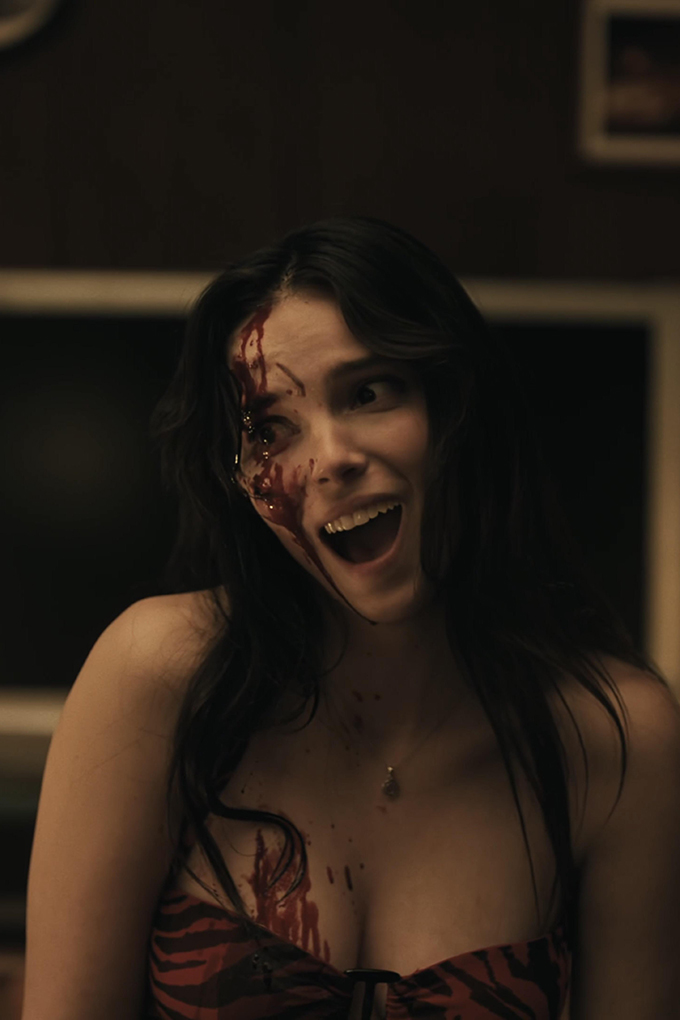
Directed by Jane Schoenbrun, Teenage Sex and Death at Camp Miasma opened to overwhelmingly positive reception at the Cannes Film Festival—and no wonder. In the movie, in-world filmmaker Kris, played by Hannah Einbinder, is tasked with rebooting an old-school slasher franchise from 1983: Camp Miasma. The star actress she has in mind? Billy Presley, played by the incomparable Gillian Anderson, who acted in the original ‘80s film. A gripping story of sexuality, terror and the blurred lines between fantasy and reality, Teenage Sex and Death at Camp Miasma is a riot in every sense of the word. Its content is not for the faint of heart—slasher films rarely are—but the intensity with which it tackles its themes makes for a riveting watch.

3 / 8
Resident Evil
Even if you’re a fan of the original Resident Evil film adaptations from the noughties—and who doesn’t love Milla Jovovich kicking undead butt?—you’ve got to admit: they weren’t exactly ‘high art’. Director Zach Cregger’s latest effort to breathe filmic life into the franchise looks to turn the ship around, and by all accounts, he’s done it. Like all of Resident Evil’s showings, across video games, films and television shows, Cregger’s work centres on a single protagonist—in this case, medical courier Bryan Hodukavich. His is a lonely, terrifying journey to deliver a critical component to the cure for a mutant outbreak, full of plenty of exhilarating practical effects and Easter eggs referencing beloved moments from the video game series. Oh, and lots of blood and gore, because of course.

4 / 8
28 Years Later: The Bone Temple
Speaking of classic zombie flicks: Danny Boyle’s original 28 Days Later, released in 2003, saw its fourth instalment wow audiences earlier this year. Directed by Nia DaCosta and written by Alex Garland, The Bone Temple sees Spike from the film’s 2025 prequel, 28 Years Later, inducted into a satanic cult led by none other than Jack O’Connell (the English actor will never escape the beautifully magnetic villain allegations). Spike’s journey in a world grown increasingly chaotic from the Rage Virus epidemic is equal parts frightening and emotionally compelling—full of just enough human tenderness to offset the ample bouts of bloody violence. Also, we’d be remiss if we didn’t point out that Ralph Fiennes’s performance as Dr Ian Kelson is simply stunning.

5 / 8
Hokum
Damian McCarthy’s Hokum is pure, unadulterated supernatural fun—ghosts, witches and all. Adam Scott of Parks & Recreation and Severance fame plays Ohm Bauman, an author struggling, and failing, to finish his latest trilogy. Fast forward to rural Ireland and Bauman finds himself staying at The Bilberry Woods Hotel. Initially spurred to visit the location where his parents’ honeymoon took place after encountering the ghost of his mother, the author’s troubles begin in earnest after one of the hotel’s staff goes missing. The ensuing chaos sees Bauman placed at the centre of a murder mystery, replete with eerie visions, terrifying chases, a local itinerant flush with milk laced with magic mushrooms and the property’s resident witch.

6 / 8
Backrooms
Curry Barker isn’t the only social media wunderkind to make their starry-eyed debut in 2026—YouTuber Kane Parsons wowed audiences earlier this year with his thrilling film inspired by 2019’s viral creepypasta phenomenon ‘The Backrooms’. Originally envisioned on 4chan as a series of extradimensional rooms, the meme took off because of its uncanny ability to tap into one of our most primal fears: there’s just something about an empty hallway in a deathly quiet hotel that triggers our flight-and-fight response. Parsons’s film of the same name, Backrooms, takes the notion and gives it wings on the silver screen, unnerving audiences around the world with more liminal spaces than you can shake a stick at. And before you ask: yes, it was produced by A24. No surprises there.

7 / 8
Never After Dark
Japan boasts centuries of rich folklore and mythologies, which means it’s about as fertile a plot of land to sow the seeds of horror as it gets. The latest reason to believe they’re on a different level when it comes to this genre comes courtesy of director Dave Boyle and his film, Never After Dark. If you’re a fan of spirits, apparitions and haunted houses, buckle up: this one’s a doozy. The protagonist of this chilling tale is Airi, played by Moeka Hoshi (Usami Fuji in Shogun) a psychic who helps the restless spirits of the dead move on from the material plane. Unfortunately, Airi gets more than she bargained for with her newest client, whose abode in the vast forests of Hokkaido is stalked by the presence of a particularly troublesome poltergeist. Who doesn’t love wrestling with the cycle of life, death and what comes after?

8 / 8
You Can See Everything
Look, we know, this probably isn’t what comes to mind when you think of what traditionally counts as ‘horror’, but hear us out: the lies peddled by private corporate executives and the rampant, rising cost of healthcare are, in a very real way, among the most horrifying realities of our modern times. We can’t think of a person better suited to the task of bringing it all to light than social experimenter and deadpan satirist, Nathan Fielder. Extraordinarily, somehow, Fielder received unfettered access to former Theranos CEO, Elizabeth Holmes, in the weeks leading up to her 11-year prison sentence, which she was given after defrauding investors. The following 174 minutes of documentary footage serves as the clearest, most bizarre and unsettling example of the adage, ‘truth is stranger than fiction’.