Tigers Jaw has always occupied a strange spot when it comes to genre conventions, slightly off the beaten path of what most people might consider ‘emo music’. Yes, the five-piece band from Scranton, Pennsylvania (yes, that Scranton of The Office fame) are technically a pioneering member of the fourth-wave emo movement, following the third-wave footsteps of noughties acts like My Chemical Romance and Paramore. And yes, their music is very, very emotional. But hear me out.
Unlike many of their peers, who have either disbanded—rest in peace, Title Fight—or drastically changed their sound over the years—nowadays, Turnover is more dream-pop than indie rock—Tigers Jaw have done the remarkable: ever since they released their debut album 20 years ago, their music has, more or less, remained the same. They have stayed the course, through all the crests and troughs of a volatile music industry; and all the uncertainty of an internet increasingly driven by faceless algorithms.

This isn’t to say they’ve cruised, stagnated or, god forbid, thrown in the towel. Far from it. Rather, the work of guitarist Ben Walsh and keyboardist Brianna Collins, both of whom contribute vocals and are the only two remaining members of Tigers Jaw since its inception, is one of slow, steady consistency. The duo’s work are the efforts of musicians who know what they want, and are more than happy to stick to their guns, boldly and unapologetically.
Their newest record, Lost On You, released earlier this March, is crystal-clear evidence of the efficacy of this approach. From start to finish, it’s all simply more Tigers Jaw—more mature, sophisticated, refined, focused. Where a band like Citizen pulls people in with upbeat tempos, catchy hooks and dancefloor-worthy choruses, Tigers Jaw keeps listeners close with heartwrenching melodies that boast plenty of space between the seconds, and deeply philosophical lyricism that wouldn’t look out of place in a contemporary poetry collection.
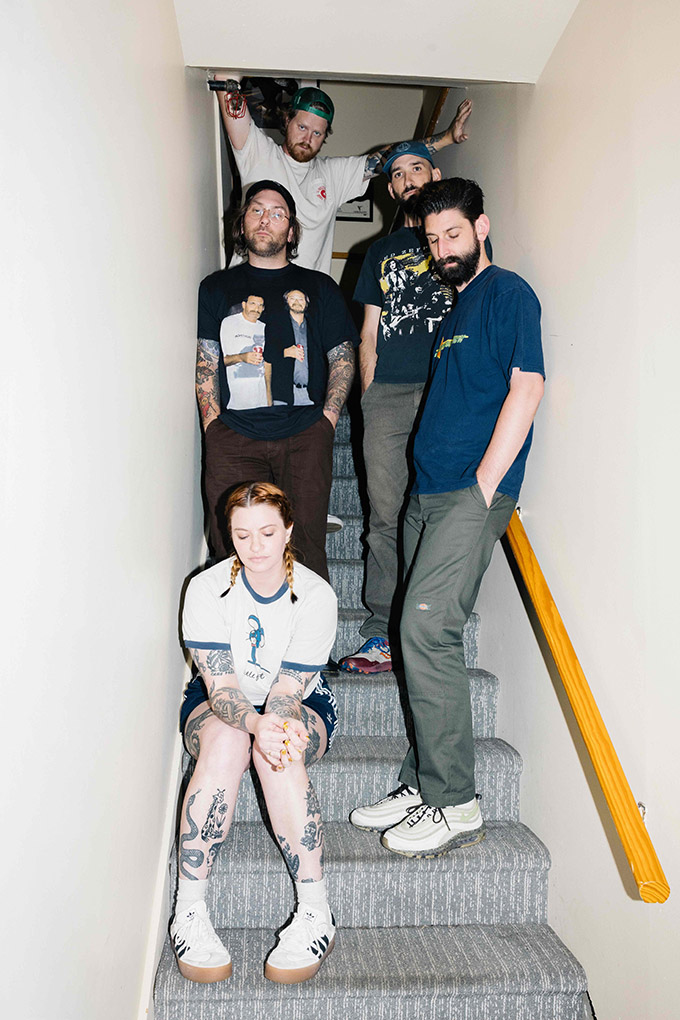
On one hand, the band still feels like the same, scrappy hometown-hero outfit it was all those years ago; but on the other, it’s impossible to deny that they’ve matured over the years. The band’s roster is its largest to-date, with Walsh and Collins now accompanied by drummer Theodore Roberts, bassist Colin Gorman and guitarist Mark Lebiecki. And it certainly helps when your long-time collaborator is a Grammy-winning staple of the indie rock scene.

Lost On You was produced by industry veteran Will Yip, who worked on the band’s last three records—and his expert touch is noticeable from the get-go. The guitar tones are warm and full, the snare drum’s punchy without drowning in compression and Walsh and Collins’s voices simply soar, cutting through the mix like a hot knife through butter. The result is a thunderous sonic package equally at home playing on a humble desktop system as it is booming out from massive stage monitors.
Speaking of the stage: the local emo crowd ate good just a scant few days ago at the Foochow Building, where Tigers Jaw played its first-ever show in Singapore. I had the privilege of sitting down with Walsh ahead of their concert, where I picked his brain on playing in Southeast Asia for the first time, what makes their new album stand out from the rest of their work, and why, at the close of 2026, hope is more important than ever before.

Thank you so much for coming to this side of the world and performing in Southeast Asia. What’s going through your mind?
It’s just mind-blowing. Growing up, my family never really travelled—I never needed a passport until I started touring. We’ve been to some far-away places before, but never to Southeast Asia. It’s never worked out for us financially. It’s a long way away, and a tour here requires a lot of logistical planning. So it’s really great to have promoters like Blacklisted Productions and PR like Secret Signals willing to take that kind of risk on a mid-level band, you know?
For me, I don’t know what type of reach we have in certain places. So coming all this way and hearing people say that they’ve been listening to us for more than a decade…it’s just mind-blowing. It makes the world feel a whole lot smaller, and it’s just really cool to connect with like-minded people here.

If you had to describe Lost On You in a word or phrase, how does it represent the band Tigers Jaw in 2026?
I think ‘energy’ would be the word. We approached the record trying to replicate the live energy of the band. On other records, we’d do things one instrument at a time, and simply layer them. Sometimes, that works perfectly. This time, though, we wanted to basically live-track everything from the start.
We kept what felt right, and then overdubbed what made sense to overdub. We ended up keeping the live drum and bass tracks—the rhythm tracks are these core live performances. But it was just more beneficial to have more control over things like guitar tones, not having to rely on switching out guitar pedals in the studio, tweaking different levels and stuff. So it was like getting the best of both worlds, having studio control over tones but also having the energy of a live performance, with all of us in the same room. I think this batch of songs really lends itself well to that style of how we captured it.

And it definitely shows! It’s not Will Yip’s first rodeo with you guys—you go together like butter on bread. It’s incredible. How has your relationship with him grown over the years?
We’ve become super close friends over the years. We even became fathers within a week and a half of each other. Going through all these cool life experiences together—it’s awesome.
The first record he did with us was Charmer, in 2014. He wasn’t involved in any of the pre-production like songwriting, he just engineered the record, which we made in just a few days. Comparing that process to now, it’s a night and day difference. We spent a few weeks together just on pre-production: playing through the songs, pulling them apart, analysing everything. We only started actually tracking some weeks later, and he was involved in the actual creation of the songs. He was there in the room while we worked through everything, contributing as one of us.
Will’s got this really good intuition for what feels good within the context of the group that he’s working with—he becomes like a chameleon, detecting what’s needed in any given situation. So yeah, he’s grown with us. He knows us really well as artists. When he contributes an idea, it’s from as genuine a place as any of us in the band.

Life in 2026 is just really, really hard. What would you want your listeners to take away from Lost On You as they try to live their lives the best they can in this crazy world?
The record is very introspective. It’s about checking in with yourself, not just in the present, but also with various iterations of yourself over time. Throughout the album, there’s this element of hope—or at least I always try to instill this element of hope (some songs have it more than others!). I would wish that that hope becomes something tangible, that our music can offer listeners some sort of light they can work towards.