Trigger warning: Mentions of disordered eating and addiction
Moon is clinging to her glory days. A former C-list actress refusing to leave Hollywood, she remains tethered to many things: her reality is bound within the industry that made her visible as a first-generation, Gen X immigrant; her star power is inseparable from her sex appeal, or rather, her sex appeal as an Asian woman; and, her current survival relies on Stevie, whose role oscillates between caretaker, manager, nemesis, and, almost incidentally, daughter.
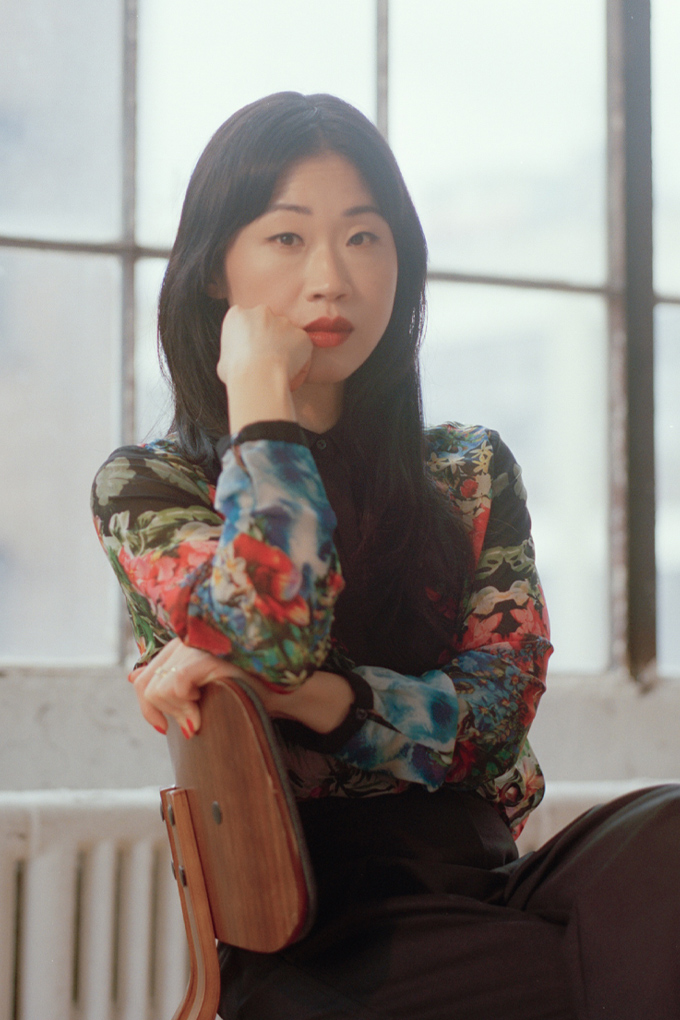
The treatment of Moon and Stevie in Mary H.K. Choi’s adult debut novel, Pool House, is a hilarious, devastating unfurling of familial dysfunction on the fringes of Hollywood—“boring heaven”, as Choi calls it. The novel playfully punctures celebrity culture, C-lister drama, and its effects on the people who live at its fringes; exposing the strange emotional economies that underpin Hollywood, an industry so often mistaken as the apex of human existence. Few writers are better positioned to dissect the celebrity machinery than Choi. As a journalist, Choi has been embedded at the heart of celebrity culture: profiling Rihanna from her private jet, ghostwriting DJ Khaled’s first book, and brunching with Zac Efron at Chateau Marmont, among other surreal moments.
The writing in Pool House is razor sharp, which makes its emotional terrain all the more sticky and claustrophobic. One of the most exciting aspects of Choi’s writing is her capacity to create flawed, believable characters—people—who are as messy and emotionally volatile as they are beloved. She relentlessly dwells in the discomfort of her characters’ flaws, and this is exactly what renders even the most absurd or vapid moments of Hollywood life relatable.
Choi is someone who has experienced a lot of life, and continues to do so. The commitment to emotional honesty on the page is an extension of Choi’s own. Her vulnerability and strength about the guts of it all is refreshing; from her bulimia to autism diagnosis when writing Pool House. “By and large, let it be known that I am a safe space to talk about these things. It’s really vital to me. It’s why I loved writing in the YA space for so long. As I write in the future, I do think that there’s always going to be a hat tip to people who might need support in some way.”
In conversation with Vogue Singapore, Choi spoke about the double-edged sword of the popularisation and subsequent pigeonholing of Asian identities, as well as the cultural iconoclasts that informed Pool House.

This book is entangled with celebrity culture, and is hilarious as satire, as caricature, whilst simultaneously being very real and grounded. As a journalist yourself, did this method of documenting celebrity culture happen naturally, or was it intentional?
It comes incredibly naturally to me—because there’s something so intrinsically unnatural about it. I find it really, really fascinating because it’s not like these celebrities are meeting me and being themselves either. There’s always this agreement, a little bit of a lie or fallacy, where they’re like, “This is who I really am, so let’s eat together at this hotel that I totally don’t live at.”
I’ve worked out with Demi Lovato, I’ve had brunch at Chateau Marmont with Zac Efron, or I had lunch with Khloé Kardashian at the Polo Club, and then I ghostwrote DJ Khaled’s book. Or I was on a world tour with Rihanna. None of these things are like, Rihanna at home. None of these things are any of these people doing a thing that isn’t specific to their job of being a celebrity.
I like the artifice in that, and determining what seems like a passable enough truth of who this person is, and negotiating how much they want to give us, the audience, parasocial relationships, and how much we project on them.
All of that, to me, is this dance that I’m endlessly fascinated by. I’ve always been interested in fandom, fan armies, things like that. When I was diagnosed as autistic in my 40s, I realised this is why I’m obsessed with behaviour patterns. I do think it came naturally to me in terms of my interests. And then later, it made more sense that it sort of came where that interest came from was something that I didn’t necessarily really know about at the time.
As you say, you didn’t meet these celebrities in their non-celebrity state. So is Moon based on your observations, or simply a fantasy?
It’s an interpretation of a lot of different people. Moon is an amalgam of Margaret Cho, Sandra Oh, anyone who is an iconoclast in their time. The model off-duty in a Fae Wong way. That was an aspect of her that was drawn from a lot of pop cultural touchstones. I think it’s culturally significant to any East Asian person looking at pop culture over the years and our contribution to it, before and after this huge wave of Korean soft power, with K-pop, K-beauty, K-dramas. Some of it is a question of who Moon is, as a Gen X person who had so little of that in America.
View this post on Instagram
I feel like the Asian ethnicity has gone through this weird transition, going from COVID-era hate to suddenly being cool that people now want to be Asian. What was your perspective, as someone who witnessed it?
Cool, but it’s still incredibly othered. There was a point at which I interviewed Lucy Liu at her studio a few years ago … she’s incredible. It was incredibly intimate to be in her space because she’s so private in many, many ways. Lucy Liu definitely informed Moon’s career trajectory, but also what she was capable of doing in her career, with how few Asians are generally on any call sheet.
I asked, how many of the previous interviewees have you gotten where they were all Asian? And she was like, a lot of them, but it’s a recent thing. The number of people who asked me—near exclusively—to talk to Asian, specifically Korean women, and I’m happy to do it, but I’m a little bit like it’s odd to me that nobody, given my 20 plus years of experience, would ask me to interview Christopher Nolan.
On one hand, what a luxury, what a blessing that there are so many of us now that we can assign an Asian writer to an Asian actor. But a little bit, I wonder if that limits both of us in a sense, and I’m incredibly aware of that.
Increasingly, there are times when people are like, “Hey, you speak Korean, right? You can just talk to this K-pop person.” I do speak Korean, but it’s actually so fucked up for you to presume that I speak Korean, right? It’s also really fucked up that you’re clearly punting this to me. If you don’t ask me to interview at least some non-Korean people, I’m gonna feel some type of way about this. That’s the double-edged sword.
Very honestly, I was considering whether I even wanted to ask you a question in relation to the first-generation Asian identities in the story—because I didn’t want to take away from how great the book stands without that aspect.
It’s interesting. I’m glad you asked because it gives us the opportunity to have this conversation, which is vital. It was very much an intention of mine to make both Stevie and Moon’s identities, specifically as it relates to being Asian, as almost being incidental. I started writing a new book, and I was just like, “Is this person Asian?” To me, they are. At a certain point, it’s an interesting exercise to leave someone ambiguously dark-haired and dark-eyed.
But that’s why I loved Pool House—all these nuances were clear to me as a reader. The protagonist, Moon, also has the implicit self-awareness that her lore had to do with her ethnicity, and that itself was so entangled with sex.
I mean, who in that position doesn’t know? Who in that position hasn’t both weaponised it, and been poisoned by it?
There’s the tainted groundwater of this, which infiltrates Stevie’s idea of herself, her own merit, and causes her to hide and then become more overt—all of that is profoundly relatable. At one point, there was this question, “Does [Moon] have to be famous? Couldn’t this be with any attractive mother?” Of course it could, but I’m coming at it from a tradition of like, Mildred Pierce—but I thought there was more pathos involved in her power, in being predicated on other people giving it to her, and the fickle aspect of that. There’s an innate powerlessness in an actor who does not write or direct their own material, where they’re just waiting.
It’s like the bludgeoning feeling that I get whenever I’m in LA, where it just feels like waiting. Each day feels like a repetition of the day prior, and that purgatorial thing of waiting was just incredibly attractive to me.
It feels like a nonfiction essay at times, a documentation of pop culture within a piece of fiction. When you’re documenting these subcultures and your observations of LA, did your background as a journalist influence how you wrote about them?
That’s a huge compliment, because I think that that would be my dream. I am a faster writer when it comes to nonfiction. I do recognise patterns or pick up things in an incredibly autistic way, I will recognise from the back whether or not you’ve had a haircut, even though I’ve only seen you once before. Maybe I’m hearing an accent, but I’m also hearing quite a concerted effort to hide that accent. All of this data comes in. It’s some of my favourite writing when I read a short story that I thought was an actual article.
View this post on Instagram
Since your autism diagnosis, or maybe even before that, have you found that the characters you write have neurodivergent qualities? Simply because that’s your norm?
I had this moment in year three of writing Pool House, because it took five years to write—which was abnormally long for me—when I was diagnosed autistic. I had this moment where I was just like, “Oh my god! Like, what if my characters are autistic?”
What does that actually mean? Does it mean no one’s gonna identify with my work unless they’re autistic? Like all of this shit. I was just like, their world is autistic. This character is autistic. That character is also autistic. Do they all sound the same? I just got really tripped up in that. There’s an autistic Irish writer named Nisha Dolan, who wrote Exciting Times. She was speaking on a panel with a friend of mine, Maeve Higgins, who is an essayist, brilliant comedian, and podcast host.
Dolan said she loves that all of her characters are autistic, and she never once questioned that they were autistic. Not only are they autistic, but the world they walk around in is also autistic. I thought that was such a beautiful sentiment. I no longer had to worry about my characters being autistic, because their world, too, would be autistic. It was really comforting, and moved me to tears. It really gave me reassurance to continue on.
How did your real-life experiences influence Pool House, and its intersections between diary, fiction, non-fiction? How does this all intersect for you, in your head?
That’s a really interesting question, and it’s not one that I’ve really interrogated. In the specific example of Pool House, when my dad died, there was suddenly a patriarch figure in the book who also dies. I’d already been writing this book for a few years, and I had absolutely no choice in that becoming the central inciting incident for a book that I’d been planning for so long. That was very much to sort of process that loss. I asked myself a lot of questions when my dad died because, in many ways, we weren’t close. I had to really reconcile questions that arose around how much I was entitled to missing him. All of those questions I gave to Stevie were so I could work out my own feelings, and maybe that’s the type of writer that I am.
What you said reminded me of this Joan Didion quote from her essay, Why I Write: “I write entirely to find out what I’m thinking, what I’m looking at, what I see and what it means. What I want and what I fear.”
I never liked writing as a kid, even in my early 20s. I was a big reader though, and I loved disappearing into books. I was an incredibly dissociative reader. In hindsight, I think it was a trauma response.
I hope to have enough opportunities to keep that record whole enough that when I die, I’m like, oh yeah, babe, you had a lot of life. Being time blind is an aspect of my ADHD, and so I genuinely have blacked out whole decades. Writing becomes that reminder of where you were, which is exciting to me—especially as someone who doesn’t have children, like acknowledging the terror of mortality, while reassuring myself of how completely pedestrian that is. It’s so unremarkable that I’m going to die.
The part of the Joan Didion quote that really resonates for me, is that I’m almost having a seance with myself [when writing]. Part of my neurodivergence is that I’m not always aware of what I’m feeling, and I’m disconnected enough for my body that even something really obvious like pain doesn’t register in the moment, depending on how hard I’m masking, or how overwhelmed I am by whatever the conditions are. The reason why I love writing is because it is in some ways, a journal of what I’m thinking, and a record of how I’m changing.
View this post on Instagram
Is there a separation between the versions of ourselves that are perceived by others and by ourselves, and what was it like portraying that for Stevie and Moon in Pool House?
I mean, I’ve been in so much therapy, and so many different kinds. I’ve done integrative practices, hallucinogens, and the [traditional] therapy format. Some of the relationship between Stevie and Moon is my relationship with my mother, and I think a lot of women, daughters, women of colour, immigrants—anyone, really, can relate to this. After a certain point, if you will never have your parents’ approval, what happens if you have to give that approval to yourself?
It’s a relationship between me and my younger selves, and the parts of myself that I’ve exiled or had powerfully uncharitable thoughts towards. I’m ashamed of [parts of my life] and I’m exiling them, because I was a fat kid growing up. In my early 20s, I was incredibly ambitious—and incredibly toxic and irresponsible. I exiled that part too. A lot of this was the conscious acceptance and reintegration of these other versions of myself, and loving and appreciating them. That fat kid saved my life. Bulimia saved my life. Addiction to other things saved my life. It engaged me long enough for something to change, so that I could appreciate actually being here.
That was the feeling of Stevie waiting for Moon, her mother, to hard launch their relationship, where it’s like “Own me, claim me, be proud of me.” Not to sound woo woo, but how much right do I have in saying that to my mother, if I cannot do that for myself? It’s about hard launching the 12-year-old fat kid version of me, and having profound respect, appreciation, and humour for that version, and not just compassion.
Like: “Man, you saw some shit, and that fucked us up. You put on a lot of armour and you got through it. Congratulations! It’s a hero’s welcome! Wrap yourself up in one of those silver blankets, that was heroic.”