What happens when there isn’t a bad guy in the breakup? No betrayal, no dramatic fallout? Sometimes relationships are doomed long before we even realise it. No singular moment you can pinpoint when somebody asks what went wrong, but rather a series of miscommunications and small fractures that are only visible in hindsight. Before you know it, you are sitting on a bench across from your partner, about to have that conversation, and the two of you have no idea how exactly you got there. This unraveling is the making of the doom-rom.
Romantic dramas have always been around. Tragedies, too. It would not be remiss to say that Shakespeare had been writing heartbreaks long before the term “chick flick” was ever coined. But unlike the sweeping theatrics of Romeo and Juliet or A Midsummer Night’s Dream, the doom-rom’s heartbreak lies in its subtlety.
For decades, love has been sold as fantasy: soulmates, grand gestures, happy endings complete with the coveted relationship glow. Now, in an era of dating app fatigue, situationships, curated Instagram intimacy and a distinctly Gen-Z strain of emotional cynicism, romances on-screen are also shifting away from idealism. Visually, too, these films often reject hyper-stylisation, but rather coloured with a similar melancholy that also foregrounds these relationships. From 500 Days of Summer, Eternal Sunshine of the Spotless Mind and Comrades: Almost A Love Story finding renewed cultural relevance, to newer releases like The Drama or Past Lives pushing the sub-genre firmly into the zeitgeist, the doom-rom has become the defining love story of the moment.
It’s not about singing the mantra that love doesn’t conquer all, but providing catharsis for the relationships that ended with an slipped through the cracks. The ones that did not work out the way we wanted, the ones that almost did, and the ones we let slip away through our fingers. These films remind us that when we lose something, we might gain a little something back in return—Nora mourning the life she did not live with Hae-sung in Past Lives is precisely what allows her to recognise the life she chose with Arthur.
So here’s to the doom-rom. Spoiler alert: they do not have happy endings.

1 / 6
The Drama (2026)
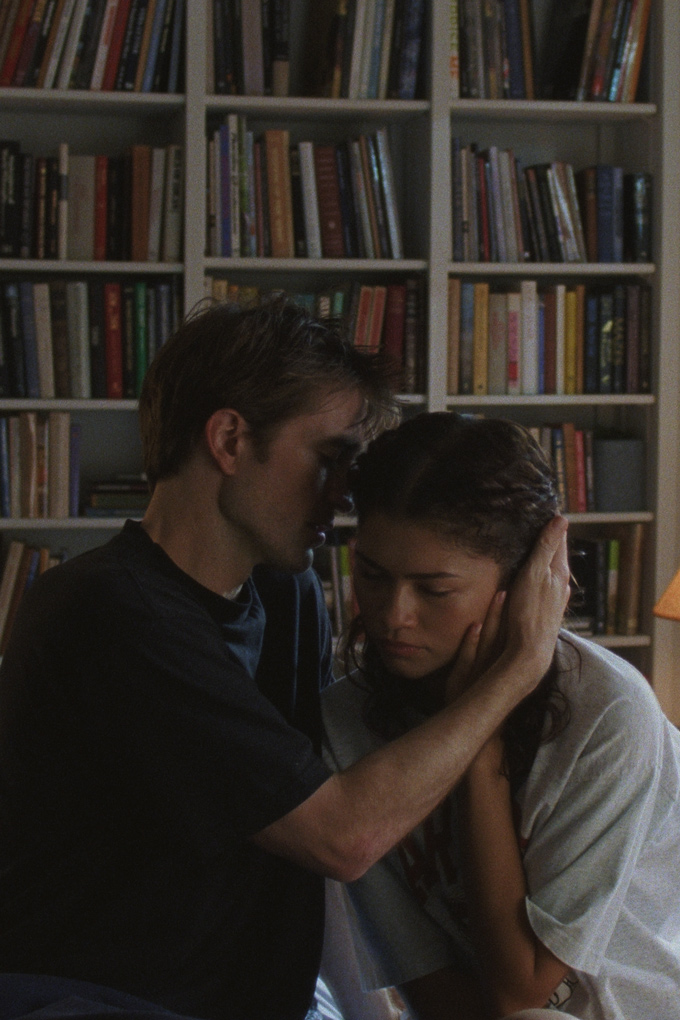
What happens when the person you are about to marry suddenly feels like a stranger? The latest from A24, Zendaya and Robert Pattinson play a couple whose world is rocked right before a wedding, after a revelation throws everything they thought they knew into question. He’s the curator for a university, she works at a bookstore. They meet at a café where Pattinson’s Charlie fashions a Goodreads pick-up line based on the book Zendaya’s Emma is reading. It’s the meet-cute of meet-cutes—until it isn’t. Get ready for some unlikely big laughs, anxiety-inducing dramatic conditions, and excellent supporting cast performances. At its core, it’s a film about human fallibility, and still being accepted and loved by the ones we hold dear.

2 / 6
Once We Were Us (2025)
When a chance encounter leads two former lovers to reunite on an airplane a decade after their relationship ended, is it fate or are some things better left unsaid? As the pair revisit old memories, the film explores the distinctly painful question of whether revisiting the past can ever truly lead to closure. Sometimes letting go of a first love isn’t a one-sided decision, but a mutual agreement which hurts all the more. Tender and melancholic, this is one of those films that lingers long after the credits roll.

3 / 6
One Day (2024)
Based on the film of the same title, this Netflix adaptation stars Ambika Mod and Leo Woodall in an addictive friends-to-lovers pairing as their lives orbit one another across 10 years. Structured around one day each year, the series stretches emotional tension across years rather than weeks—from respective relationships, one night stands, and even a brief 15 minutes of fame—as the pair’s lives weave in and out before finally coming together in a slow-burn that makes it impossible to not be invested.

4 / 6
Past Lives (2023)
Celine Song’s semi-autobiographical directorial debut is nothing short of bittersweet, as two childhood friends-turned-lovers find each other again via Facebook. The film follows Greta Lee’s Nora and Teo Yoo’s Hae Sung reconnect during one fateful week in New York City, despite Nora now being married to another man. Restrained and deeply introspective, the pair are forced to confront the versions of themselves—and each other—that never came to be. The minimal romance makes the film all the more painfully poignant—and it is almost frustrating to witness every character carry such a considerate stance of the situation at hand.

5 / 6
La La Land (2016)
Is there such a thing as right person, wrong time? This is precisely the dilemma of La La Land. Emma Stone and Ryan Gosling reunite on screen as two people who are seemingly perfect for each other for a moment in time—but forever belonging to different futures. The film’s narrative follows the couple’s whirlwind romance, and inevitable heartbreak—and yet, despite the ups and downs thrown their way, the pair are kind and sincere in their love for each other, which is exactly what makes this as beautiful as it is bittersweet.

6 / 6
You Are The Apple Of My Eye (2011)
What begins as youthful teasing, adolescent awkwardness and an opposites-attract romance slowly transforms into something far more bittersweet in You Are the Apple of My Eye, Giddens Ko’s seminal coming-of-age drama. On the surface, it feels familiar: the immature troublemaker falls for the academically gifted girl who helps him survive high school in 1990s Taiwan. But beneath its seemingly simple premise lies a poignant reflection on friendship, heartbreak and the quiet ache of growing up. In doing so, the film captures a distinctly Asian nostalgia surrounding youth, first love and the people we only learn how to cherish in retrospect.