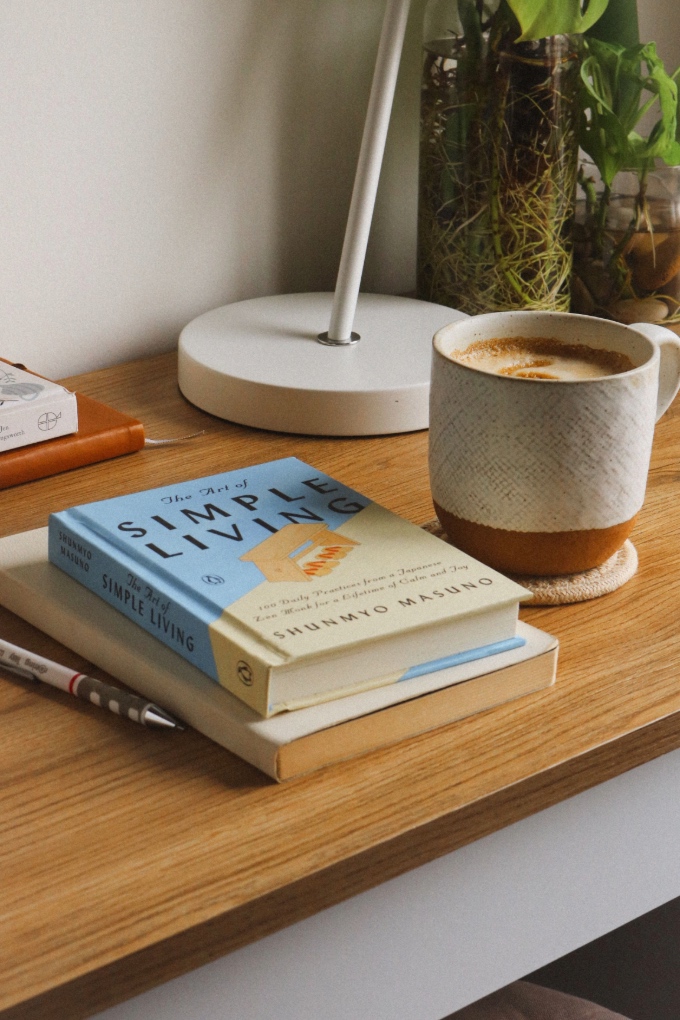
The harmful effects of living in the digital age are hardly a foreign concept by any means. We’ve all scrolled web articles and watched youtube commentaries explaining exactly how our brains are deteriorating. Collectively, we’ve entered a doomsday level of discourse surrounding our myriad of screens. Behind the glaring blue light however, lies a glimmer of hope: brainstacking.
The trend slowly began to infiltrate my feed, and my social media transformed from a work-centric flurry of fashion and lifestyle content to an algorithm pushing activities healthy for the brain. The term is self-explanatory: you dedicate an hour or two of your day doing back-to-back activities that are healthy for your brain. There is somewhat of a blueprint: reading, journalling and sudokus seem to be essential to the mix. Other activities are entirely up to one’s discretion—as long as they challenge one’s cognitive functions. Variations of brainstacking also depend on the amount of time that is allocated. I’ve seen some creators time themselves for each section, challenging themselves when attempting any sort of puzzle. Whether you choose to do it first thing in the morning or as part of your night routine, you’re likely to reap the benefits that are on offer.
@mandyrulez Okay let me know how we feel about the new additions to the library routine! Today we have: the iced latte returning (and hopefully never leaving again), one page journal entry, sudoku, NYT mini, and Honey by Imani Thompson! #library #morningroutine #brainstack #sudoku #paperasmr ♬ original sound – Mandy Rulez 🪐✨🔮
The benefits of brainstacking
Brainstacking first grew in popularity as a response to doomscrolling, as it creates time in your schedule away from your phone (at most, you’re using a device to listen to music). Time away from screens is always refreshing—you’re no longer hit with a constant stream of dopamine as you passively consume content, and you’re actively working out your brain.
The brain is an organ but it responds to training and challenges in a similar manner to your muscular system. A neglected, under-stimulated brain will decline in cognitive function, neural pathways and neuroplasticity (your brain’s ability to adapt and learn new tasks). With journalling, reading and sudoku, three main types of cognitive functions are targeted respectively: The ability to process and express emotions and thoughts; absorbing and retaining information; and problem-solving skills.

If you decide to brainstack in the morning, then you’re setting yourself up for success for the rest of the day. That single hour of brainwork acts as a warm-up of sorts, activating your prefrontal cortex’s executive functioning pathways without overwhelming them. The activities will slowly ease you into the day, keeping your mood and productivity levels stable and consistent. And if it’s become a reflex for you to reach for your phone as soon as you wake up, you’re spiking your cortisol while also harming your memory and focus. Brainstacking, on the other hand, is calming. Think of it as an analogue task, finetuned to reduce your anxiety before your day even begins.
Implementing new habits can be hard, but brainstacking helps you group multiple activities together—rather than attempting to read, journal and solve puzzles at different times throughout the day, stacking allows you to block out a period of time to focus on the tasks. This one block of time is repeated every day at the same time, which makes it easier to approach the stack as a long-term habit.
My process
I was intrigued by the trend almost immediately, being both a bookworm and someone who adores journalling myself. I decided to wake up an hour earlier than usual and brainstack before heading off to work. My stack included the following: my journal, The Bluest Eye by Toni Morrison, a sudoku book, a word salad book and a bit of embroidery work I’ve been meaning to catch up on. Armed with breakfast and a large bottle of water, I would brainstack on my balcony.
The result
I’m a night owl, so waking up the first two days was a challenge of its own. I naturally put myself to bed as early as I could for the rest of the week, improving my sleep schedule by quite a bit. By the end of the seven days, my brain had learnt to make time for the brainstack, and my body clock adjusted to waking up at seven in the morning.
@beckymaelee Here’s a library brain stack routine (asmr & no trending audio) to soothe your brain 🧘🏻♀️✨ Ib the brain stacking queen @Mandy Rulez 🪐✨🔮 #morning #library #sudoku #journaling ♬ original sound – becky mae
Although a week might not have been enough to properly reap the benefits of brainstacking, I felt my morning grogginess and brain fog clear up a bit. I stopped running on autopilot in the morning, and felt significantly more awake as I worked through my brainstack. This translated to the rest of my day too, and I felt more focused and productive as I did my work. Seeing the progress I had made for the novel, the puzzles, and my embroidery project definitely boosted my mood and productivity too.
What did feel significant to me was brainstacking at night. Many proponents of the trend brainstack at night after work, but this felt less effective to me. Due to a busy schedule, I had to brainstack at night for one day of the week—it felt entirely different. I was lethargic from work, which affected the quality of my stack: My journal entry was visibly shorter and less introspective, and I took much longer to solve both the sudoku and word salad puzzles. In the evening, the activities felt more akin to doing chores or running errands, and I was extremely conscious of the fact that I was also experimenting with the ‘trend’. Brainstacking in the morning felt like a deliberate choice.

Within a week, I’m already reaping the benefits of brainstacking, and the real bonus here is that I’m really making time for the activities I already love to do. Escaping the algorithm or not, I’ll be trying to make it a real habit now.