Life imitates art, as Oscar Wilde so famously believes. But more often art seems to imitate life, as the author’s hand is dictated by what they see; their everyday findings kindling the imagination as they put pen to paper.
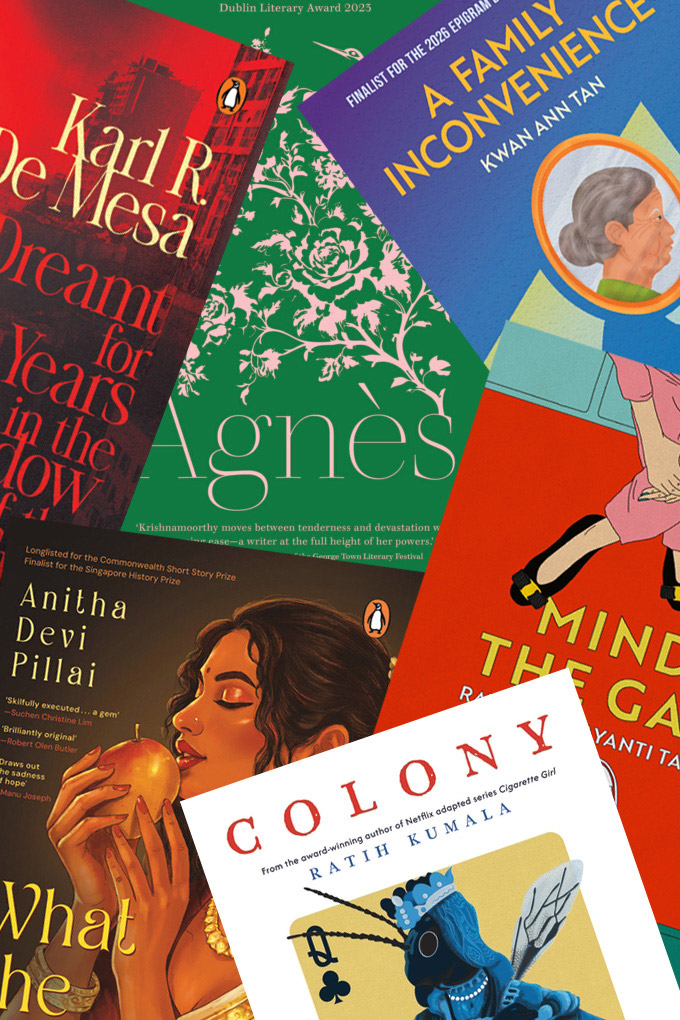
Across the region, contemporary literature holds up a mirror to the fabric of our societies—its ills, joys and soul of the strata we play a part of every day. Kwan Ann Tan’s newest A Family Inconvenience shines a light on classic Asian household struggles of sibling quarrels and filial piety, while Ratna Damayanti Taha’s debut novel Mind The Gap confronts the constant pressure to be ahead in modern-day Singapore.
Elsewhere, the ghosts of colonisation and past world wars are recognised and explored, seen in Viji Krishnamoorthy’s Agnès set during the Malayan Emergency. For Ratih Kumala, Colony was originally written in Indonesian as an outcry of deep concern for her nation.
With such complex stories weaved into the history of the region, the result is a tapestry of layered identities—proving that the voices of Southeast Asia simply cannot be put in a box. Whilst incisive and fierce prose from the region will never cease, we bid you start from some of the newest reads by the writers who are closest to home. Here are the newest books by Southeast Asian authors to add to your shelf in 2026.

1 / 6
Agnès by Viji Krishnamoorthy
Set against the backdrop of World War II and the Malayan Emergency, the book is a tale of love, loss and betrayal. Saved from a German warship and left on the doorstep of a convent as an infant, Agnès has always stood in the shadows of her mixed Oriental-Russian past. When she is offered a second chance of a new life, will she step boldly into the light or retreat into the familiar darkness of her circumstances?

2 / 6
Dreamt for Years in the Shadow of the Sun by Karl R. De Mesa
A novel that will have you at the edge of your seat. Mixing high-stakes crime, sinister folklore and the gritty streets of ‘90s Metro Manila, Dreamt for Years in the Shadow of the Sun follows young misfits Lenix and Elena as they’re recruited to fight against a formidable cartel that rules all trade of the highly addictive, mysterious drug Fantoma. Amidst ruthless battles with Fantoma’s guardians, the underworld creatures and monsters, Lenix and Elena can’t help but be entangled in the twisted fate of love that blooms in the shadow of war.

3 / 6
What the Tongue Remembers by Anitha Devi Pillai
What the Tongue Remembers encompasses 11 short stories of the lives of Malayalee women in Singapore. Set against the backdrop of the kitchen, each tale sits at the crossroads of life—Kerala’s culinary heritage is passed down in the kitchens of Anusha and Aysha, while Lilykutty soaks up the last few hours of her marriage. Across these women’s homes and lives sits a deep hunger to love and be loved.

4 / 6
Colony by Ratih Kumala
A literary fable inspired by the author’s anxieties for her beloved home country, Colony depicts themes of power struggles, succession and loyalty through the layered organisation of an ant colony. Here, every ant has its place, with the queen ruling at the top. When a catastrophe strikes her own home, queen Darojak has no choice but to seek refuge in another queen’s colony. As she navigates through the new landscape, she is pulled into the age-old challenge of control, sacrifice, and the bloodthirsty desire to remain at the top.

5 / 6
A Family Inconvenience by Kwan Ann Tan
Five siblings are confronted with the ghosts of their buried past when their Nai Nai is in need of urgent care. With the eldest daughter no longer able to shoulder the caregiving responsibility, the rest of the household is forced to rise to the occasion, breaking open old wounds that challenge the family bedrock. It’s a poignant tale of the familiar duties and sacrifices almost every Asian household is built upon.

6 / 6
Mind The Gap by Ratna Damayanti Taha
Nora rarely strayed far from her path, certain that an honest life of hard work was a surefire way to success. But over the years, as her career takes a turn and loyalties fracture, Nora’s steady conviction unravels at an alarming rate, questioning the Singapore she thought she once knew. Tackling societal issues of ambition, disillusionment and compromise, the novel addresses hidden burdens of keeping up with a nation obsessed with moving forward.