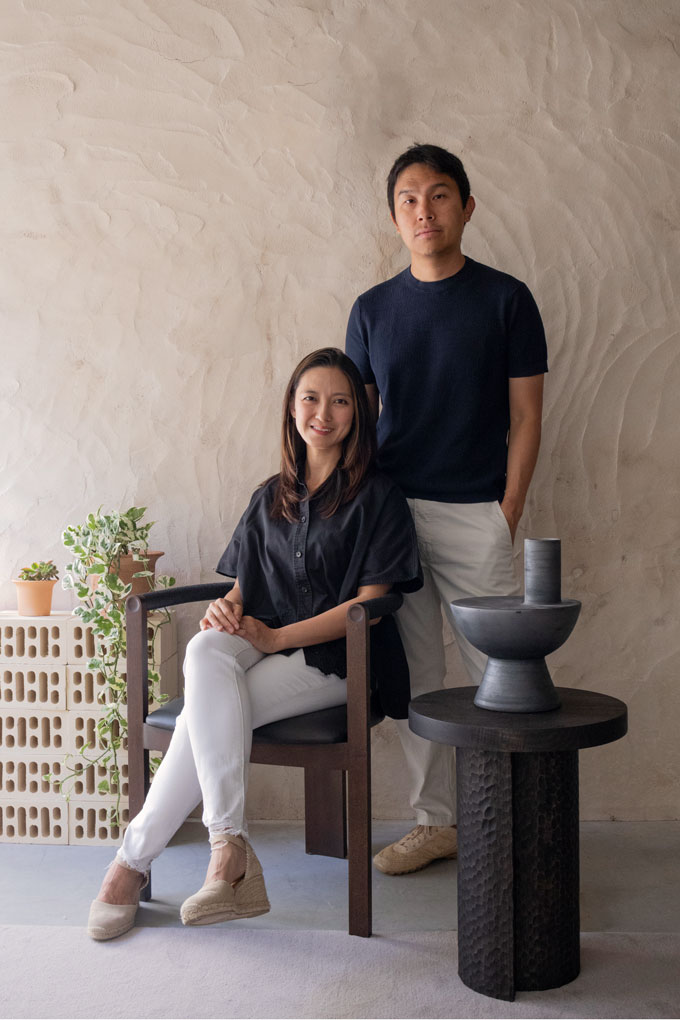
Gabriel Tan’s design journey began in an unlikely place. At 19, while training to be a combat officer in the Singapore Navy, he chanced upon a collection of industrial design books at the library, and was immediately hooked. This discovery set him on a new course, and he has never looked back. Today, he’s flying the flag for Singapore design on a global scale, having collaborated with a growing roster of international brands, including B&B Italia and Herman Miller.
The year 2019 marked another defining chapter, when Tan relocated to Porto, Portugal, and co-founded the craft-led design marque Origin Made with his wife Cherie Er. The brand partners with master artisans around the world to create handmade furniture and objects that blur the boundaries between design and art.
Last year, Tan’s contributions to the field were recognised with two major honours: Singapore’s President’s Design Award for Designer of the Year—the nation’s highest design accolade—and Louis Poulsen’s inaugural Designer of the Year award. Vogue Living caught up with Tan to discuss his latest designs and the ideas that continue to shape his practice.

How would you describe Origin Made to the uninitiated?
It is a craft-focused brand that combines artisanal qualities with international contemporary design. We seek to find the middle ground between design and art—handcrafted objects that are exquisite, tactile and functional, made in small batches of 10-20 pieces at a time. We hope to fill that void between mass-produced products and gallery pieces.
The brand started out with a focus on Portuguese makers, but Origin Made has recently worked with Japanese and Indonesian artisans. How did this expansion come about?
We began working with Portuguese makers because I’m based in Porto, so it made sense to start there, but craft has never been confined to one geographic region. As Origin Made grew, it made sense to involve different makers we admire from around the world. Our new Daiza pedestals [designed by Torafu Architects] came about when a friend from Kagoshima brought me to visit the prefecture’s craftspeople. I was fascinated by the work of ceramic artist Yusuke Kido, and the dark, mysterious and iridescent finish of his volcanic ash-glazed pieces. Our series of new rattan chairs Tsuki, Ei and Yumi came to life after I discovered an ex-student of mine had married the owner of a rattan workshop in Cirebon, Indonesia. The level of craft is very high—few places in the world can match these Indonesian rattan artisans today.

At the recent 3daysofdesign fair in Copenhagen, Origin Made presented its largest collection of furniture to date, including the brand’s first sofa. Tell us more.
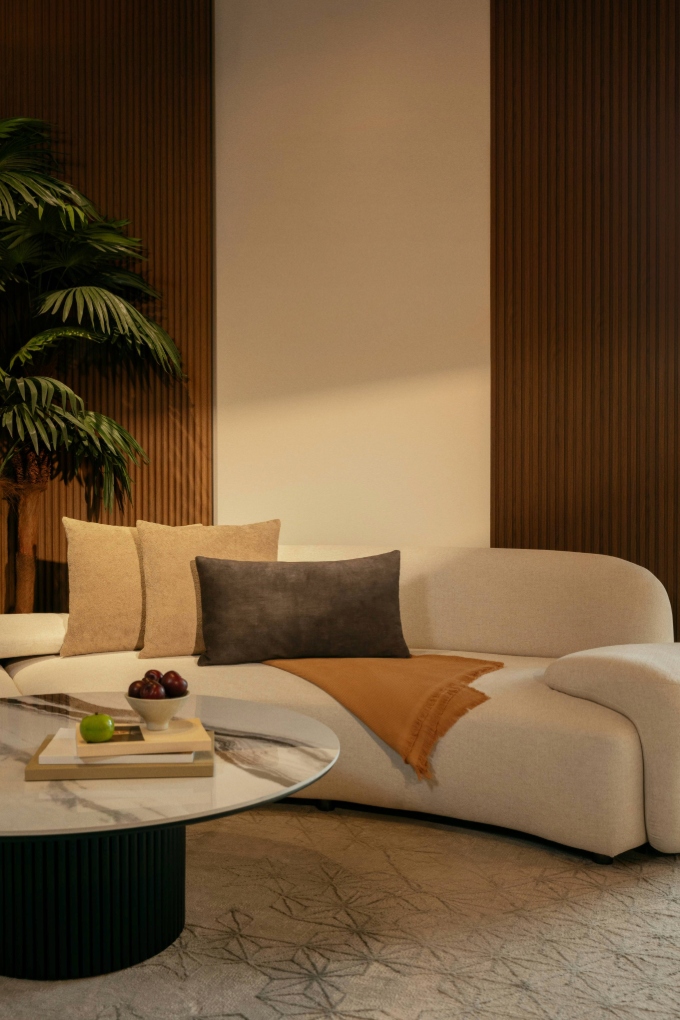
We’ve always had the ambition to grow into a brand that made products for all parts of the home, beyond sculpture and objects. Italian-Uruguayan designer Matteo Fogale told me that he had the perfect sofa for me, and indeed, his design really fit the brand. It’s a special sofa because the armrest and backrest can be easily lifted from the wooden frame. The covers are removable, and all the components can be separated, making it easy to transport. It’s a clever yet sculptural design. At Origin Made, we always try to create furniture that feels special. It’s never just a utilitarian piece.
Congratulations on being named Louis Poulsen’s first-ever Designer of the Year. What was the process in designing the Rumee portable lamp like?
I was first introduced to Søren Mygind Eskildsen, Louis Poulsen’s global CEO, at a dinner, where he asked me if I’d ever thought of designing for the brand. I told him that I would, of course, be happy to work with them, and it just so happened that I had already booked a vacation to Copenhagen that summer. I connected with him and the team at Louis Poulsen’s headquarters, and eventually received a brief from them a few months later. It was for a portable lamp. Given the success of Panthella, I began to think of what’s next for the brand, which led me to create an asymmetrical lamp, something that is far less common in the market. I wanted a lamp that could create different moods rather than simply glow in all directions. The form drew inspiration from fashion icons like Audrey Hepburn wearing oversized hats, and lily pads. When I showed the concept to the Louis Poulsen team, they loved it and immediately kick-started the development process. The time period from the first presentation to the market launch was 18 months.


One of your latest designs is the ClassiCon Soft Stone sofa. How did it come about?
When I moved to Porto during the lockdown, I rented a home located next to Parque da Cidade, a seaside city park known for hosting the Primavera Sound music festival. I would often sit on these assemblages of massive stone blocks to sketch, especially after lunch. There was nowhere else to go because of the pandemic. What struck me was how the stone blocks were positioned at a good height for sitting, but of course, they were hard to sit on. I began to imagine soft versions of them, where you can sink into these chunky and generous slabs. Their interlocking forms were also something I’ve never noticed before.
You’ve released a strong lineup of products in a short span of time. What inspires you to keep creating?
It’s a natural process for me, where I do not have a set number of pieces to design every year. Ideas flow organically, whether in a museum, park or during my travels. New experiences, especially when I’m out of my comfort zone, tend to inspire me, perhaps because I’m much more alert in such scenarios. I catch onto things more easily. That’s how the ClassiCon sofa came about. I had just moved to a new city, so everything proved to be a stimulating experience for me, even stone blocks in a park.
Lastly, what’s next on the horizon for you?
I’m currently working with one of the best wood manufacturers in the world on a few new products. A new collaboration with a Finnish furniture company is also in the works.