In my late twenties and early thirties, I found my calendar peppered with the continuous throws of engagement parties, hens trips and of course the big day itself—weddings. Fast forward to the forties, and the invitations have all but dried up. My hens heels have been hung up and the wedding fervour has well and truly died off. Instead of chatting about solitaire or emerald cuts, floral arrangements or how to not invite your parent’s peripheral acquaintances to the wedding, conversations with friends have turned into cautionary tales of marital woes and spousal disapproval. Cue the divorce era.
While a lot of the focus post breakup is on not having a breakdown or the internal impact, what about how it affects the outside or, put more directly, our looks? Dr John Gottman, the ‘Godfather’ of relationship psychology has singled out one particular facial expression that predicts divorce with 93.6% accuracy—the contempt microexpression. So while your visible disdain for your significant other is a telltale sign of things awry, imagine what years of “contempt face” compounding over time does? It’s totally understandable that high cortisol, lack of sleep and grief can really do a number on you. Divorce can be ugly after all. But what if more optimistically ditching the “old ball and chain” was the key to not only living your best life, but looking your best too?
View this post on Instagram
This, too, shall pass
Before we get to the Renaissance chapter, sometimes the only way out is through.
“I literally looked haggard. When you’re going through all this stress, you’re not looking after yourself at all and looking after yourself beauty-wise is kind of the least of your concerns. You’ve got so much sh*t that you’re dealing with. And especially if you’ve got kids. It is an afterthought. Even as a mother in general you’re already last, you put yourself there. Then imagine yourself as a mother that’s broken at the moment—it’s so tough,” states Jennifer*, a 42-year-old media personality. “For your children, you’re overcompensating. I’m pretty sure some of the ageing elements like grey hairs came faster, because it was so damn stressful. There’s some saying about how divorce is worse than death and they’re not lying.”
For Jennifer, the dissolution of her over decade long union resulted in not only hair loss, but her eyelashes falling out in clumps and inexplicable rashes cropping up on her limbs regularly. Turns out she was allergic to divorce—or more officially and according to her dermatologist, it was her body’s reaction to her distress.
View this post on Instagram
This theme of self abandonment in favour of the wellbeing of the family isn’t unique to Jennifer. Daphne*, 47, landlord, is currently in the throes of the legal process to end her longtime marriage. She gained four kilograms in two months due to the metaphorical weight of guilt of being the catalyst for the familial breakup. But now that she’s finally pulled the martial pin, she’s refocusing on her wellbeing.
“I’m not so much after a revenge body, but it’s about taking back something for myself. My soon to be ex-husband would go to the gym, go for a run on whim, or decide to play a game of basketball when he felt like it. Because he could, as I was the default parent with the kids,” Daphne claims. “The balance of leisure time or ‘me time’ was not equitable. I see this dynamic quite often in families—the husband looks amazing, all buff and healthy, and the wife is labelled as the one who let herself go, when in fact, she has prioritised the family over herself. Not only am I now more confident in what I wear, I am more confident in calling out the disparity between the sexes when it comes to family life.”
The divorce toll, explained
So what do the experts say? Is the divorce toll a tax we have to pay with our looks?
“The chronic stress from events like separation or divorce accelerates ageing of the skin, hair, and nails through hormonal and inflammatory pathways, mainly driven by prolonged elevation of cortisol and oxidative stress,” elucidates Dr Stephanie Ho, Consultant Dermatologist at Stephanie Ho Dermatology.
From a clinical perspective, psychological turmoil can show up as slower skin barrier recovery times, faster collagen loss contributing to earlier onset of wrinkles, reduced elasticity and reduction of facial volume. Extreme tension and worry can also exacerbate things like acne, eczema, and rosacea inflammatory rashes and, as suspected, hair loss and those pesky greys.
“Chronic stress is a well-known trigger for a condition called telogen effluvium, where stress hormones push large numbers of hair follicles into the shedding phase at the same time. This sudden hair loss typically occurs two to three months after the major emotional stress event and can cause noticeable diffuse hair thinning and excessive hair fall,” says Dr Ho. “Stress has also been linked to premature greying in animal and emerging human studies via depletion of melanocyte stem cells.”
View this post on Instagram
While this isn’t painting a pretty picture, the good news is that there is an abundance of things that can be done to reset. A medical grade skincare routine in tandem with in-clinic treatments can do wonders. Dr Ho recommends focusing on hydration, skin repair and the reduction of inflammation in the form of calming cleansers and moisturisers containing ceramides, cholesterol and fatty acids to reduce transepidermal water loss (TEWL). There’s also anti-inflammatory serums containing things like B5 or panthenol, hyaluronic acid, polynucleotides, and centella to help settle the skin.
Other items that would make a great addition to your regime include hydrating and calming facial masks at least once a week to aid with soothing inflammation and replenishing moisture, alongside a low-strength retinoid up to three times week which normalises cell turnover and gently stimulates collagen.
If required, prescriptive creams or oral medicines can also treat any flares of eczema, acne or rosacea. In taking it one step further, she suggests on-site treatments like skin boosters, exosomes therapy, collagen stimulators and vascular lasers to work on rejuvenation and correction as ultimately, “women going through major life transitions like divorce would be seeking treatments to restore freshness and vitality rather than dramatically change their features.”
View this post on Instagram
If your dermatologist is the architect of your beauty renovation, consider the aesthetician as your proverbial interior designer. Dr Pamela Chong, Epion Clinic, also puts down “high-stress life events, such as a divorce, as the trigger for a cascade of physiological responses that can visibly manifest on the face” and that most clients in this position are “looking to reconnect with themselves.”
She sees the same horsemen of the dreaded divorce effect: dullness and lack of radiance in the skin, collagen and elastin degradation, oxidative stress, reduced cellular regeneration, tired looking eyes, inflammation and fine lines and wrinkles. In Dr Chong’s view, “minimally invasive procedures can often improve psychological and social well being because they provide immediate aesthetic improvements, giving [clients] a refreshed, empowered and natural looking appearance. This enables them to still feel like themselves, just better.”
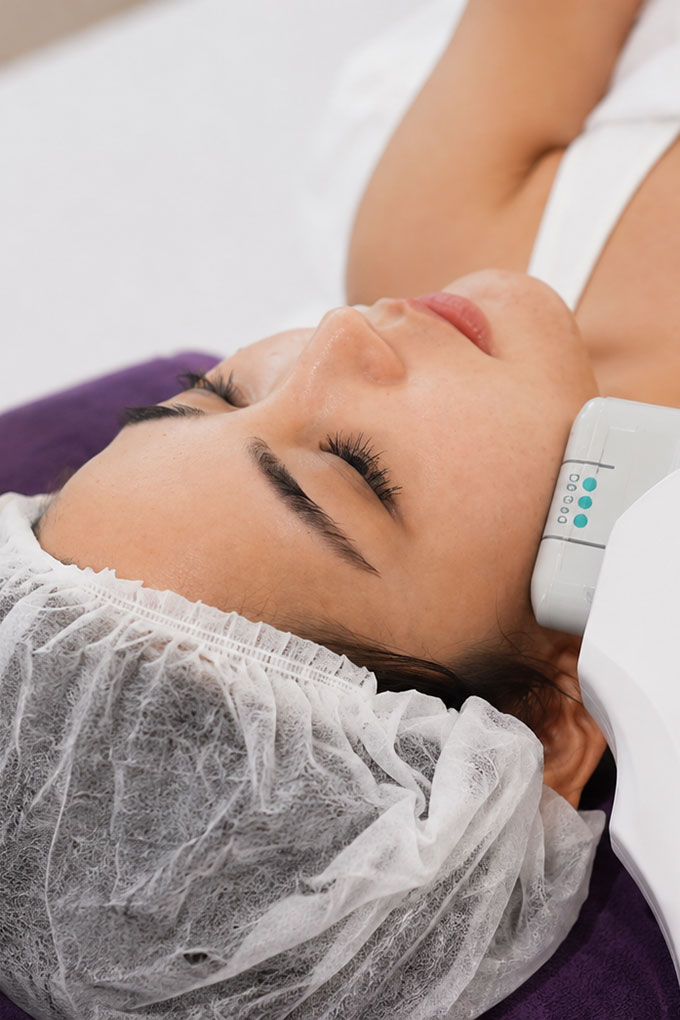
What would she advise someone whose skin has been through the wringer? Microneedling with radiofrequency, which creates microinjuries in the skin to stimulate the body’s natural healing processes, promoting collagen production. Lasers. For example, long-pulsed lasers can go deep into the skin resulting in rejuvenation. Fractional non-ablative lasers induce controlled thermal damage to improve wrinkles and skin laxity. And finally, injectable biostimulators such as polynucleotides, hyaluronic acid and calcium hydroxyapatite to help work on improved skin quality, texture and firmness. Of course, for both a dermatologist and an aesthetician a personalised consult face-to-face is optimal for best results as a programme can be tailored to you.
View this post on Instagram
In addition to some of the above, a face mask and a bath, plus a daily dose of retinol and keeping those greys in check are the simple beauty pick-me-ups that Jennifer now subscribes to. As for Daphne, signing up for a body transformation programme has been, well, transformative. For her, leaning into investing in herself has been a no-brainer. “Both dopamine and serotonin are key neurotransmitters that can affect your overall mood and function. Therefore prioritising beauty, exercise and self-care will help to promote your levels of each of these, and in turn, aid your mental wellness.”
Turns out recovery from a conscious uncoupling is both an inside and outside job. In Dr Ho’s opinion, “when people regulate stress (sleep, breathwork, exercise), they are shifting into “repair mode”. Self-care that combines both wellness and aesthetic treatments will in general always get more consistent results than those who rely on procedures alone.”
Retrospectively, now her divorce is more of a thing of the past, Jennifer believes a divorce glow up simply comes down to reprioritising yourself. “I’m just so happy I got myself out of that. That I brought myself and my glow back. In this process you lose yourself—we should never do that. We have to love ourselves first before you can love anyone else. It’s like when you’re on a plane and you have to put on your mask first before you tend to your kids. It feels counterintuitive, but at the end of the day that concept reflects everywhere. Your kids look up to you more too when you have respect for yourself.”
*Names have been changed for privacy