Did you hear? Reading is back. The art of having a book in hand has become the latest ‘it’ factor in society’s ever-evolving equation of validation. After all, who doesn’t want to be seen as an intellectual—worthy of interest—by the millions of eyes fixated on feeds around the world?
There’s just one thing: reading never really left to begin with. It’s always been around, and not just within the venerated halls of academia. For people just trying to make their way in an unforgiving universe, reading offers a space of the safest variety.
Its most timeless genre—classic literature—has been doing exactly that for centuries. And now that the practice looms large in the zeitgeist once again, there’s no better opportunity to embrace all the myriad stories of yore, both big and small.
Chances are you’ve seen the 2005 film adaptation of Pride and Prejudice, but if you haven’t read it, Austen’s most famous work is well worth your time. Of course, you can’t go wrong with Shakespeare, either. Romeo and Juliet, Hamlet, Macbeth—you hardly need to have read these stories to know what they’re about. And if you want to crank the dial on the time machine even further back, Homer’s Odyssey is one of the most powerfully enduring narratives ever told. Indeed, there’s no better time to get acquainted with the far-flung journeys of Odysseus, as Christopher Nolan’s epic take on the sweeping saga is due for release in a few months.

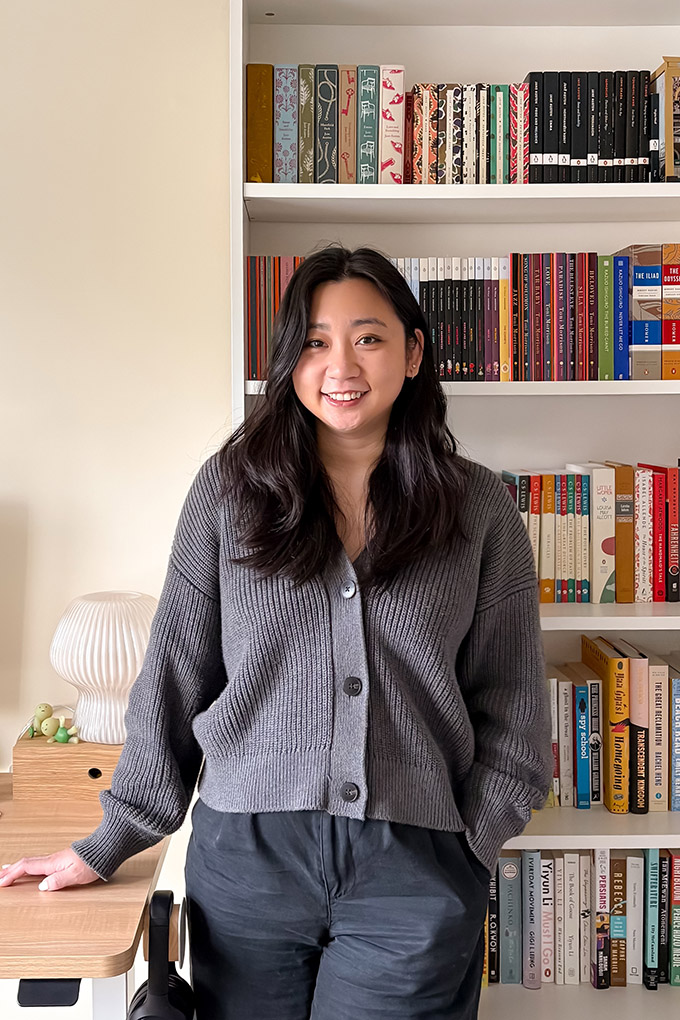
However, there are innumerable other authors whose voices tell no less mighty a tale than those penned by ancient Greece’s most famous poet or the Bard of Avon. To learn more, Vogue Singapore reached out to content creator and professional bookworm Esther Fung for a crash course in classic literature. Here, she breaks down the ins and outs of the genre: what it is, why it matters and how to get started reading—along with the six titles she considers staples.
Why do you think reading is making waves now outside of the niche online communities that call it home?
I am not surprised that reading has made a comeback in our society. Since the pandemic, there has been a widespread longing for offline connection, restorative hobbies other than watching television on the couch and analog pastimes to get us off the digital overload that is our phones. It is only natural that people would turn to books, and it shows, with indie romance bookstores sprouting up, waves of adaptations hitting the big screen like Project Hail Mary and Wuthering Heights and the surprise it-accessory of the season: Coach’s book bag charms.
Even classics themselves are making a comeback. I work at PangoBooks, a book marketplace where readers can shop each other’s shelves. In the last year, classics like East of Eden by John Steinbeck and The Handmaid’s Tale by Margaret Atwood have jumped in popularity.
I am really excited that books have made the jump from nerd to cool, though. Reading is a powerful way to connect with others, learn more about ourselves and sharpen our minds. Storytelling has always been humanity’s way to interrogate ourselves. More people reading means more minds thinking.
The term can be vague—some people think ‘classic literature’ means Shakespeare, or it applies only to books written before the 21st century. What would be a good way of describing the genre?
I’ve been asking myself this question since I was an undergraduate. Today, I use two main criteria. The first is if the book has endured the test of time. Will it be just as relevant in twenty, fifty or even a hundred years as it is today? The second is cultural contribution. Did it define a genre, the way Parable of the Sower by Octavia E. Butler defined Afrofuturism? Did it capture the anxieties and hopes of a nation in a specific moment in time, like To Live by Yu Hua? Both those questions require some temporal distance to fully answer. There are many contemporary books that I believe will become classics, such as James by Percival Everett. But only time will tell, as the saying goes.

Break down the relationship between Esther Fung and classic literature for me. How was it born, how did it grow and what does it look like now?
When I was in tenth grade, I joined my high school’s academic team. Our coach assigned us areas of expertise, and because I liked reading, my assignment was literature. It wasn’t enough to just memorise who wrote what. I also needed to have an understanding of the characters, settings, and themes. That’s when I began reading classics.
The first three classics I picked up were Anna Karenina by Leo Tolstoy, Wuthering Heights by Emily Bronte and Tess of the D’Urbervilles by Thomas Hardy. To say I struggled would be an understatement. But struggling with a book became a joy in and of itself. My world was expanding. Each new book challenged what I thought storytelling could be. I still remember encountering magical realism for the first time in One Hundred Years of Solitude by Gabriel García Márquez and feeling like the breath had been knocked out of my body. I was addicted. Classics were the only genre I read for the next decade of my life.
Now I am a much more well-rounded reader. I’ll pick up anything other than true crime and horror, but classics are still my first love. These days, I am exploring classics by authors who have been forgotten by classroom curriculums as well as those from outside the Western canon. Currently at the top of my reading list is Evelina by Francis Burney, Journey to the West by Wu Cheng’en and The Makioka Sisters by Jun’ichirō Tanizaki.

Your IG bio reads: ‘Book recommendations and cosy side quests for a slower life’. What makes classic literature uniquely positioned to help people pursue this slower life?
My twenties were fast-paced. In the span of a decade, I got my bachelor’s and master’s degrees, learned two new languages, got married, switched careers twice, moved to a different city and became a homeowner. Now in the first year of my thirties, I am looking to slow down. I want to pursue a soft life with deep roots, and I find that many others online do as well.
Classic literature forces you to slow down. Many books are incredibly slow, with long chapters where nothing seems to happen (although there is so much happening, just below the surface). These stories are inviting you to be still. They are providing a space for you to notice and reflect.
One of my favourite novels ever, Mrs. Dalloway by Virginia Woolf, is a great example. In the first ten pages or so, the titular character walks to the florist so she can buy flowers for a party she’s having that evening. On the surface, this is not very interesting. And yet, when you slow down and pay attention, you’ll notice that London is not yet fully recovered from the recent war, that our narrator has been ill and that she is not very comfortable with her purpose and position in life. Dig even deeper and you’ll discover a persistent struggle between being content in the present moment (“…what she loved; life; London; this moment of June”) and regretting the choices that led her there (“Oh if she could have had her life over again!”). And all of this is just in the first 10 pages.
For those who have never dipped their toes in the genre before, what advice would you offer them to take on these timeless tales?
First, don’t be intimidated. I was born in Taiwan and did not learn English until second grade. If I can read classics, then so can you. Next, go slow. I enjoy classics much better when I can sit with them, and I encourage others to do the same as well. The writing style may be an adjustment, depending on what books you’re used to reading. But the joy is in the details. The more you grapple with the text, the more you’ll get out of the book.
Finally, if you are very anxious about where to start, check my Instagram post, ‘Your First 100 Classics: The Complete Guide for Beginners’. Drawing on my own experiences as an English learner and teacher, I have compiled a college-style guide that moves you from the most accessible classics, such as A Wrinkle in Time by Madeleine L’Engle, to more advanced works, like Crime and Punishment by Fyodor Dostoevsky. This is a great resource for anyone who wants to start reading classics. For a quick and dirty breakdown though, here are six staples of the genre below.

1 / 6
Beloved by Toni Morrison
Beloved follows a woman named Sethe who lives with her children and their grandmother in a house haunted by the baby she killed while escaping from slavery. Inspired by a real life woman, this magical realism ghost story gives shape to trauma and memory. I discover something new every time I reread it.

2 / 6
East of Eden by John Steinbeck
While most high school students may know Steinbeck from Of Mice and Men, East of Eden is the real masterpiece of his career. Set largely in California’s Salinas Valley, this epic family drama postulates that while we inherit dysfunctional family dynamics and worldviews, we make our own destinies. Each of us has the power to break the cycle.

3 / 6
Pride and Prejudice by Jane Austen
Pride and Prejudice is not the first classic published by an English woman, but it is the most famous, and for good reason. Elizabeth Bennet and Mr. Darcy both overcome their own character flaws in their arcs toward each other, building up to not only a happily ever after but also a better version of themselves. The universality of this Regency-era enemies-to-lovers novel is a testament to Austen’s witty and charming writing style.

4 / 6
The Iliad by Homer
For centuries, the muses have sung of the wrath of Achilles, and we have listened. The Iliad shaped the foundations of Western literature, defining what heroes, gods and conflict look like. And yet it still has the power to move its audience. No matter how many times I reread it, Priam’s audience with Achilles always makes me emotional.

5 / 6
One Hundred Years of Solitude by Gabriel García Márquez
This magical realism epic traces the rise and fall of the Buendia family, tracking individual history against the history of a nation. One Hundred Years of Solitude is a stunning example of how a story can simultaneously operate on a micro level as well as a macro.

6 / 6
Mrs. Dalloway by Virginia Woolf
In this stream-of-consciousness novel, Woolf follows two Londoners who could not be more different. Clarissa Dalloway is an upper-class wife preparing to host a party that evening, while Septimus Warren Smith is a World War I vet suffering from PTSD and hallucinations. Through these two characters, the novel acknowledges how hard life can be while still urging us to see the beauty in everyday moments.