Today’s translated literary landscape has evolved in spades. This is especially so for the tapestry of Asian fiction. In the past few years, a wealth of books from across the region has been released, spanning both recent reads as well as early literature. Back in 2023, it was the South Korean novel Welcome to the Hyunam-dong Bookshop by Hwang Bo-reum—translated by Singaporean literary translator Shanna Tan—which famously centres itself around a magical bookshop that feels like solace for various characters, that led the charge for a flurry of translated texts. There have been similar undertones in the reads that have made it to our bookshelves since; Sonoko Machida’s The Convenience by The Sea and Satoshi Yagisawa’s Days at the Morisaki Bookshop are just some of them.
We’ve also seen some great wins for Asian translated fiction recently. Following Han Kang’s Nobel Prize in Literature for The Vegetarian in 2024, just last year, the 2025 International Booker Prize was awarded to a collection of short stories, Heart Lamp, written by Indian author Banu Mushtaq and translated by Deepa Bhasthi. A tender force, the 12 shorts capture the seemingly simple, everyday lives of Muslim women and girls in Southern India.
The beautiful, honest thing about translated fiction is its ability to transport you into a realm that feels oddly foreign—yet familiar in its humanity—simply for it stemming from sentiments unique to a specific community or culture in a specific part of the world. For much of Japanese literature for example, this might unfold in quiet introspection, and seeking out the specialness of everyday life. Whilst reads like Asako Yuzuki’s feminist Butter on the other hand, takes a thrilling, dark twist to societal themes, from misogyny to the policing of a woman’s body. Steer yourself to the Malay Archipelago instead, and you’ll meet the tumultuous scene of a war-stricken Indonesia perhaps, through Ahmad Tohari’s The Dancer.
And the world of translated fiction rooted in the Asian voice is only growing, as more and more literary translators put in the due diligence to honour each text—from the nuances of language to cultural context. Be it highly feminist perspectives set in a dystopian Hong Kong or the hauntingly surreal setting of Japanese author Uketsu’s thrillers, discover some of the most compelling translated titles to consider adding to your 2026 reading list.

1 / 8
Blowfish by Jo Kyung-Ran, translated by Kim Chi-Young
Melancholy teems through Jo Kyung-Ran’s novel, which surrounds the inexplicable journey of a sculptor who has decided her artwork of parting as she plans her own suicide: a lethal blowfish dish. She meets an architect again in Tokyo, after meeting him once in Seoul—and they both contemplate death (and the lives they’ve seen) in their own ways.

2 / 8
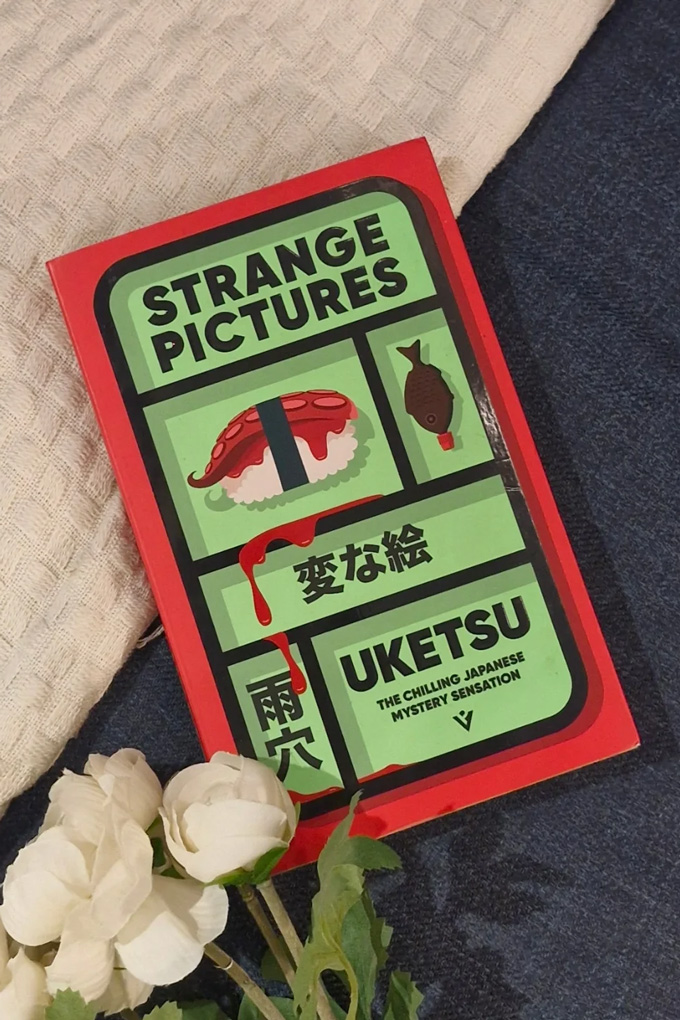
Strange Pictures by Uketsu, translated by Jim Rion
The strange, the dark and the macabre all come out to play in Uketsu’s iconic Strange Pictures. Various short stories that seem to act as commentary on everyday realities of a conforming Japanese social structure, you’ll find that this picture-text narrative format will enrapture its audience every step of the way.

3 / 8
Heart Lamp by Banu Mushtaq, translated by Deepa Bhasthi
There is precise work that Banu Mushtaq is doing—with a concise excavation of the everyday lives of Muslim women and girls in southern India. An artful tribute to the lived experience of an important yet overlooked community, Heart Lamp also received the International Booker Prize in 2025.

4 / 8
The Sad Part Was by Prabda Yoon, translated by Mui Poopoksakul
A traipse to Bangkok. Here we are, immersed in the curiosities of Thai life, through a collection of off-beat narratives that feel quintessentially Thai still. Beating with the voice a new generation, this contemplative collection of postmodern stories thoroughly finds himself in the position of an unreliable narrator.

5 / 8
Butter by Asako Yuzuki, translated by Polly Barton
Inspired by a true story, Yuzuki’s Butter follows gourmand chef Manako Kajii who is convicted of the serial murders of lonely businessmen—whom she had supposedly seduced with her delicious food. An evocative exploration of the female body, misogyny, obsession and gastronomic pleasures.

6 / 8
The dancer: a trilogy of novels by Ahmad Tohari, translated by Rene T.A. Lysloff
A picture of 1960s Indonesia: war-stricken, and tinged with heartbreaking romance. Following the lives of two characters, a dancer, Srintil and Rasus, her lover, who is finding his place in the world as he converts to Islam and attains a position in the army.

7 / 8
Mending Bodies by Hon Lai Chu, translated by Jacqueline Cheung
Body anatomy. A harrowing dystopia. Forced government programmes. This triptych of elements set the scene for Mending Bodies by Hon Lai Chu, centred around one female student who refuses the government-backed program which incentivises couples to surgically attach themselves to one another or ‘conjoin’. Evidently, the body horror of this disturbing narrative is weaponised as political allegory; examining how much we value our freedom in a world when sacrifice is demanded for the greater good.

8 / 8
Retrograde by Osamu Dazai, translated by Leo Elizabeth Takada
One of the greats. Known for his autobiographical yet fictional narrative style, Dazai’s Retrograde—originally written in the late 1930s—sees six stories following the lives of six different protagonists, as they seemingly live eccentric personal lives. With one of them being Dazai’s own, right in line with his semi-autobiographical writing format.