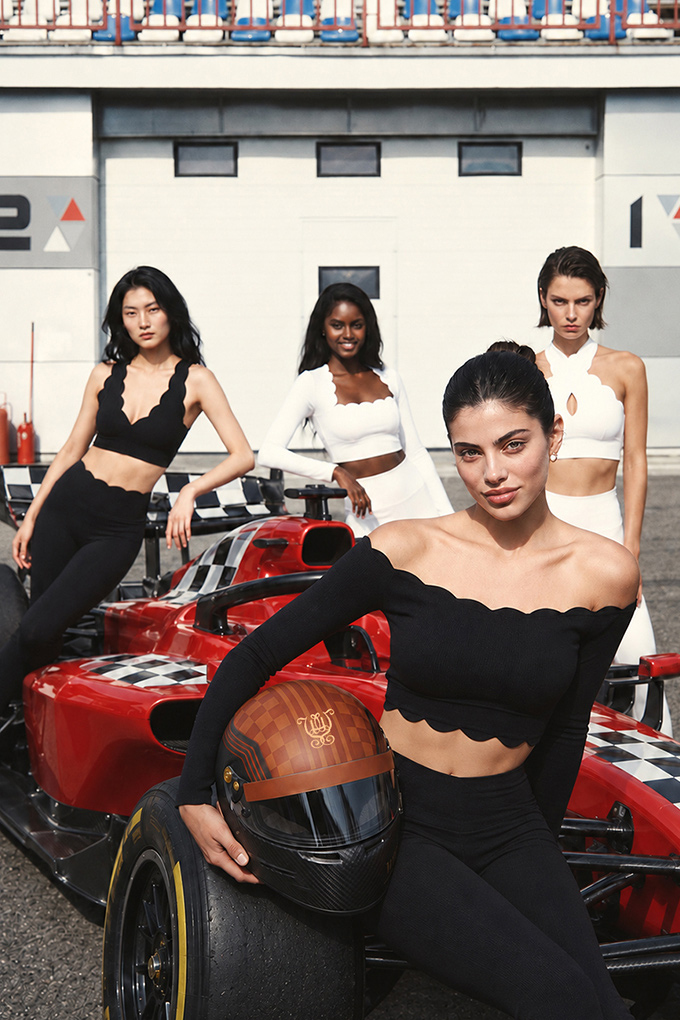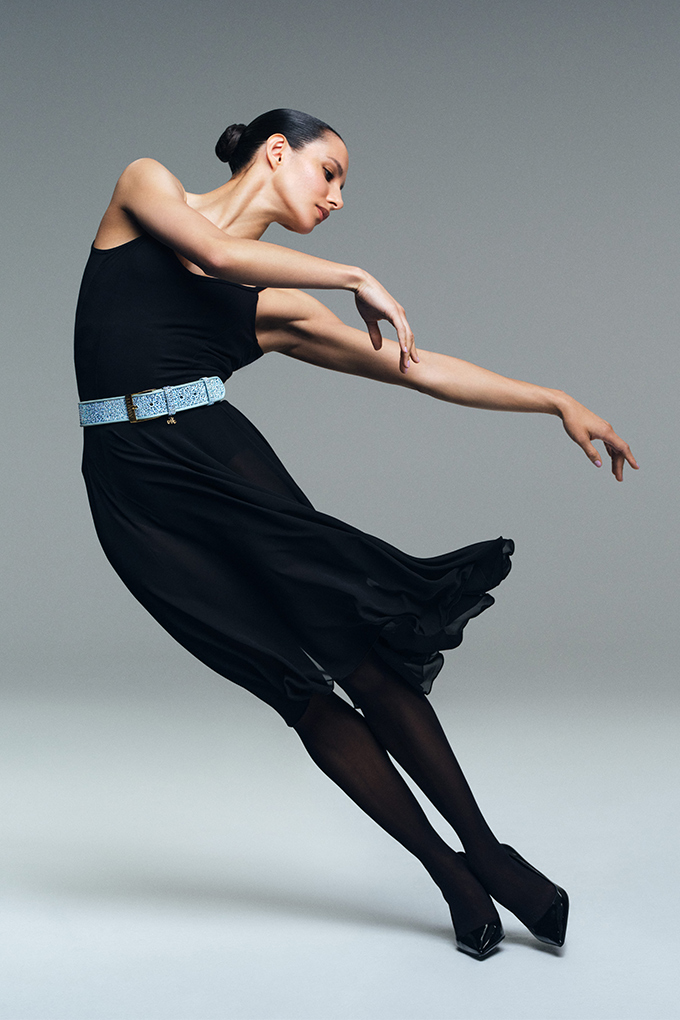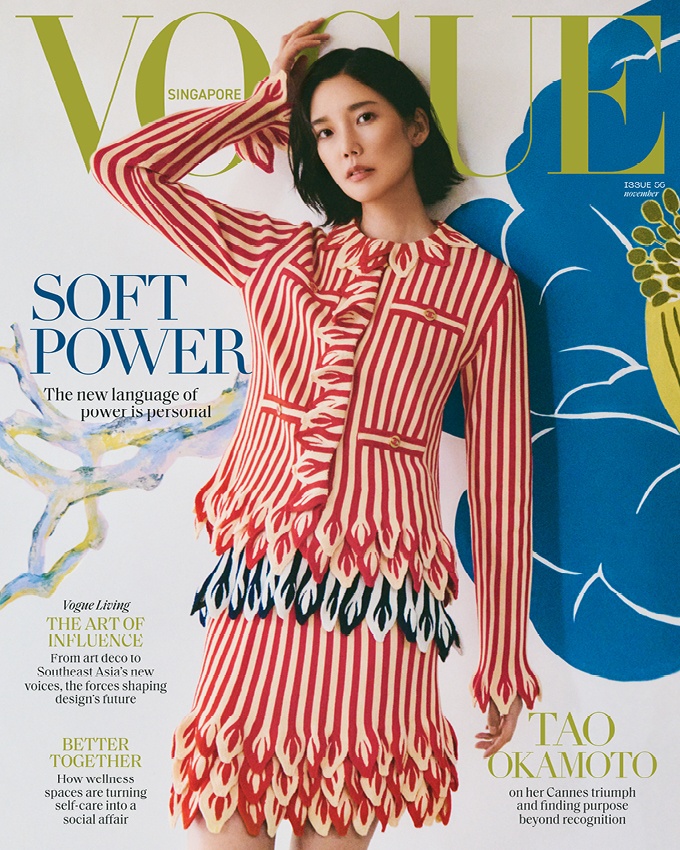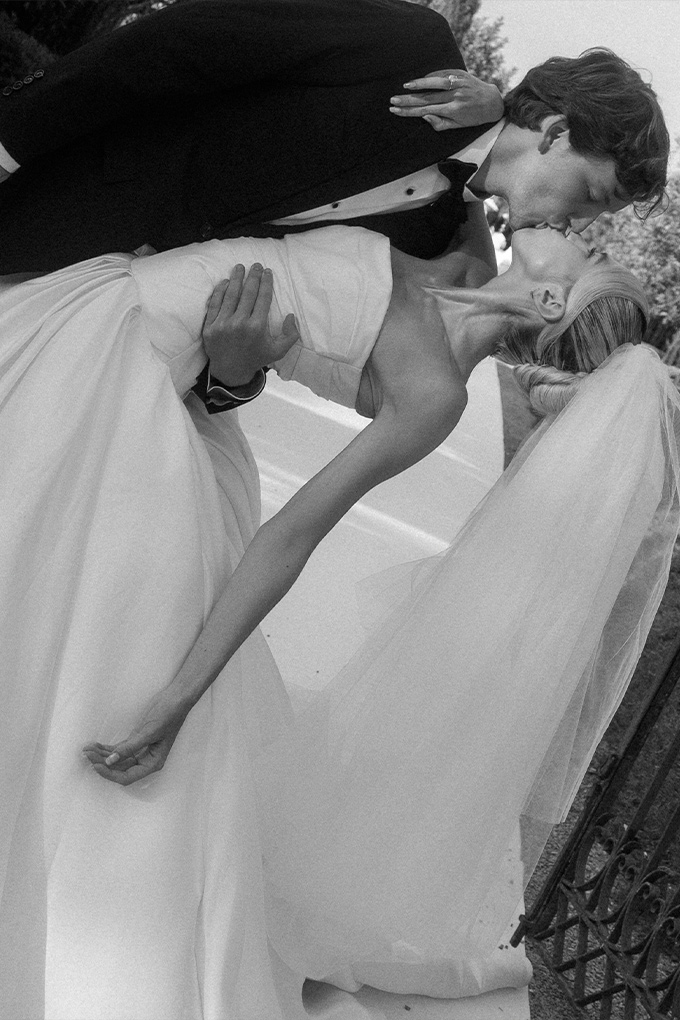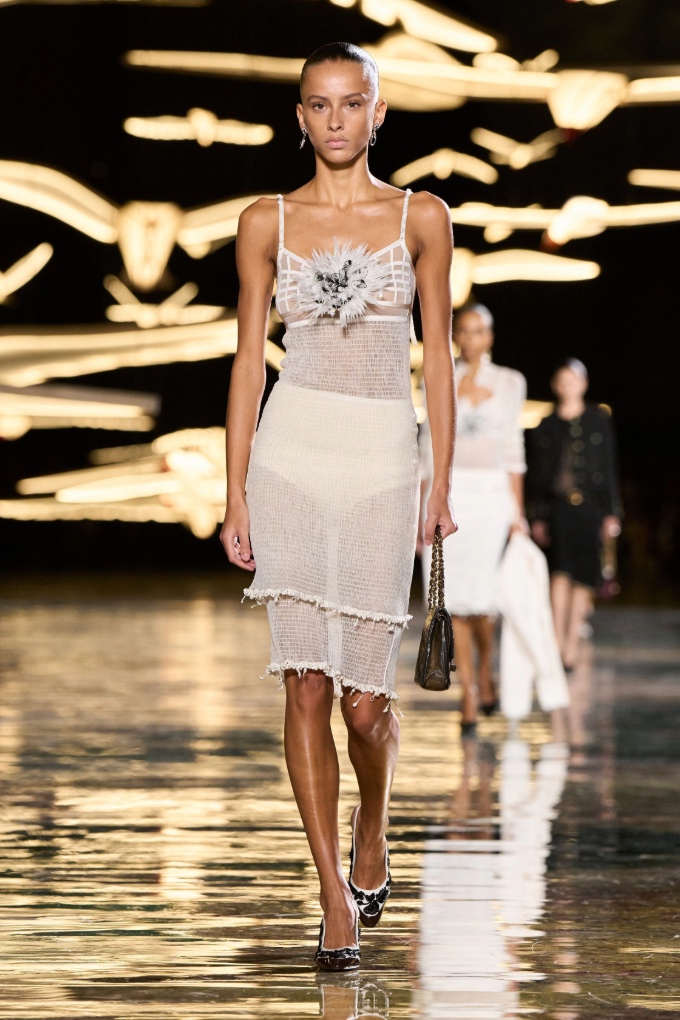
Matthieu Blazy’s Chanel debut was a mere year ago. It’s impossible not to marvel at how thoroughly he’s captured the hearts of fashion loving women in that short span of time. The frenzy outside the house’s stores may have cooled this season, but the evidence of the collective affection for Blazy is everywhere you look, from the front rows to the streets. I saw a young woman riding a bike around the Place de la Concorde last night in cap-toed Chanel heels. It was nearly dark, but there was no mistaking them.
For a designer, Chanel is the greatest prize in fashion, an independent, privately owned company with a rich history going back more than a century. There’s privilege in Blazy’s position, and no doubt pressure too, but all you see is the pleasure. “Not to go too philosophical,” he said, “but I think there is a space for poetry, beauty, joy, and it’s a good remedy to the dark time. I think fashion should give this to women.” Let other designers coast on aloofness and cool. It sounds almost hokey to say it, but Blazy’s bringing the soul back in fashion.
Coco was at the center of his storytelling again this season. He said he came across a conversation she had with Louise de Vilmorin (who went on to work on the designer’s memoir) in which Chanel said, “The child I once was is with me today… No one is closer to me than she is. She owes me everything, and I owe her what I was able to contribute to my era.” Chanel’s comment gave Blazy the idea to address the different parts of her life: a youth spent suffering the confines of Edwardian formality, her experiments wearing men’s clothes and the fun she had with costumes, and her fashion-shifting innovations around the easy-wearing suit after the second world war.
“It’s not a historical show,” he said, “it’s a show about the histories of Chanel.” But it proceeded chronologically according to her personal trajectory, beginning with ornament (bitty flower embroidery, a corsage decorating a bustline); moving briefly into masculine propositions, some of them deconstructed with raw edges, and new iterations of the runaway hit Charvet shirt; and ending with many examples of Coco’s iconic rounded shoulder jacket worn sans shirt and with a knee-length skirt slung low on the hips or a fringy mini. The same model, newcomer Dyanira Hurbuscher, opened and closed the show carrying Chanel’s own 2.55 bag borrowed from the Patrimoine archives, full circle.
The point of Blazy’s explorations was to make legible his commitment to making Chanel a place for many women across generations, not just a singular, narrow vision of them. He is also dedicated to modernisation, the way Coco herself was. A group of pieces near the end were the result of a year’s worth of efforts to develop a new tweed, something stretchy in re-embroidered organza and silk that could be “the answer to what sportif means at Chanel.” With different teams, he also developed new yarns and recalibrated machines that make textiles so that embroideries can be integrated directly into the process of knitting. The zesty yellow two-piece top and skirt set was a showcase for this freshly developed know-how.
All that’s a lot of technical hoo-ha, though, when really the brilliance of Blazy’s Chanel comes down to its heart aflutter got-to-have-it-ness. On that subject, prepare yourselves, ladies: there were 83 looks in the show and each and every one of them was accessorised by a different pair of heels.

1 / 10
Look 1

2 / 10
Look 10

3 / 10
Look 18

4 / 10
Look 29

5 / 10
Look 34

6 / 10
Look 41

7 / 10
Look 57

8 / 10
Look 64

9 / 10