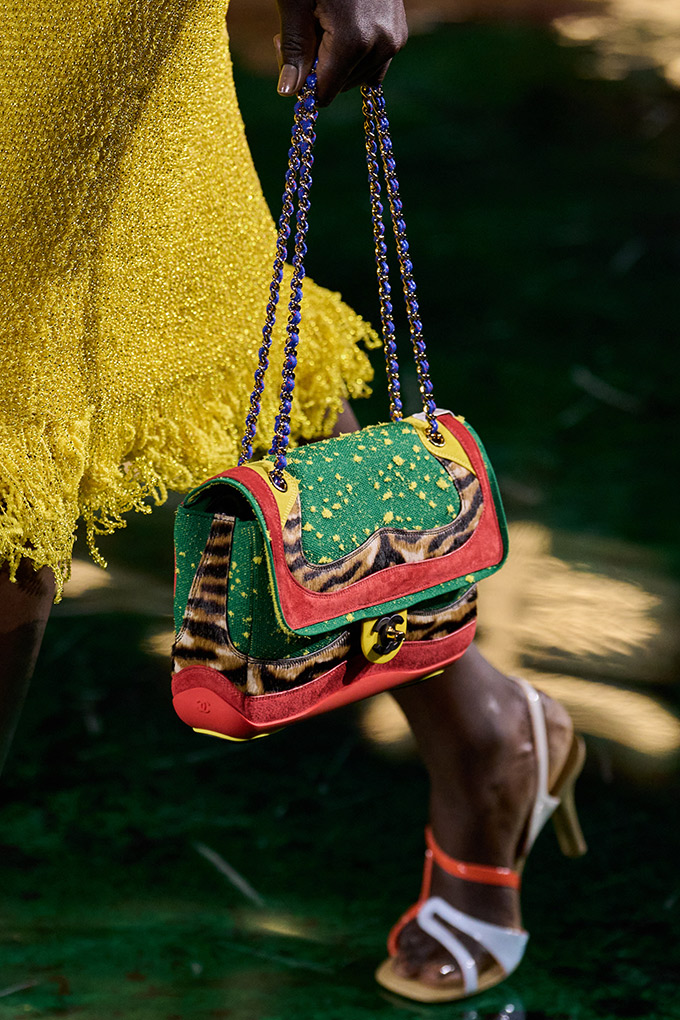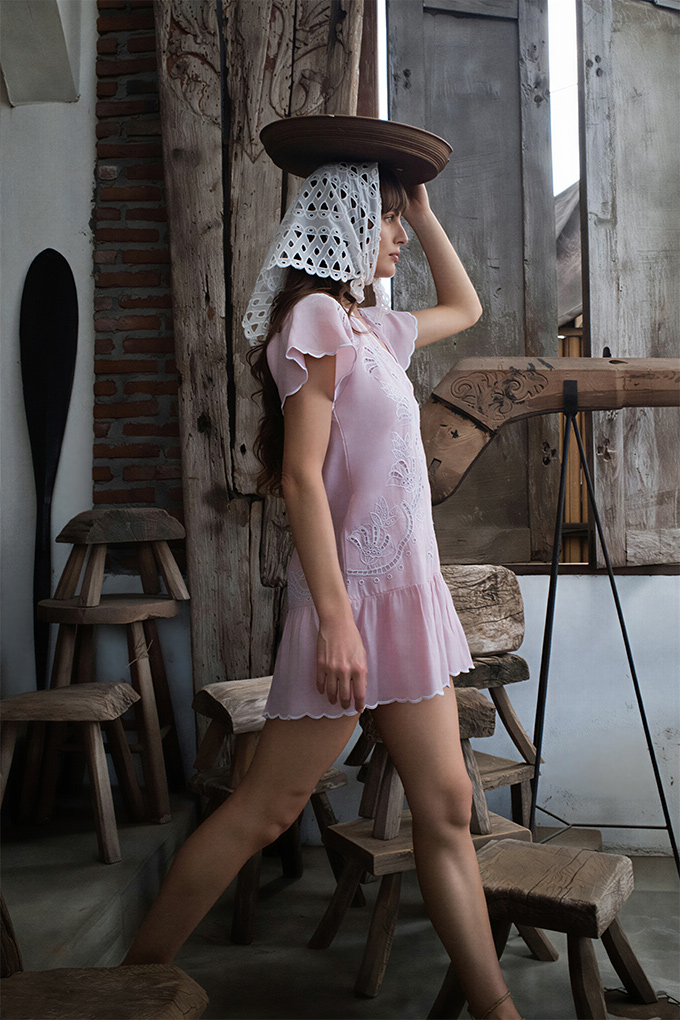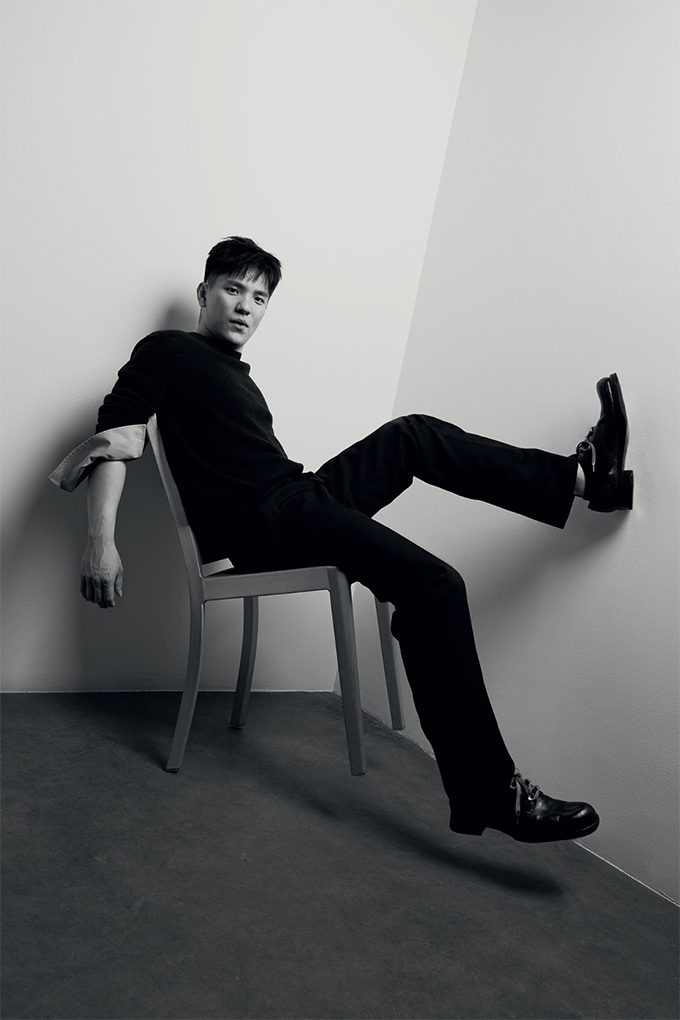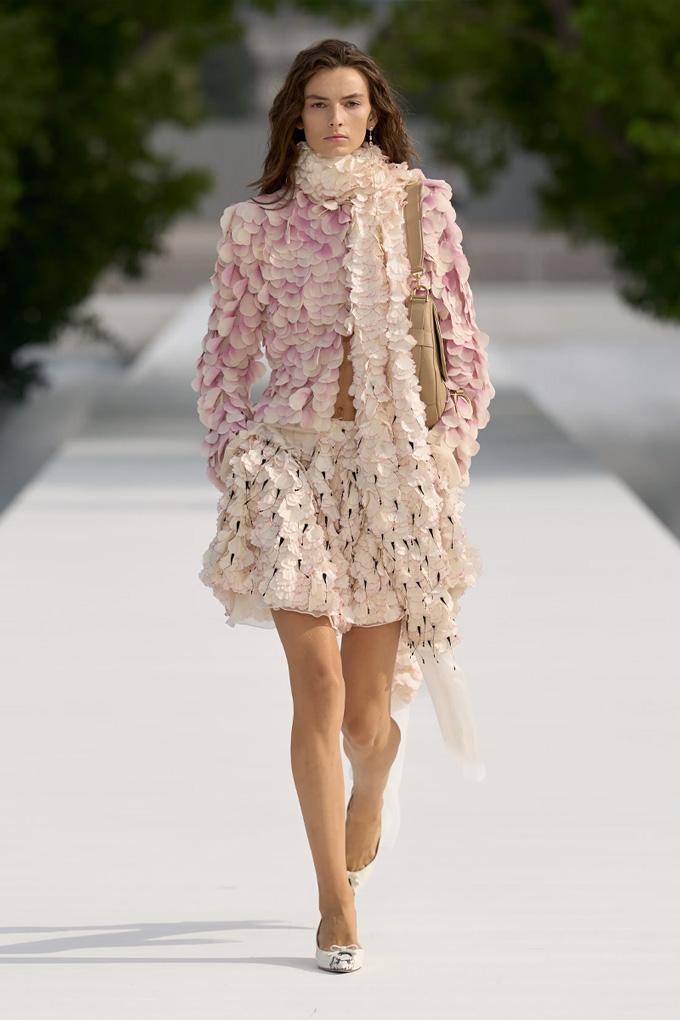
Jonathan Anderson brought his Dior woman more into focus for spring by blurring her edges into an impression of lightness. “It starts off with chiffon,” he was saying a couple of hours before his seventh women’s collection in a year fluttered its way along a runway across a pond in the middle of the Tuileries gardens.
Despite being late September, it is still so baking in Paris that Dior had installed roller blinds and ceiling fans into their pristine verandah-style runway, plying the audience with mineral water while everyone prayed for Rihanna to hurry up and arrive so that the show could go on. This vignette of the social scene that prevailed—whilst a Dior mist blew cinematically across the water—isn’t incidental. Design of all kinds, from architecture through to city utilities and the clothes we wear must adapt, fast, to how we’re going to live with the heating of the planet.
And here were Anderson’s attractively logical solutions: softened, near transparent translations of the tiny-waisted, corseted Bar jackets and circle skirts with which Christian Dior founded his house in 1947. In those days ‘femininity,’ retrenched after World War II, seemed to have a monolithic meaning. With this collection, Anderson literally saw through all of the heavy tweeds and melted away the whale-boned corseted carapaces of Dior’s original silhouettes. He’d visibly begun this transparent tailoring experiment with a few opening looks during the infernal heat that beset his Dior menswear show in July. “I’ll never forget being that hot,” he said ruefully during his women’s preview.
All of this experience translated into a refreshed concept for a summer suit: Tiny, multi-layered semi-transparent circle skirts, topped with pinstriped or tweed-printed chiffon blazers. The Bar jacket became something soft, unconstricted and somehow woven from flyaway ribbons. The prettiness favoured by Dior’s customers down the generations manifested in mobile layers of 3D pastel florals. One looked almost like a bunch of pink-and-white hydrangeas, trailing a casually frothy petalled boa around the neck.
Anderson has put a lot of thought into what the modernity of Dior might mean, and how its enduring traditions are equally relevant to a customer now. “It’s how she can operate within different kind of parts of the day, and I think it’s about trying to remove the heaviness of heritage of a brand like Dior,” he extemporised. “It’s trying to work out what you like in the brand that is opposing to you, and at the same time trying to find solutions.”
Anderson-ologists will have spotted the embedded read-overs from his men’s collections (there have been four of them since last June). His penchant for 18th century frock coats was collapsed into the pattern of a black and white tweed-printed chiffon coat worn over a diaphanous checked shirt and trousers. His obsession with men’s shirting spilled over into some amazing blue-and-white striped bias-cut blouses, worn over micro-pleated skirts with a low-slung volume. Men’s pajama tops, shawl collared smoking-jackets and khaki outdoor typologies came up too; cool and easy to wear casually, everyday.
Still, the everyday of a Dior customer is very often formal and demanding of a strictness and sobriety which is a hard quantity to find in luxury fashion. Dior is also the house to which politicians, first ladies and members of royal families of the world turn first when they need something flawlessly tailored for public occasions. Such a coat, a slim, impeccable silhouette in black, at number 26 stood out alone amongst the plethora of pretty, pink plissé and flower printed dresses in this show.
It was, perhaps, Anderson’s salute to Dior’s Mathilde Favier, who died earlier this summer, as well as to the women who attended her funeral. Black tailored Dior was worn by both the Queen of Denmark and Princess Charlene of Monaco to the funeral of the King of Norway recently. It might sound frivolous to say how incredibly chic and appropriate they all looked, but they did. That’s the kind of ‘solution’ that fashion too often forgets to fulfil.