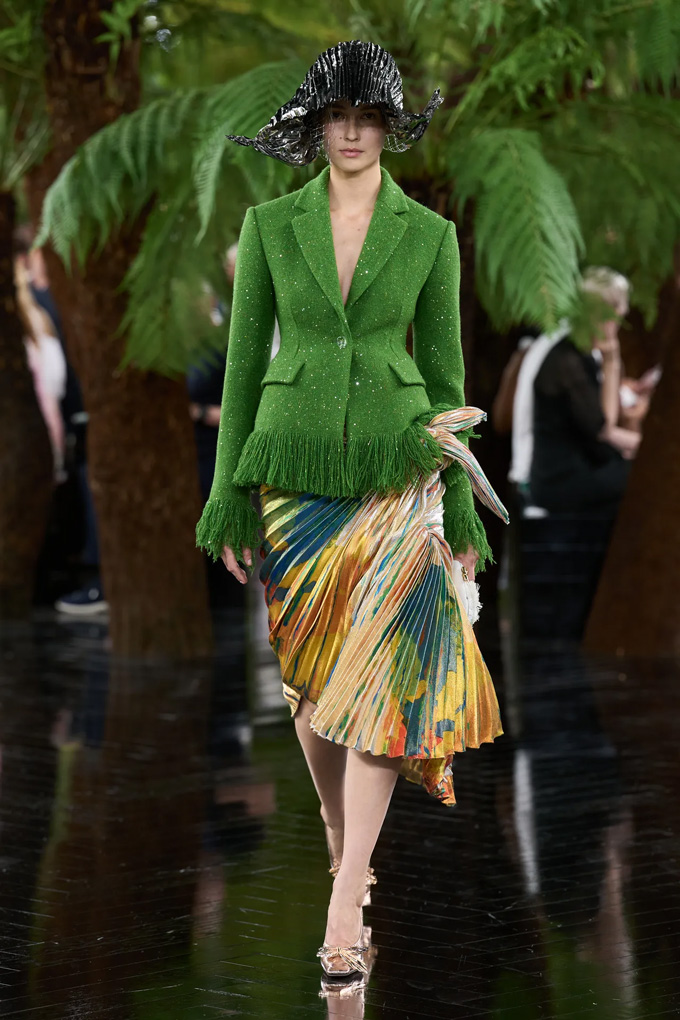
Amid the pomp of the Parisian occasion that is the Dior haute couture show—its always incredible setting in the gardens of the Musée Rodin, and the arrivals of the starry friends of the house and the Arnault family owners—it’s never so easy to clear your head and focus on what’s going on with the clothes. But under the roof of the leafy hothouse that Jonathan Anderson constructed, something softened and a little bit radical was going on between the knots and the pleats, the fluidity and the flower allusions.
The Bar suit is the toughest test for any creative director who enters the house: how to bring its relevance alive for women who are living nearly 80 years after it was invented by Christian Dior? Anderson’s solution was effectively to melt it down, take away the hardness, and replace buttoned-up silhouettes with sensuously draped shapes.
One minute, silver pleats were exploding outwards from an asymmetric cocktail dress, the next menswear checks had been bias-cut and lightened up almost unrecognisably, and used with dress-making rather than tailoring skills. A couple of trouser suits with gently-waisted frilled-edge black jackets were matched with white plissé silk trousers, cut on the bias. Skirt suits had the elegant offhand drape of silk pajamas, casually tied in the middle, the corseting of old completely forgotten.
To form this new flow of things, Anderson had continued in the footsteps of Maria Grazia Chiuri, who spent her tenure at Dior collaborating with women artists, or with their estates. Anderson, fluent in contemporary art world language, hooked up with Lynda Benglis, the American artist whose work on blurring the boundaries between painting, sculpture, and textiles inspired his freedom with wrapping, tying, and metallic fan-pleating. He’s had an ongoing relationship with the great radical feminist of the 1960s and ’70s since he was at Loewe, commissioning installations by her in 2023 (the importance of her work was put on the road to rightful recognition when Anderson’s friend, the gallerist and art consultant Andrew Bonacina, curated a retrospective at the Hepworth Museum in 2015).
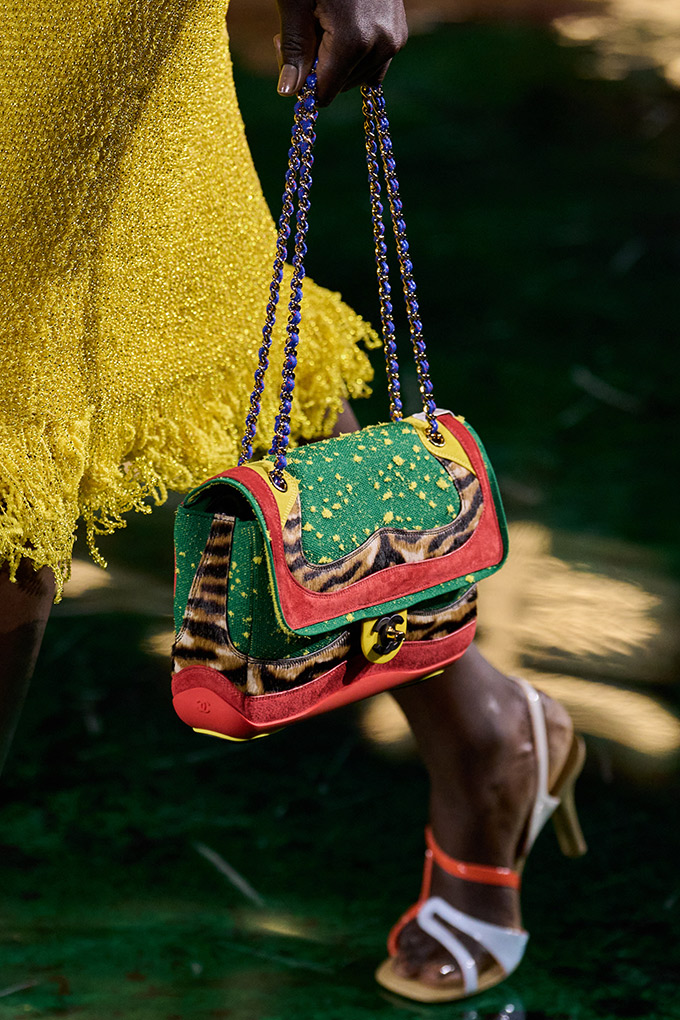
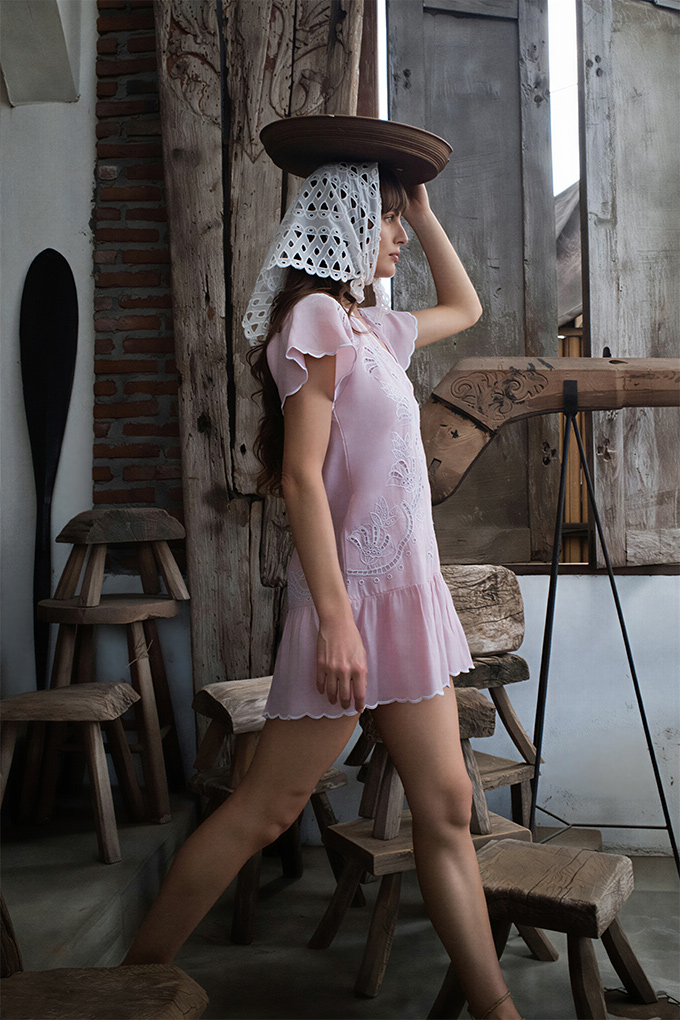
Benglis’s fascination with melting and manipulating materials into unconventional forms set milliner Stephen Jones off, wrapping his metallic bonnets to echo and enhance the free-form vibe of the collection. Her practice and life story—she’s worked and lived for years in India and New Mexico—also had another profound effect. Anderson said he’d imagined her gardens in both parts of the world. Hence the abundance of ferns, embroideries he compared to cacti and eucalyptus, and shoes sprouting exuberantly conceptual flowers. Amongst the collection of clutches were purses covered in antique Indian chintz, and porcelain ones decorated with waterlilies.
Underlying it all was Anderson’s solution—or the beginnings of it—cherishing and honouring the femininity and prettiness that has pervaded the house forever. Making it attractive for the customers who already love and spend at Dior, while also seeding a vision that can fan out beyond that to intrigue new ones is the task. Haute couture is only for the few super-wealthy of the world, but Jonathan Anderson knows how to communicate his Dior messages to a far greater constituency. A certain Dior-dressed wedding in New York a couple of days ago said exactly that, too.

1 / 15
Look 1

2 / 15
Look 8

3 / 15
Look 9

4 / 15
Look 12

5 / 15
Look 20

6 / 15
Look 24

7 / 15
Look 27

8 / 15
Look 29

9 / 15
Look 30

10 / 15
Look 38

11 / 15
Look 47

12 / 15
Look 52

13 / 15
Look 60

14 / 15