Scandinavian, Bohemian, Japandi—interior design trends have weaved in and out of style. One to take note of now: brutalism. Known for its accentuation of raw, organic materials—and abundance of concrete—brutalism’s monolithic allure has snuck its way back into the minds of designers and homeowners alike, looking to transform their urban abodes into uniquely bold and captivating sanctuaries.
Derived from the French term béton brut, meaning raw concrete, brutalism was pioneered by iconic Swiss architect Le Corbusier in the 1950s. It flourished in post-World War II with its emphasis on functionality over frills, a much welcomed ideal during a long period of reconstruction. However, the architectural style lost traction in the 1980s, as society began to favour postmodern approaches, yielding to more ornate buildings and towering skyscrapers.
Though divisive, the appeal of brutalist design has resurfaced in recent years, for one due to the Oscar-winning film The Brutalist released in 2024. Homeowners old and new have come to embrace the minimalistic nature of brutalism, revamping their spaces in a sleeker and bolder manner, and ridding themselves of lavish finishes and embellishments.
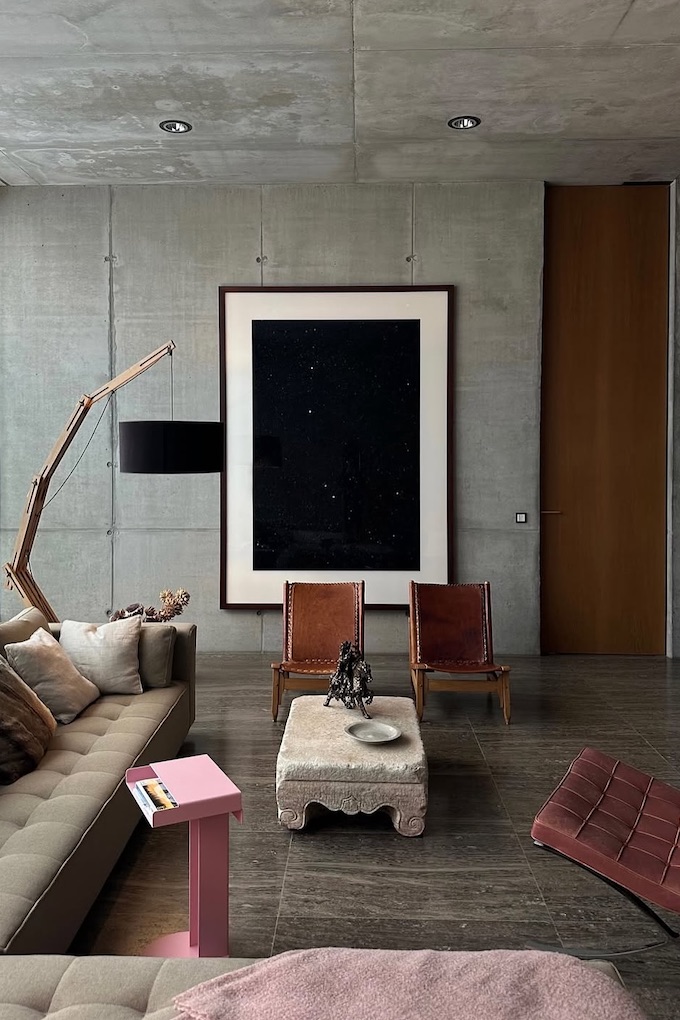
A minimalist approach to design, brutalism hones in on a utilitarian and subdued aesthetic. But minimalism doesn’t necessarily mean barebones. Modern brutalism in particular has married the overarching principles of traditional brutalism with contemporary functionality. Here, we round up some design tips as well as a curation of minimalist decor that tastefully incorporates brutalism’s silent charm into the comfort of your home.

1 / 14
Go monochrome: Ueno Bench Black Edition
Grey, black, and white are your best friends when it comes to emulating the brutalist look indoors. Setting out a monochromatic palette creates a grand canvas, against which your structural elements can shine, especially when paired with raw textures like concrete, wood, and metal that give the space a modern edge. You may also consider using different shades to add variation and depth to the space, without diverging too much from a cohesive palette.
Available at The Oblist.


3 / 14
Go monochrome: Le Feu Wall Fireplace
Available at Japandi Supply House.

4 / 14
Go monochrome: Ruby sparkling water maker
Available at Finnish Design Shop.

5 / 14
Embrace geometry: La Santa María chair
As brutalism favours a largely open and minimal concept, it’s important to create focal points when constructing your space. In setting up the overall composition, take note of how clean lines and bold shapes can help to create a dynamic flow within the space. You may introduce geometry through furniture, textiles, or even artwork—be it a monolithic concrete table, a sculptural chair, or angular shelves.
Available at The Oblist.


7 / 14
Embrace geometry: Erode candle holder
Available at Finnish Design Shop.


9 / 14
Balance with softness: Poliform Wallace Chaise Longue
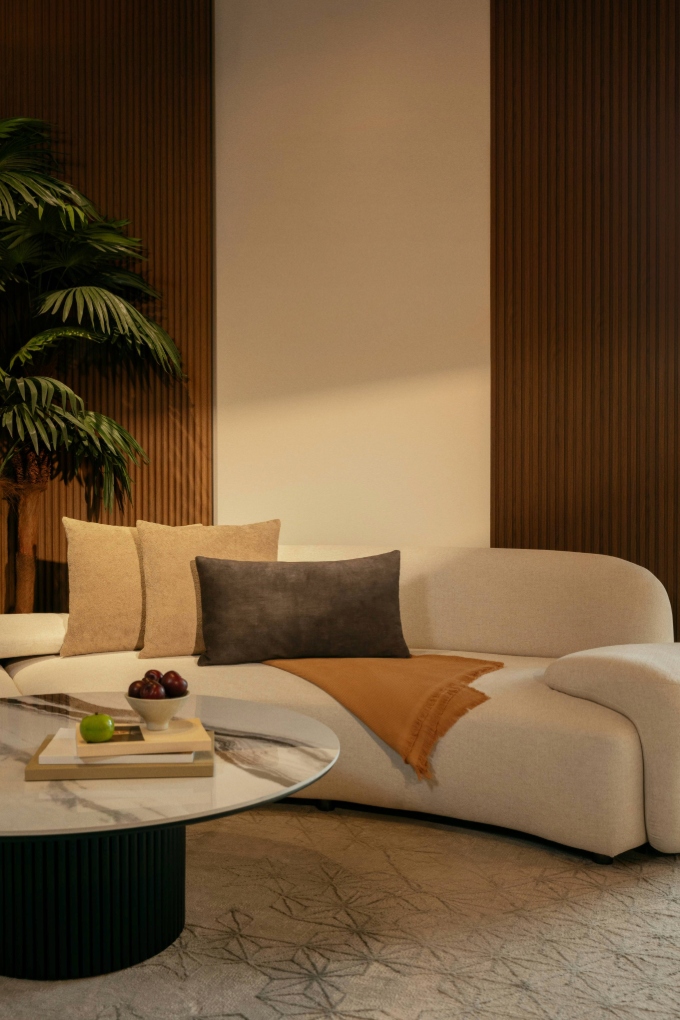
Brutalism doesn’t mean you should live in a concrete block. While the overarching aesthetic of brutalism is to embrace rawness, adding softer textiles will create a more balanced and inviting space where you’d actually like to spend your nights in. Feel free to introduce soft fabrics like rugs, cushions, and plush couches to break up the severe nature of a brutalist space. Take the warm tones of unfinished wood or the rich hues of full-grain leather to create a contrast that will only further highlight the natural beauty of these statement pieces.
Available at Space Furniture.


12 / 14
Balance with softness: Moooi Carpets Lotus Tile Rug
Available at Space Furniture.

13 / 14
Integrate nature: Japanese Ficus Benjamina Baroque
Plants may be the last thing one would associate brutalism with, but there’s nothing against adding greenery in brutalist interior design. In fact, incorporating natural elements would soften the space and provide a visual contrast against the structured geometric lines. Modern brutalism is about playing with the soft, the hard, and striking a delicate balance between the two. Perhaps opt for some low maintenance greenery, such as snake plants or succulents, which can thrive indoors without the need of direct sunlight.
Available at Soilboy.