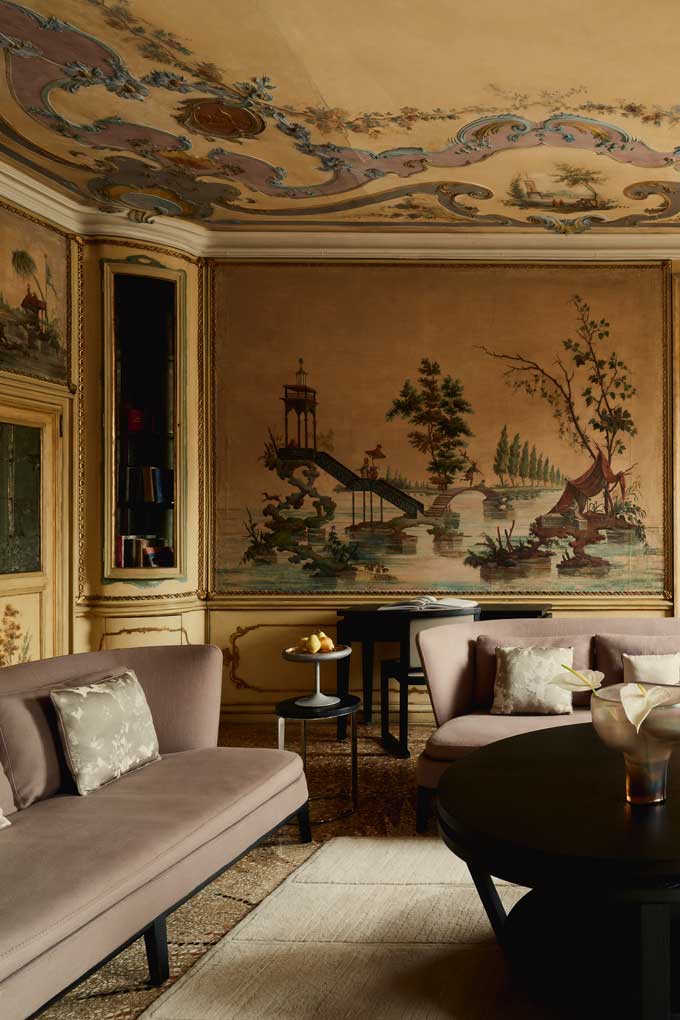
With its vivid red brick exterior, swooping arches, and exquisite frescoes painted across domed ceilings, San Bernardino alle Monache is one of Milan’s most historic churches. Stepping inside, you might be surprised to find an eclectic group of Singaporean designers standing alongside their most futuristic works.
This intriguing juxtaposition is owed to Milan Design Week—one of the most important design events of the global cultural calendar. For the third year running, DesignSingapore Council has brought a fresh crop of Singaporean creatives to the show, providing them a platform to present their work on an international stage.

Alongside design world heavyweights Tony Chambers and Maria Cristina Didero, this year’s showcase, named Future Impact 3: Design Nation, sees the introduction of a Singaporean co-curator for the first time—a fitting addition marking 60 years of Singapore’s independence. As the director and co-founder of President’s Design Award-winning creative studio Lanzavecchia + Wai, Hunn Wai is a thought leader in contemporary design and design educator based between Milan and Singapore.
For Future Impact 3, Wai dove into Singapore’s past to rediscover oft-overlooked moments of design brilliance in our history. One notable example is the original HDB model—the ingenious public housing grid which marries utility with communal charm to function as the land-scarce city-state’s bedrock.

The showcase then takes visitors to the main exhibition floor, comprising the works of six leading contemporary designers from Singapore as well as six emerging names to watch. Hailing from vastly different backgrounds and disciplines, what this group of creatives share in common is distinctively future-forward point of view—using design to identify and solve hyperlocal and yet universally relevant problems. Below, see our shortlist of the most exciting designers from Singapore who showed at Milan Design Week.

1 / 5
Olivia Lee
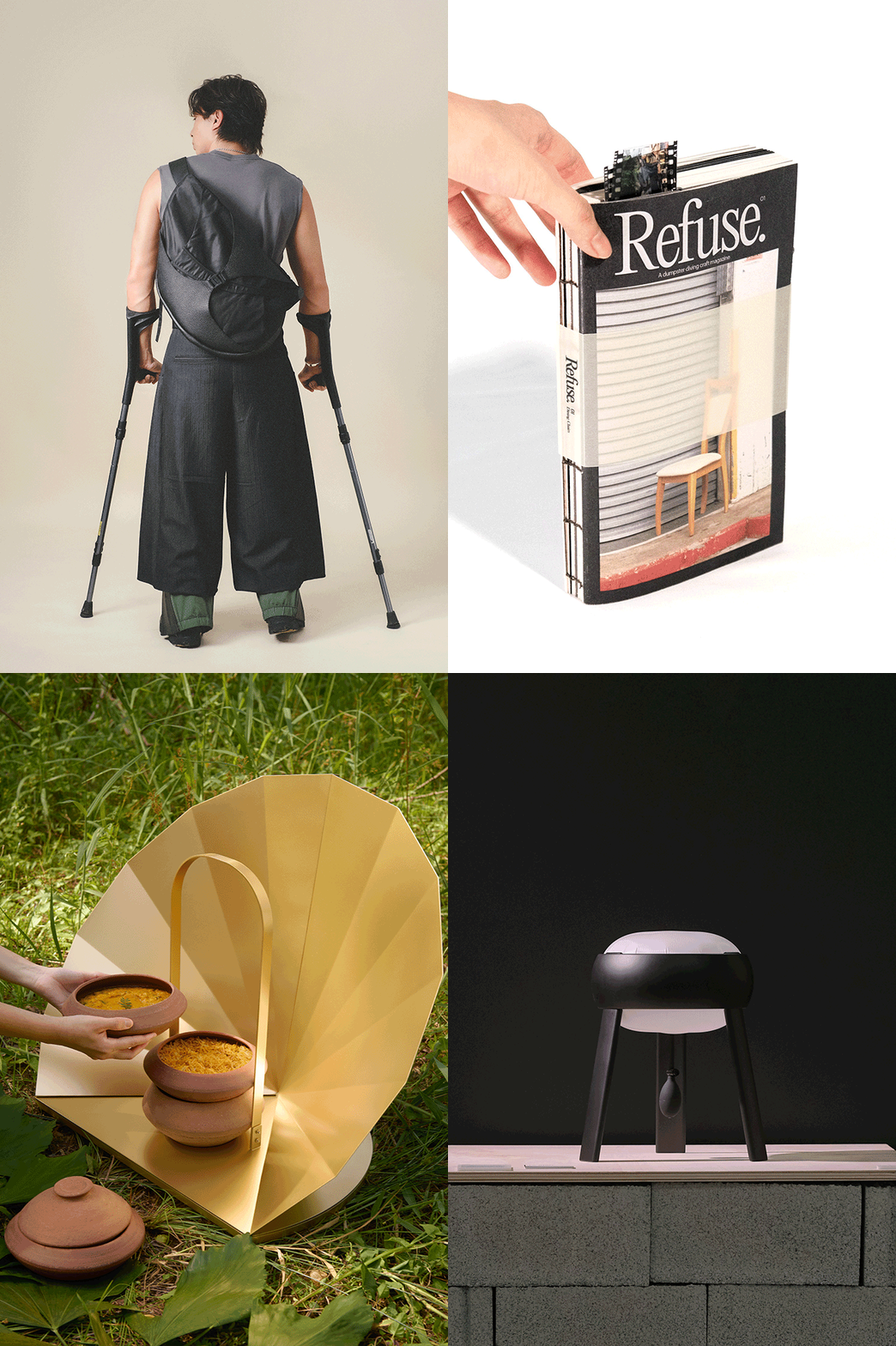
Multidisciplinary designer Olivia Lee’s latest project comes in the form of a deceptively ornate object. Dubbed Matahari (Malay for “eye of the day”, an idiom for the sun), the multi-tiered terracotta solar cooker is framed against a golden-hued metallic deflector—evoking a melange of familiar references like an old-school tiffin box or traditional earthen claypot. Known for her highly conceptual and visually striking work, Lee manages to comment on cultural confluence, climate change and the overlooked wisdom held in domestic labour with a single object, reimagining the place of green energy in the kitchen through a distinctively Southeast Asian lens.

2 / 5
Eian Siew
Through Pnewmatics, industrial designer Eian Siew unlocks the creative potential of a substance we often take for granted: air. Engineering a diverse line of products which make use of air in versatile ways—from a stool that utilises an inflatable air bladder to secure solid components, to a rehabilitative chest brace using vacuum dynamics to provide adaptive compression to stabilise the sternum, reduce pain and enhance mobility after open-heart surgery—Siew fuses creative design with innovative technology to offer a promising glimpse into the future of biomedical design.

3 / 5
Claudia Poh
At the forefront of the inclusive fashion movement is Claudia Poh, the founder of adaptive clothing label Werable. With accessibility at the heart of her work, Poh’s newest creation is inspired by an encounter with a friend who was struggling to find a suitable bag to use while walking with crutches. Designed for one-handed access and equipped with adjustable straps, the bag adapts seamlessly to the user’s gait and movement patterns—enhancing stability without restricting motion. Crafted from genuine leather and tear-resistant nylon, the product echoes the ethos behind much of Werable’s offerings: a desire to fashion a world where everyone belongs.

4 / 5
Wong Eng Geng
Designer and photographer Wong Eng Geng pays tribute to the misunderstood art of dumpster diving with Refuse, a craft journal capturing the process of transforming discarded furniture into something wholly new. Inspiring us to look at ‘waste’ through a new lens, the display advocates for a circular economy and a reconsideration of our habit of overconsumption. Beyond the evocative journal, the invisible magic in Wong’s project lies in his ability to activate the greater creative community to rally around this idea—thereby maximising the project’s potential and lifespan.

5 / 5
Namjot Kaur
The practice of botany is deeply embedded in many cultures—including in Singapore, where home gardens take root in many households. Product designer Namjot Kaur levels her gaze at improving the bulky plastic supports that many domestic gardeners resort to using in their plant pots, particularly useful for climbing plants and rare species like the Monstera. With Tera, a sculptural terracotta pot equipped with a central water-storing funnel that slowly diffuses water to prevent over-watering—while serving a dual purpose as a support structure—Kaur marries form and function seamlessly, resulting in an innovative gardening solution that doubles as décor.