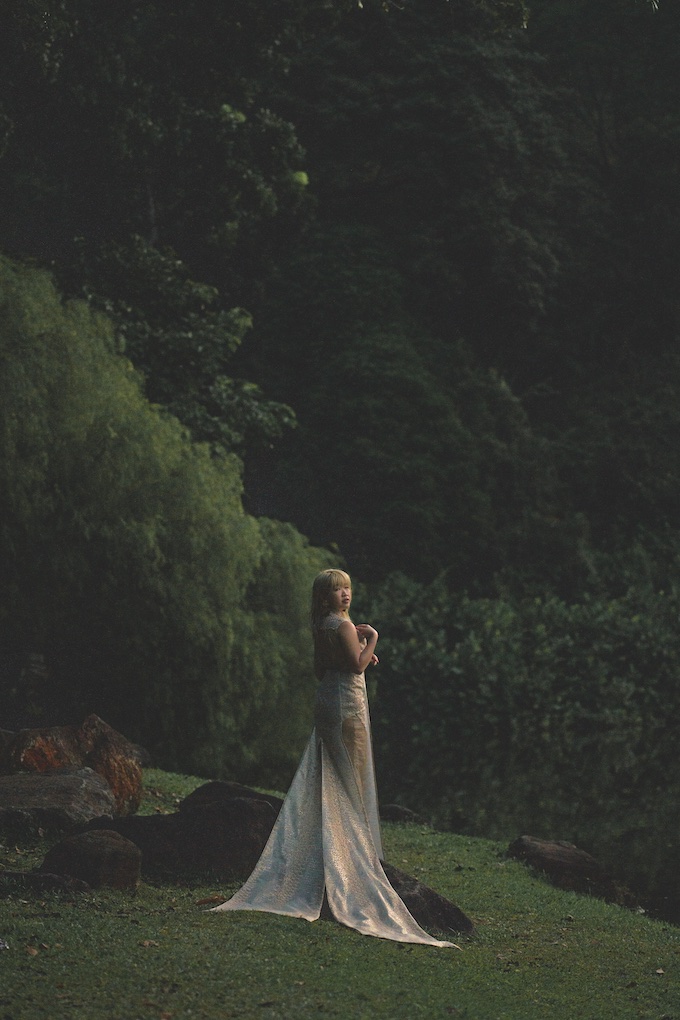
It is New Year’s Eve and Linying is sandwiched between a throng of artists and models at a rooftop party in the Hollywood Hills of Los Angeles. Loud music reverberates through her chest as half-empty glasses of shiny liquid slosh around. It’s getting late, she thinks to herself. She has an important appointment to keep the next day.
The next morning, she finds herself surrounded by a decidedly different crowd: Asian septuagenarians. This community of immigrants, a majority of them well into their 60s and 70s, meets up religiously in what Linying describes as an “extremely immigrant part of town” for one reason and one reason only—to play badminton.
The Singaporean musician, who has been living in Los Angeles for more than two years now, finds herself instinctually drawn to this crew of seniors, joining in their athletic endeavours several times a week. “LA is lawless,” she explains, breaking into a cheeky, dimpled smile. “You call your friends’ parents by their first names! I miss the feeling of old Asian people bossing me around and treating me like a child.”
“Sonically, this album is a lot heavier than what I’m used to making on my own, which I enjoy because it captures this time of my life well.”
We are speaking on a Thursday morning (Wednesday night for Linying) and she is curled up in the front seat of her car, hugging her knees like she’s sharing a nightcap with an old friend. The airwaves on our Zoom call are crackling with the electric energy of soul-baring conversation.
As we chat, I catch a glimpse of her musical forte out in the wild. Even in conversation, Linying speaks poetically and emotionally, and it’s easy to notice a through line in the way these qualities transfer to her confessional lyricism. Her new album, Swim, Swim, is on the cusp of release and it’s the first one she’s written while away from home—mere months into a major move across the globe to her new base in Los Angeles.
Pieced together over the course of a year, the 10 tracks of Swim, Swim reveal not only Linying’s arrival into the new evolution of the craft, but also a deeply personal vignette of a second coming of age. Armed with old-soul wisdom and the achingly honest openness of someone having come to terms with the uncontrollability of life, she puts both her regressions and growth on unabashed display. There’s no more holding back. That, in itself, is a triumph.

What does Swim, Swim symbolise about where you are today in your journey as an artist?
I tend to fixate on things. Every time I create a body of work, it’s related to one of my fixations—whether that’s heartbreak, trying to belong somewhere, or the fear of being happy because you’re scared to lose something special. I used to feel exhausted at myself. Why do I need to care so much about who I am? It would irritate me. (Laughs) With this album, I have accepted this part of myself. I do spend a lot of time introspecting, but maybe if I lean into that and stop beating myself up for it, I can discover something about myself that will, in turn, allow someone else to discover something about themselves. I have benefited from artists who look inward and I’ve never thought that they should have been making more important music.
You talk about being in your body and taking inspiration from nature for the making of Swim, Swim. What inspired you to take a more sensorial approach to this album?
Part of it has to do with a crazy, disorienting period of my life. Right before I was about to move to LA, I ended up going to a remote island in the Philippines called Siargao. Josh, a producer friend of mine, had roped me in to work with a Filipino movie star who wanted to transition to a music career. We had to take two planes—one of which had a propeller, I kid you not—to get there. There was no studio. We brought our own mic stands and holed up in her villa because she was wildly famous and would be mobbed every time she went out.
I fell in love with the island. It is so untouched. I loved how free and uninhibited I felt when I was there, and there was a magic in realising that if I wanted something, I had to figure it out for myself. For example, if we wanted to eat pork, we had to go down the one road that exists on the island and ask around, ‘Hey, do you know who might kill a pig today?’ I have never experienced a way of life broken down to its essence like that. Being at the mercy of the natural world is unrelenting. Some days you might want fish, but you don’t have any because the fishermen didn’t bring any back. Look, too bad—maybe eat a banana instead?
“I have benefited from artists who look inward and I’ve never thought that they should have been making more important music.”
I imagine this lack of control would be quite illuminating since we are used to having an absurd amount of control over our lives. Was there a sense of, ‘Wow, this is actually how human beings are supposed to live, in community with one another’?
Exactly. Particularly because in LA I can get anything I want with a snap of my fingers. I can get groceries delivered to me in 10 minutes. The consumerism here is mind-boggling— everything is available all the time and you have endless options. So, being in a place where it’s the complete opposite was illuminating. I realised that nothing is constant and everything is circumstantial. You are subject to the forces around you, and to go through that internally then see it mirrored in my outside world was comforting.
Sonically speaking, what is going to be different about this album?
One cool thing about this album is that I worked with three main producers who all come from vastly different musical backgrounds. One of them is from the south, so he has a real sense of melody which we connected over. The other two are from the post pop punk world, so the way we worked was unplanned and instinctive. We never tried to make everything perfect. Sonically, the music in this album is a lot heavier than what I’m used to making on my own, which I enjoy because it captures this time of my life well and reflects it to listeners.
With this album, it’s clear that you’ve arrived at a new destination and a new creative identity. What are you looking for next?
One of the aunties at badminton told me recently, ‘You need to find the middle point’. She told me that I wasn’t hitting the bird with the right strength because I was gripping too hard all the time. And because I was gripping so hard continuously, I didn’t have the energy I needed when it actually came time to hit. So that middle point, I think, is what’s important. Life will keep flowing. There will be a high, then a low and then there’ll be a high again. You just have to be okay with that and find your balance.
Vogue Singapore’s April ‘Movement’ issue will be out on newsstands from 14 April and available to preorder online.