Olivia Rodrigo, Chappell Roan, Rosalía. If you’re not living under a rock, there’s a good chance you’ve heard of these pop icons, who sell out stadiums with earworm-inducing tracks that dominate streaming platforms as much as they do the cultural zeitgeist. They are also solo artists—marking a profound shift in the fabric of female singer-songwriters in the 21st century.
But for every Taylor Swift or Laufey out there, there are countless artists who don’t enjoy the benefits of a ravenous fanbase or billions of streams online. These are the musicians working in the background, putting their nose to the grindstone to create art that’s as meaningful as it is underrated. Their efforts are no less deserving of your time and energy.
First things first, though: what does ‘singer-songwriter’ even mean in 2026? Simply put, it describes musicians who write and perform their own work. At the turn of the century, as music’s celestial body began its slow descent across the event horizon of dying radio waves and MTV, the term might have applied to artists like Jason Mraz, Jack Johnson and Iron & Wine. Rewind further, and you arrive at the prototypical ‘white guy with a guitar’, albeit with greats such as Bruce Springsteen and James Taylor.
Now, it’s anyone’s game. Do you sing? Do you write songs? Well, then, you’re a singer-songwriter. The folksy formula of days long past has been forced to evolve with the times—the genre is no longer stuck within the confines of soulful warbling accompanied by the gentle strumming of acoustic guitars. And, crucially, both whiteness and maleness are no longer prerequisites for success.

New slices of the singer-songwriter pie are cropping up daily. Thunderously glacial shoegaze filtered through used MIDI keyboards bought off eBay (see Della Zyr from South Korea). Gridlocked electronic production forged in the mathematical crucible of digital audio workstations like Ableton (see Wu Zhuoling from China). The tried-and-true classic of ‘guitar plus vocals’ still looms large, too, but new generations are carrying that torch forward with a regional flair (see Fazerdaze from New Zealand). Unfortunately, despite the wealth of talent on display today, the hard work of making music remains an uphill battle for everyone.
The great myth of the modern age is that social media has placed the podium of success within everyone’s reach. Alas, the truth is far stranger—and far more unforgiving—than this fiction. When all is said and done, we all need to eat; we all need a roof over our heads. And if you’re going solo, then you need to grapple with marketing and outreach, administration and logistics.
Therein lies the crux of the issue: how does one make a living as a solo musician? Genuine, creative self-expression isn’t always enough to put food on the table, especially when the price of living continues to skyrocket. You could work your creative muscles down to the bone, but if you don’t get that record deal, if you don’t properly manage tour costs, if you don’t catch your break, what then?

What happens to the calling when it no longer provides material relief? Is authentic artistry even feasible in a world actively being consumed by the gaping maw of the oligarchy? Many would say the endeavour would be a thankless fool’s errand. But music, like all art, is a pursuit of passion. To those truly invested in the practice, the value of millions pales in comparison to a life well-lived—to small satisfactions like a song sung well.
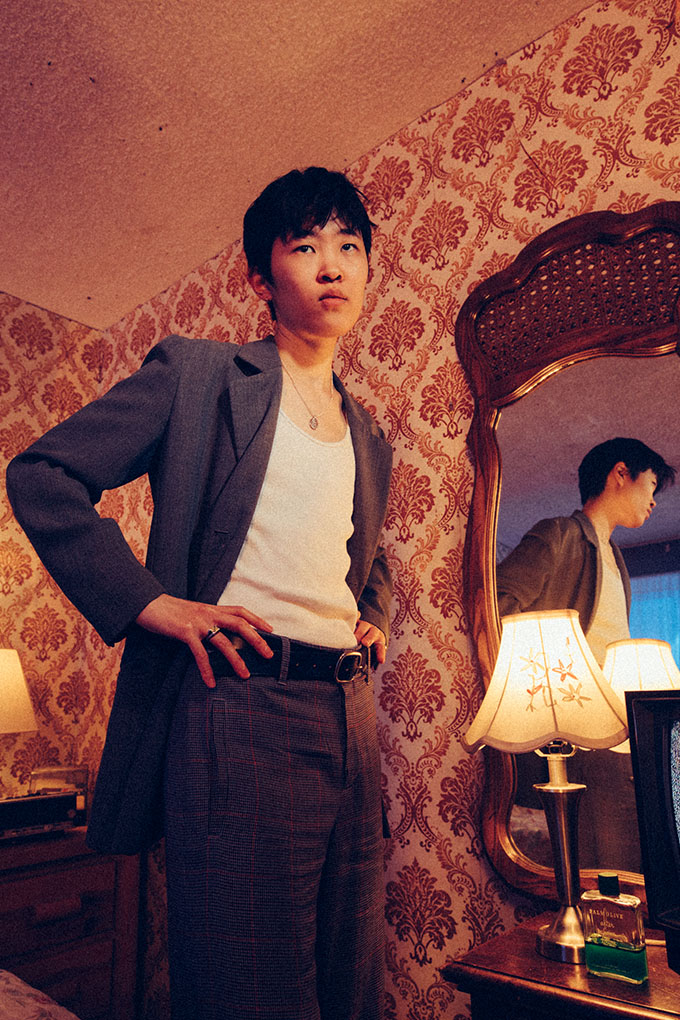
For your consideration on this front, dear reader, I present to you: Baek Hwong, who performs as NoSo. They are one of the artists who would argue that pursuing music today is still, in fact, possible. In the face of a world that pulls no punches, they know what it takes to remain themself, boldly and unapologetically. Why should it matter if corporate culture refuses you entrance to its rat race? Success, defined by modern metrics, be damned.
The production of Korean artist Hwong closely mirrors industry counterparts like Yumi Zouma, Hatchie and Sjowgren: fleshed-out band arrangements, tasteful guitars strumming catchy riffs and wonderfully smooth vocals. Fronting it all is a bold moniker: NoSo serves as a defiant assertion and reclamation of identity (ultimately, whether they hail from North or South Korea is beside the point).

I spoke with Hwong to get a closer look at what makes the singer-songwriter clock tick—and how the role continues to evolve in an ever-changing musical landscape. Read on for their perspectives on everything from the shifting dynamics of the singer-songwriter and social media’s impact on the art form to the importance of solidarity in supporting artists, as well as the state of Asian representation in the industry today.
On their creative journey
I began writing songs in childhood but didn’t see it as a clear path until I was in a songwriting contest through Carnegie Hall when I was 16. We performed original music with bands at a music festival in South Africa, and it was so special that it solidified my ambition. I then decided to study music in college and started releasing music under the moniker NoSo. I think my relationship with music today is largely similar to when I first started playing. I feel the most myself when I’m in my room learning something new on instruments and it bleeds into the songs I write. I will always consider myself to be a student in music and that’s what allows my relationship with it to remain pure and exciting.
On their love for music
For me, it’s the way it creates so many ephemeral connections. My mum worked at my favourite venue called Ravinia Festival in Chicago when I was growing up, so I would listen to artists like BB King, Bonnie Raitt and Aretha Franklin every night. Watching the crowd dance and form memories together is what mesmerised me the most. When I’m performing and watching the crowd move together, it evokes the same feelings in me. It feels like you’re a participant in something, even from the stage.
On the term ‘singer-songwriter’
The connotation used to make me think of a sort of twee genre and acoustic guitar, but in this day and age, I feel it’s an evolved term. I consider myself a singer-songwriter, even though most of my music doesn’t feature acoustic guitar and my production has lush arrangements.

On their sound
I think my approach to guitar is a significant contribution to my sound. I almost think of it as playing bass and guitar at the same time. My performance of ‘I Feel You’ in my Tiny Desk session on NPR is a good example of it. I also consider my production process as an integral part of songwriting, so that gives my music a specific feeling as well.
On material solidarity
Any kind of support means the world to artists, especially when it feels very human. When someone can afford to come to a show or buy a record, of course it means a lot. But when I receive comments or messages about why certain songs resonate with them, it also rejuvenates my spirit. I’m deeply grateful when someone continues to tune in and listen to my music through the years. My dream has always been to keep evolving musically as my audience grows and we get older. I truly believe that’s the greatest gift a musician could receive.
On social media
I use it as a tool. I clock in and post what I need to quickly, then clock out so I can be creative. I think lingering on it is bad for me mental health-wise, so I’ve set strict limits. I am not someone who looks forward to posting on the internet, but I do it because it’s helpful and there’s no universe in which I’d give it up. Making albums takes so much time and I’m proud of what I’ve made, so of course I’ll create as many chances as I can to reach new people.

On fame
My main goal has always been to become a legacy musician one day, and I think the personal and intimate nature of my songs feels like a strong foundation for building that. I never really saw anyone like me in music while I was growing up, and I think that being consistently honest in my lyrics allows the right people to find me.
On representation
There’s so much more mainstream Asian representation for younger generations in music. As a kid, I would watch a lot of K-pop shows like Music Bank. I was so happy that they were cool and not the butt of the joke like how the media portrayed Asians at the time. There’s still work to do with intersectionality in music, but we’ve made strides. Olivia Rodrigo being one of the biggest artists in the world is a prime example of that. If there was an Asian artist like her dominating the charts when I was a kid, I would’ve felt more confident in my all-white town.
On their inspirations
It’s forever Prince and Frank Ocean, and lately it’s also Pink Floyd. My parents showed me a performance of Purple Rain when I was eight and I was too young to understand Prince’s brilliance. It wasn’t until I listened to his records at 18 and realised what a genius he was; now he’s my favorite artist of all time. Frank Ocean’s music just makes me feel everything. For him to write downtempo music that resonates so deeply and universally, and to still sound so ahead of its time is a staggering accomplishment. My dad’s favorite band is Pink Floyd, and, like Prince, I never quite understood them until recently when their music suddenly moved me. Their experimental choices and the moods they create are beautiful.
On aspiring musicians
Don’t spend too much time on your phone and don’t measure yourself against what you see online. Put that energy into practising your instrument instead. Show up to local shows and support your fellow artists. Don’t just follow what others deem cool in music. Trust your instincts and embrace what genuinely resonates with you.
The September 2026 ‘Beyond the New’ edition of Vogue Singapore is available online and on newsstands.