The signs of hair fall creep seamlessly into your routine until they become normal—spotting a few strands on your pillow, a tangled bunch in your hairbrush, or simply watching them swirl into the drain when showering—it’s a daily affair. Not all hair fall, however, is made equal. While the outcome may appear similar, hair shedding and hair thinning are two very different… hairy situations.
“Hair shedding is usually temporary,” explains Dubai-based aesthetic medicine and anti-ageing physician, Dr Bushra Mir. “It happens when a larger-than-normal number of hairs enter the resting phase and fall out. The follicles remain intact, which means regrowth is expected once the trigger settles.” This is particularly triggered by a sudden shock to the system, like periods of stress, illness, hormonal shifts, crash diets, postpartum changes, nutritional deficiencies, rapid weight loss, and, of course, seasonal changes.
Hair thinning, on the other hand, is more progressive and involves gradual miniaturisation, in which hair becomes finer over time, and overall density slowly decreases. The driving factors for hair thinning include genetics, androgen sensitivity, ageing, chronic inflammation, and long-term hormonal imbalance. As Dr Mir notes, this is often long-term and can worsen without any targeted intervention.
View this post on Instagram
According to Dubai-based hairstylist Samir Alhassan, the core difference between hair shedding and hair thinning is simple—losing strands versus losing density. “Hair shedding is a quantity problem. Your hair is suddenly falling out in large amounts. Here, the follicles themselves are pretty healthy, but something has triggered them to drop the hair all at once,” he says.
“Hair thinning is a quality problem where you may not see a lot of hair in the drain, but the actual strands growing out of the scalp are becoming skinnier, weaker, and more fragile over time.”
Signs you’re shedding
With shedding, both experts state that people notice a sudden and visible increase in hair fall, with temporary loss in volume. Think of clumps of full-length hair on your clothes, in your shower drain, within the bristles of your hair brush, and on your pillow.
Signs you’re thinning
Thinning, on the other hand, manifests itself through a widened parting, receding hairline, reduced density, finer strands, and a gradually more visible scalp, especially under bright light. “It is slow and sneaky. You won’t see dramatic fallout,” says Alhassan.
Both Dr Mir and Alhassan warn that if shedding doesn’t resolve itself after three to six months—the natural shedding period once the body rebalances—or thinning becomes more noticeable, then professional intervention is advised. For thinning, it’s important to act immediately—the sooner you treat a shrinking follicle, the easier it is to save.
“When clients sit in my chair, and I hear the panic in their voices about their hair, they almost always confuse these two issues,” explains Alhassan. “But treating them the same way is a major mistake—it is like trying to fix a skin breakout with a hydrating cream—it simply won’t work.”
Dr Mir notes that the biology for each is different. For hair shedding, treatment needs to focus on identifying and correcting the triggers, restoring nutritional balance through a diet rich in protein, iron, and essential vitamins, reducing stress, and allowing natural regrowth.
View this post on Instagram
As a hairstylist, Alhassan also recommends avoiding tight, slicked-back hairstyles that put unnecessary stress on weakened roots and switching to a silk pillowcase to prevent friction. Since it is temporary, the main goal is to support the body while the hair naturally grows back.
Hair thinning treatments focus on follicle preservation and reactivation, often requiring long-term scalp and hormonal support. Targeted scalp serums that contain minoxidil or high-quality rosemary oil blends force blood circulation to the follicle, keeping it nourished and wide.
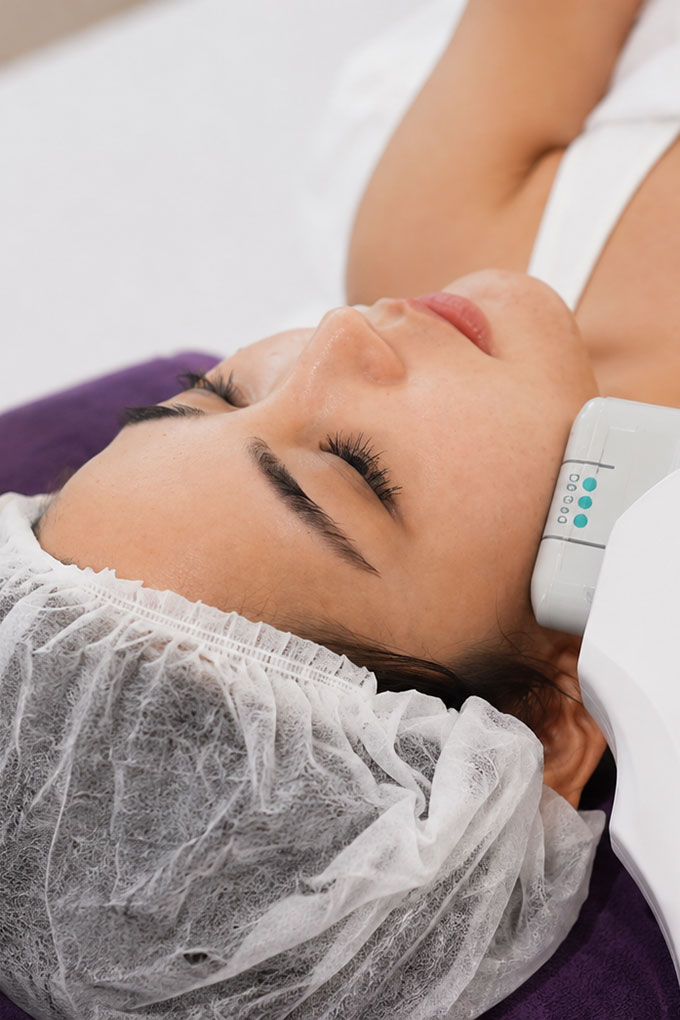
In-clinic, patients can opt for regenerative treatments that help with thinning hair. “Peptide therapy supports cellular signalling and follicle activity, exosome therapy may help reduce inflammation and improve communication between scalp cells, stem cell-based treatments aim to stimulate dormant follicles and improve the regenerative environment of the scalp,” explains Dr Mir. “These approaches are promising, but still evolving.”
In-salon, Alhassan recommends asking your stylist for a structured, blunt haircut. Removing wispy, thinned-out ends, it instantly creates the illusion of density. “Adding multi-tonal lowlights can also shade the scalp, so it looks less visible,” he says.
This article was originally published on VogueArabia.com.