If there’s one thing I know for sure, it’s this: your hips don’t lie. I used to think it was just about belly dancing, but one accidental TikTok spiral later— watching people cry through deep hip stretches—those words have started to mean something more to me. That’s how I ended up learning about the psoas (pronounced SO-as), a deep core muscle that sits at the centre of your hips, connecting your spine to your legs. It plays a big role in movement and posture, but it’s also often linked to how the body holds stress. Because of where it sits, tension in the psoas doesn’t just stay in one place. It shows up as tight hips, an achy lower back, that general feeling of being a bit wound up.
@gurl_in_spaceI cannot explain how much lighter my body feels♬ Chanel – Babyxsosa
In yin yoga, there’s a belief that the hips store emotions, sometimes even the lingering kind you don’t consciously think about anymore. Whether or not you fully buy into that, it’s hard to ignore how closely physical tightness and emotional stress seem to overlap. The idea that your hips don’t lie starts to feel a little less metaphorical. After watching enough of these videos, I decided to try it out myself. I wouldn’t say that I’m emotionally repressed, or at least not that I’m fully aware of, but I had been looking for ways to release pent-up emotions beyond the usual journalling or ranting. Adding a few hip stretches into my routine felt like a low-stakes place to start.
The benefits
A lot of this ties back to the idea that the hips are connected to the sacral chakra, often associated with connection. It’s less about anything mystical and more about how this part of the body sits at the crossroads of instinct and expression. The things you don’t say, the feelings you brush off, the reactions you swallow, they tend to settle somewhere. What makes hip openers different from your average stretch is the pace. You’re not moving quickly in and out of positions. You’re staying there, sometimes for longer than is comfortable, with not much to do except breathe. That stillness encourages awareness, one that’s easy to avoid in day-to-day life.
The “release” people talk about isn’t always dramatic. More often, it shows up in smaller ways. A sense of looseness, a bit of mental clarity, or just feeling slightly less tense for no obvious reason. That said, there’s a reason instructors often give a small heads-up before longer hip stretches. Holding these poses can feel unexpectedly intense, and not just physically. It’s easy to underestimate until you’re in the middle of it, trying to breathe through a stretch that feels like it’s hitting somewhere deeper than you planned.
View this post on Instagram
How-to
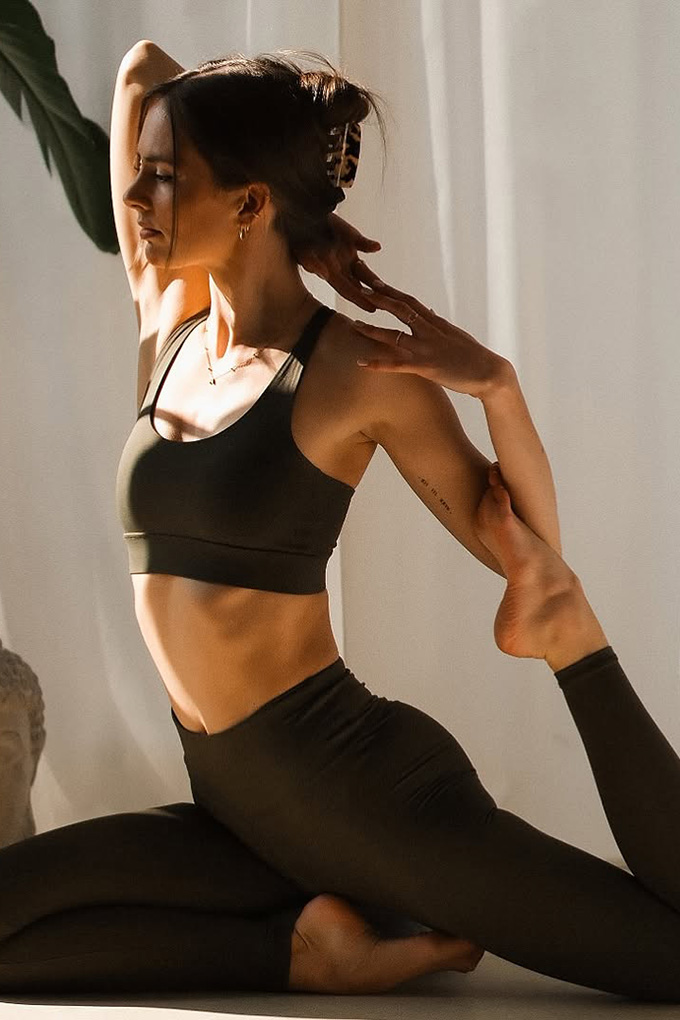
After some research, I narrowed things down to three stretches I could realistically stick to each night. I wanted something simple enough that I wouldn’t give up after a few days, but still effective enough to feel like it was doing something. Most nights, I would ease into frog pose first, letting the intensity of the stretch settle in as I focused on breathing through the discomfort. From there, I’d shift into child’s pose, which felt like a natural reset, softening everything and giving my body a moment to recover. I’d usually end with pigeon pose, the one I had been most curious about, holding it a little longer each time as I got more comfortable.

The results
Full disclosure, I wasn’t crying on the mat. No dramatic breakthroughs, but after a month, I did notice slight changes in my overall mood. The first week felt underwhelming. I was a little more flexible, maybe a bit lighter, but nothing that matched the emotional outpouring I’d seen online. If anything, I wondered if I was missing something. Still, I stuck with it, and somewhere around the halfway mark, things started to change. I began holding the poses longer, sitting with the discomfort instead of trying to get out of it, and that made all the difference. The stretches slowly stopped feeling like something I had to get through and I started looking forward to doing them before going to bed. I never had that big, emotional release but I did notice that the tension from the day, whether from overthinking or just general stress, didn’t stick as much. My body felt looser, and more than that, I didn’t feel as wound up.
Safe to say, hip stretches has made it’s way into my daily routine. Now, when I’m feeling overwhelmed, I’d find myself dropping into a stretch instead of my usual crashouts. It became less of a routine and more of a way to reset without needing much time or effort. Stress isn’t going anywhere, and neither is the habit of holding it in the body. But having a simple, low-effort method to release some of that tension makes it feel a little more manageable. Or, as Carrie Bradshaw once said, “After all, computers crash, people die, relationships fall apart. The best we can do is breathe and reboot.” Or in this case, stretch.