Spoiler alert: This article contains spoilers of Digger.
I have never seen a movie quite like Digger before. For starters, I can recall no film released in my lifetime that so expertly, and humorously, captures the wanton despair at the core of our modern collective consciousness. The world is literally on fire. What are we doing about it? Unfortunately, not much. Certainly not enough.
You could read Digger a few ways. To be honest, I’m still not sure which way director Alejandro G. Iñárritu intended, but at the same time, I also think that’s the point. Digger is a film about art and the hope it offers humanity in all our fragile mortality. It’s also a wild, painfully true example of why—when confronted with the voracious greed of the oligarchy—all the art in the world might be ultimately hopeless.
Take the world created by Iñárritu, for example. The marketing didn’t do Digger justice—not by a mile. Yes, while the film is ostensibly about Digger Rockwell, an old Texan billionaire trying to save the world from an apocalypse borne of his own ignorance and greed, it is so much more. Heads up: if you only know Tom Cruise from his Mission Impossible franchise, you’re in for a delightful awakening. Cruise’s performance as the ornery, selfish and loud-mouthed oil magnate is perhaps the strongest in his lengthy career.

The film opens with Rockwell receiving an urgent call from one of the scientists monitoring his oil plants in Greenland. A crack in the ice has led to a methane leak. Operations have to be shut down, lest all hell breaks loose. Despite the many vocal warnings from his employees, Rockwell is adamant: nothing can stand in the way of his path to profit. The drilling must continue.
Naturally, the crack gets bigger. Something explodes. A massive chunk of Greenland the size of the state of Maryland is sent hurtling toward the northern European coastline. As his environmental safety chief Dr Nirav Ganesh, played masterfully by Riz Ahmed, portends, thousands will die and many hundreds of thousands will be displaced. The world will be brought to its heels, a ruined corpse of Rockwell’s own making.

And then, something weird(er) happens. Inside Rockwell’s living room, the American president, played by John Goodman, confesses that he’s suffering immensely from an acute case of what he repeatedly dubs “ass cancer”—the first real hint of the very absurd, very necessary humour that underscores the entire narrative. The two old, white men look out the window of the oil magnate’s house…and a tree falls.
But it’s not a real tree. It’s merely a prop. A panel in the sky opens up and a giant hand reaches in, resetting the tree. The view from inside Rockwell’s house was all sleight of hand, a touch of forced perspective. Turns out, everything that has played out thus far is a story within a story—a nested narrative. Think Arabian Nights or The Princess Bride.
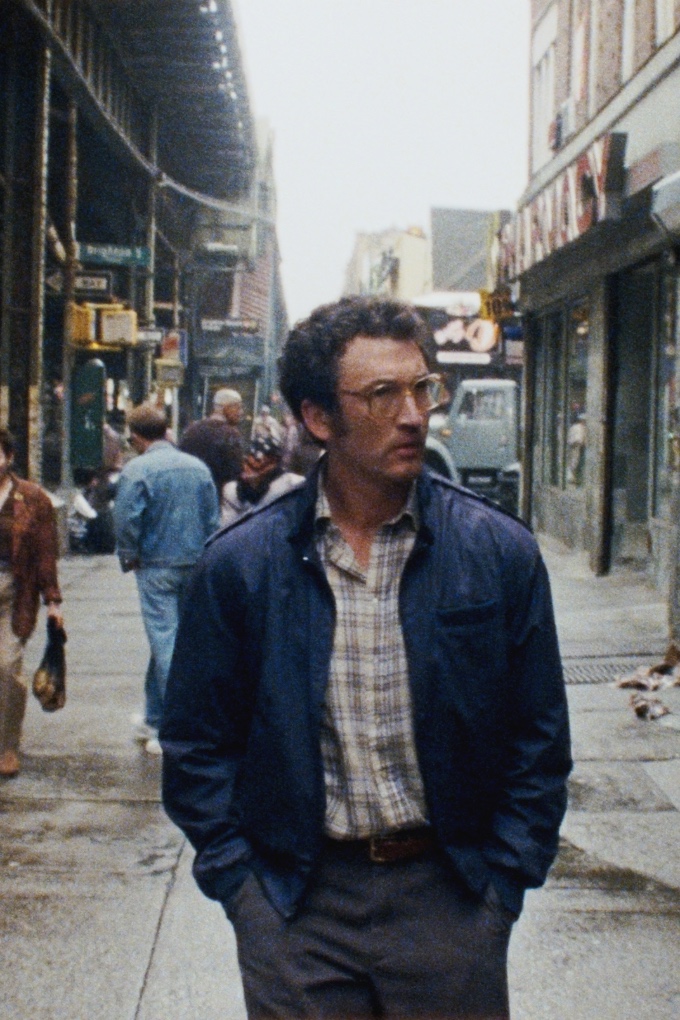
It’s a bizarre feeling, to have the wool pulled over your eyes in real-time, so quickly and so convincingly. To realise Tom Cruise is merely playing as actor Curtis Markson, who in turn is acting as Digger Rockwell? That it’s all part of an intricate stage rehearsal for the 25th anniversary of a theatre production titled Fossil Fools—based on the in-world, real-life story of Rockwell himself? It’s unnerving, to say the least. All the more so because, as the audience, you know there’s a nugget of truth lurking, festering at the heart of the play.

What exactly happened after Rockwell’s oil plant exploded? Did the gigantic slab of ice make landfall in Europe? How many people died? Of course, you don’t know the whole story, because you’re only witnessing the consequences of Rockwell’s actions play out at the same pace as it is shown in the theatre production. For all intents and purposes, you’re watching Digger-as-Fossil-Fools.
When I watched Digger and that tree keeled over—a voice offscreen yelling “Cut!”—the feeling in the darkened cinema hall was almost palpable. The big reveal dawned on all of us like a terminally slow sunrise on a misty morning. For my part, I wondered: when is the other shoe going to drop? What’s real, and what’s really going on? Good news: there’s only one nested narrative at play, so you don’t need to worry about your brain getting short-circuited from further mental gymnastics of the meta variety. Even better news: there’s a whole lot of story still left in the movie’s runtime.
The stakes are very real for the people living in the world of Fossil Fools. You see it in the sweat-stained clothes of the theatre production staff, the perspiration beading on the foreheads of the cast and crew. You feel it through Cruise-as-Markson’s performance, as he wrestles with the heavy-handed messaging of the play itself, as well as with the disappearance of his daughter, who boarded a flight in Jamaica just before a category six hurricane hit the island (hint: these do not exist in real life). Clearly, something did go disastrously wrong. Fossil Fools is based on a true story, after all.

I could go on and on (and on), but I’ll forgo the additional spoilers and just say: Fossil Fools and the story it tells of Digger’s world is very much a tragedy in the classical sense. No one wins. As a movie, however, Iñárritu’s art is truly something special. As political commentary, it’s intensely sobering and a harrowing reminder of our own world’s ongoing plight. As satire, it’s really bloody funny—I spent half the movie with chills running down my spine, and the other half in stitches, laughing uproariously. The film asks many questions, most of which are difficult, if not impossible, to answer, but Iñárritu’s work is all the more beautiful for it.
The sound production is stellar, melodies and rhythms employing the constant drip-drop of water as tasteful, maddening foreshadowing. The colour grading’s washed-out palette lends a stark contrast to the horrific reality framing the story of Digger—as well as the reality of the real-world audience taking it all in. And the performances from Cruise, Ahmed, Goodman and the rest of the cast are simply a joy to behold.
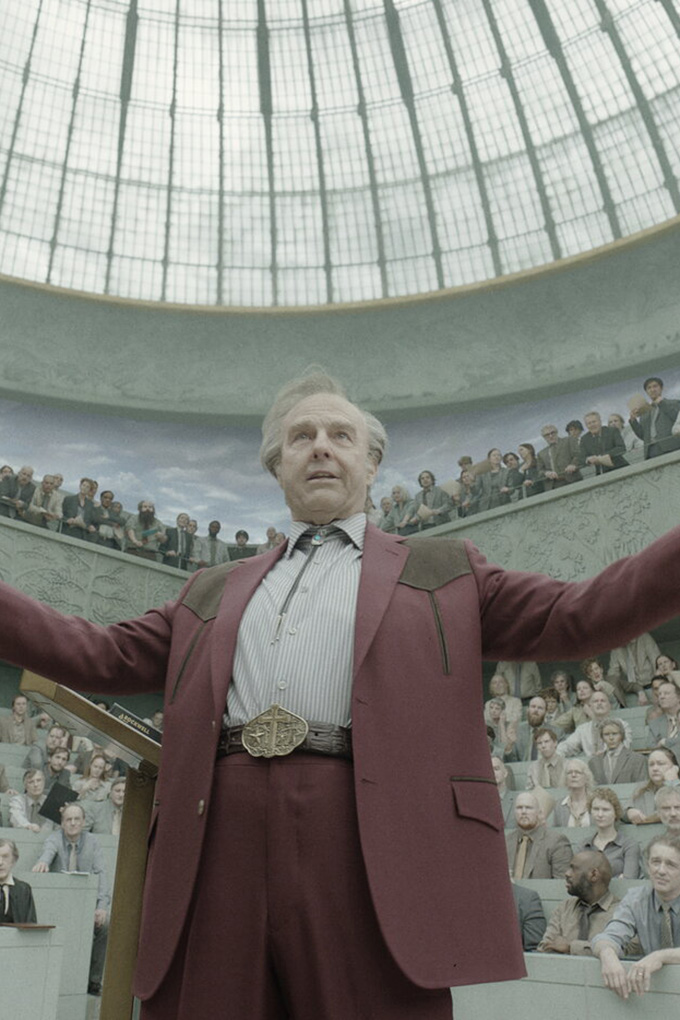
One moment, they’re hilariously over-the-top, screeching expletives and railing about the God-given right of American exceptionalism; the next, they’re woefully subdued, returning to their in-world lives as actors in a theatre play. One scene stands out in particular, where Cruise-as-Rockwell takes to the floor of the European Parliament in defence of his actions. His monologue is 10 minutes long and all performed in one take. If any one scene this year deserves an Oscar, it’s this.
At the end of Digger, the premiere of Fossil Fools comes to a close—and I realised that Iñárritu had one more trick up his sleeve. The curtains rise on the stage and the cast takes a bow to thunderous applause, the audience’s standing ovation is almost bloodthirsty in nature as they scream themselves hoarse in remembered anger over Rockwell’s role in bringing about the end of the world. Over the speaker, a disembodied voice warns of a ‘Level Four’ condition outside the building. The audience calmly stands up, puts masks over their faces and walks out to a crumbling, dystopian city. The streets are flooded. Security drones soar in tight formation overhead. The apocalypse really happened.

Then, as the credits rolled, the lights in my own theatre turned on, and I was left to stand up and walk out into the real world. The roads of Singapore weren’t flooded. No autonomous robots guarded the streets. And yet, it was impossible to shake the feeling: the story of Digger isn’t so far removed from our own. We are all currently staring down the barrel of a gun loaded with death and destruction. The world is on fire and we’re not doing enough to stop it.
What power does art have in the face of private interests profitmaxxing at the expense of the public good? Do we continue to make that art, knowing full well the pitch-black, gaping void our work screams and rages into, day after dying day, might never see the light? What is the point of putting on a production like Fossil Fools, much less spending $150 million on making Digger? In Rockwell’s case, the damage was already done. It’s not too late for us, though.
Can movies offer us some way out of the quagmire? Can the act of simply going to watch a film like Digger, with friends, family, loved ones, be enough to quell our collective panic? Hell, is trying to curb the terror even appropriate? I don’t rightly know. However, I’d desperately like to think that art can, at the very least, do some small good in pointing us in the right direction. Sometimes we just need to laugh and take solace in knowing that we’re all in this together, because the alternative—to give up and throw away our art—is simply unacceptable.