Is peach fuzz the enemy? For many of us, it would seem so. Up close—especially under bright lighting or beneath even the most well-applied beat—is exactly when the pesky strands catch the light and disrupt what should be an otherwise seamless finish. But as TikTok would have you know, dermaplaning might just be the fix in question. A few careful strokes are supposedly enough to deliver a visibly smoother complexion. As the tools to achieve said light-reflecting base become readily available, a treatment once confined to the clinic has reshaped into an addition to the at-home routine.
A favourite of celebrities like Eva Mendes, dermaplaning’s popularity is easy to understand. “At-home dermaplaning has grown in popularity alongside the rise of ‘glass skin,’ a K-beauty-inspired ideal centred on a smooth, light-reflective complexion,” explains Dr Ratna Rajaratnam, senior consultant and dermatologist at Shine Dermatology. “Removing this surface layer can result in a smoother texture and may allow skincare products to spread and absorb more evenly, which helps explain the growing uptake of dermaplaning in at-home routines.”
@itsmelissaga Once a month: Dermaplaning following with 2 face masks I use the serum oil from @deziskin for dermaplaning, then the cranberry and turmeric energizing mask by @Kiehl’s Since 1851 following with the collagen wrap mask by @Miguhara Official.MY #skincare #skinreset #glowyskin #dermaplaning
Is it as simple as it seems?
Rajaratnam notes that while at-home dermaplaning is generally safe for the average person if done properly, it is not without its considerations. “Most home devices use guarded, less sharp blades that primarily remove fine facial hair rather than deeply exfoliating the stratum corneum. However, using the wrong angle, applying too much pressure, or making repeated passes can still cause small cuts or increase skin sensitivity,” she says. “Hygiene is also important: reused or poorly cleaned tools can introduce bacteria, which may lead to breakouts or irritation.”
So let’s say you’ve got the technique down and your tools are clean—what else should you be paying attention to? According to Rajaratnam, preparation is key. Skipping proper cleansing and failure to fully remove make-up beforehand also plays a part in increasing the risk of irritation and breakouts. And equally as important in the mix is post-care. “After dermaplaning, it’s important to use gentle cleansers, barrier-repair ingredients like ceramides, and daily sun protection, since exfoliated skin is more sensitive to UV exposure,” elucidates Rajaratnam.
At-home versus in-clinic
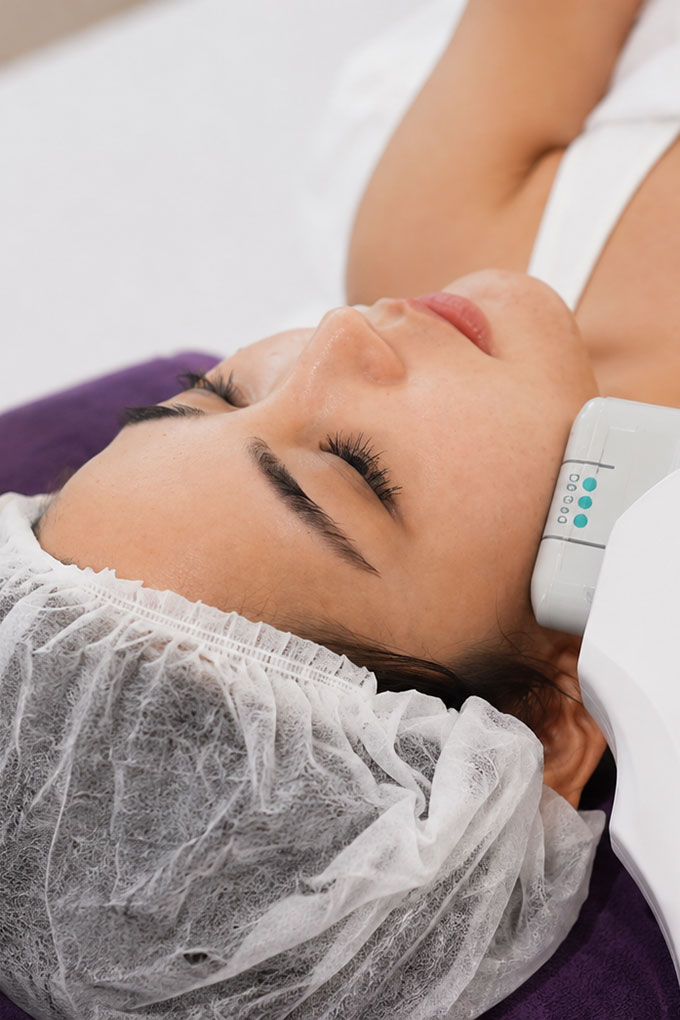
As much as one might prefer the convenience of at-home dermaplaning, where it’s done—as it turns out—does make a difference. “At-home devices use safety-guarded, less sharp blades to reduce the risk of cuts, but this may also limit their effectiveness,” notes Rajaratnam. “In-clinic, a consistent technique for safe, uniform results is likely to be used. Hygiene is also more controlled in a clinic, where single-use sterile blades and strict protocols minimise infection risk, whereas at-home tools can introduce bacteria if reused or poorly cleaned.”

Delving deeper
Keeping everything in mind, what’s the best way to go about dermaplaning at home? As Rajaratnam recounts: “Cleanse and fully remove your make-up and dry your skin, disinfect a purpose-designed home dermaplaning tool, and pause exfoliants and retinoids for several days. Hold the blade at a 45-degree angle, use short, light strokes in the direction of hair growth, and avoid sensitive areas like eyelids, the sides of the nose, and raised lesions. Afterwards, rinse gently, apply a hydrating serum or fragrance-free gentle moisturiser, and use SPF 30+; for the next 48–72 hours, avoid harsh skincare, waxing, threading, steam, or prolonged sun exposure.”
To expound on the prep prior to dermaplaning, Rajaratnam notes the importance of thorough cleansing, ensuring that the skin is completely dry before proceeding. Temporarily halt the use of prescription retinoids, exfoliating acids or scrubs for at least a week as well. “After dermaplaning, the skin is more sensitive, so use gentle, hydrating products and apply sunscreen consistently. Avoid other exfoliation, harsh skincare, excessive heat (steam, saunas, intense exercise) or swimming in chlorinated pools for a few days to allow the skin barrier to recover and prevent irritation.”
“For safe at-home dermaplaning, use a purpose-designed device with a single-edge blade and built-in safety guard, an ergonomic handle for ease of use, and replaceable stainless steel blades,” comments Rajaratnam. “Weighted or electric options can help beginners and those with sensitive skin. Always clean blades before use and replace when dull. Avoid surgical scalpels, multi-blade body razors or reused dull blades, as these increase the risk of cuts, uneven exfoliation, and infection.”

Rajaratnam also explains that an interval of four weeks between dermaplaning sessions is ideal, noting that this time frame aligns with the skin’s renewal cycle. If done more frequently, one faces the risk of skin irritation alongside barrier disruption—especially among older adults.
Bear in mind
For all its ease, dermaplaning should not be approached as a one-size-fits-all treatment, as some might find it best to avoid the step entirely. “Dermaplaning is generally safe for many people, but certain skin types and conditions warrant avoiding it. It should never be performed on skin with active lesions, such as acne pustules or infections like cold sores, as this worsens or spreads the condition,” warns Rajaratnam. “People with active inflammatory or chronic skin disorders, including eczema or psoriasis, should also avoid dermaplaning to prevent irritation or flare-ups. Additionally, it should not be done over raised lesions, e.g., moles or skin tags, or by individuals with a tendency to keloid or hypertrophic scarring, as these areas are more prone to injury or abnormal scarring.”
Even for those who can generally tolerate it, the skin has a way of signalling when things have gone too far. Rajaratnam explains that warning signs of overdoing dermaplaning can manifest through increased inflammation, sensitivity and even stinging from products that don’t normally cause such reactions. Additionally, the presence of dry, flaky or peeling patches are also an indication of a compromised barrier. In such cases, gentle hydration and barrier repair are key.