I first noticed it years ago, sitting at my desk at work—raised, colourless bumps right above the crook of my elbow. Having had a history of eczema and dermatitis attacks, it was surprising to me that they didn’t itch. They were just there. It was freaky at first, until a quick search online led me to its name: keratosis pilaris.
Also known as ‘strawberry skin’ or its shortened form, KP, the condition is a common affliction. Appearing most often on the backs of the arms, the thighs and sometimes the face, it can get mixed up with eczema. It even seems to appear more particularly on women with Polycystic Ovary Syndrome (PCOS). But what exactly is keratosis pilaris, and how can it be treated? Here to unpack the condition is Dr Liew Hui Min, dually accredited dermatologist at The Skin Drs. clinic.
Keratosis pilaris versus eczema
While KP-related inflammation might itch, it is not to be confused with eczema. Keratosis pilaris is caused by a buildup of keratin around the hair follicle, which can block the pores and occasionally trap small, coiled hairs, Liew explains. The cause of eczema, on the other hand, is traced to a weakened skin barrier—where the skin is unable to retain moisture or protect against irritants. The most telling sign of eczema is an itchy sensation, usually on the neck, face and the inner folds of the elbows and knees. That being said, Liew highlights that they can both be traced to genetics: the two conditions may even co-exist in some cases.
And what of KP’s correlation with PCOS? Liew establishes that though there is no scientific evidence connecting the two directly, the hormonal imbalances—elevated androgen levels—that are associated with PCOS can make keratosis pilaris more pronounced.
@alexeinissigrowing up, it was such a struggle to love my skin. but now idgaf, ive embraced it and it’s a part of meeee <3 ok keratosis pilaris u win idc HAHAHA♬ original sound – Venn – VMedia
Caring for KP
As keratosis pilaris is usually asymptomatic, it can be left alone. However, should its appearance bother you, there are a few options for treatment.
At home, exfoliation is key—both in the physical and chemical sense. It could be a loofah or a gentle scrub in the shower, combined with over-the-counter options like urea-based creams, topical retinol or salicylic acid. However, if there is underlying eczema, retinol and acids—salicylic or lactic—should be avoided, as they may irritate the skin further and trigger flare-ups.
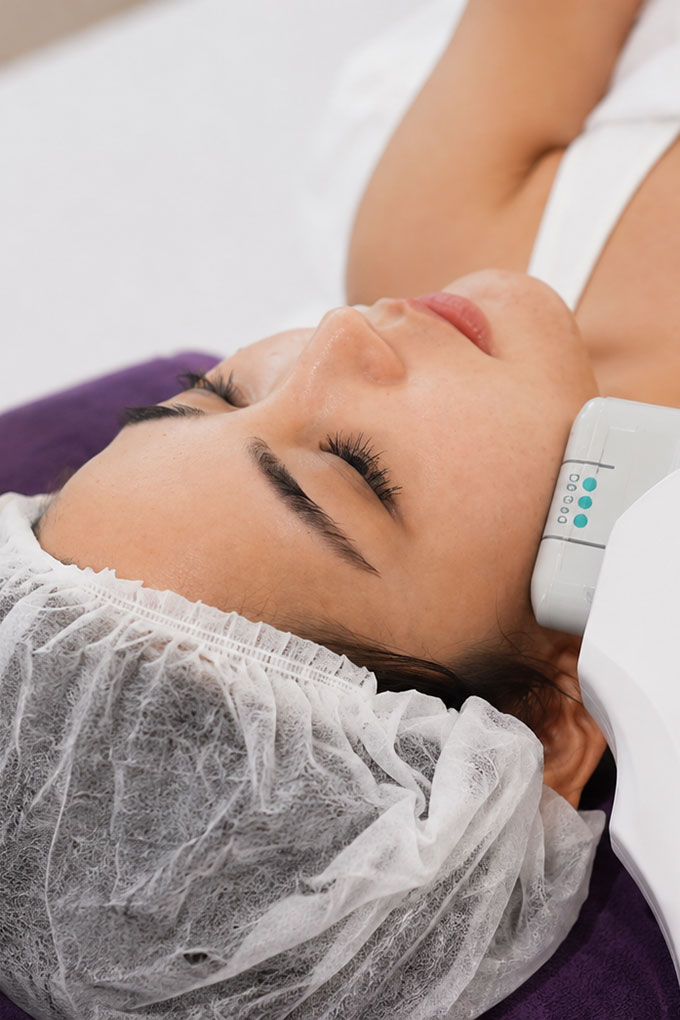
The other course of action is clinical treatments, which might look like topical retinoids, exfoliants and ammonium lactate moisturisers. A doctor may prescribe a mild topical steroid for itching. Lasers can also be used for hair removal, smoothing rough patches, or reducing redness and pigmentation—though Liew highlights that results may vary.
On the ingestible side of things, vitamin A supplements can be an option—though it is not always helpful, according to Liew. Where more severe cases of KP are observed, a doctor may prescribe oral isotretinoin instead. A potent vitamin A derivative that increases cell turnover and prevents follicular clogging, oral isotretinoin isn’t a permanent cure, but it can help control flares.
So, is KP a big concern?
The answer, according to Liew, is no. While its appearance might bother some of us—I, for one, may have committed the sin of picking at my bumps—it’s good to know that it shouldn’t haunt us too much. All it takes to manage it is gentle exfoliation, a good layer of moisturiser, and, perhaps, an adjustment of our expectations. We might never be rid of it completely, but having a little texture on our skin is part of the experience of inhabiting a body, anyway.