In sunny climates like Singapore’s, it goes without saying that sunscreen is an absolute non-negotiable in our skincare routines year round. In addition to preventing immediate issues like painful and irritating burns, sunscreen is paramount for protecting our skin from premature aging, hyperpigmentation and skin cancer caused by prolonged UV exposure. While there’s an abundance of options out there to suit every skin type and situation—from hydrating creams and gels to handy stick and spray sunscreens—not all of them are made equal. Spray sunscreens, in particular, are sometimes met with uncertainty from those more cautious about sun safety due to doubts surrounding its reliability.
Although it’s highly recommended to reapply sunscreen every two to three hours, it’s not always easy or practical to do so, especially while you’re on the go. This is where a spray sunscreen often comes into play, due to its ease of application without having to touch your face and ruin any makeup you have on. But is the UV protection from spray sunscreens really enough to keep our skin healthy and thriving, and how can we maximise its efficacy?
To answer these burning questions, Vogue Singapore turns to Dr. Angeline Yong, the medical director and consultant dermatologist at Angeline Yong Dermatology.
How spray sunscreens measure up to other forms of sun protection
When it comes to the inherent amount of sun protection they provide, sprays are just as effective as any other form of sunscreen. However, the effectiveness of any sunscreen is heavily dependent on the correct and careful application of the product, and here’s where spray sunscreens tend to falter.
According to Dr. Yong, cream sunscreens remain the gold standard for sun protection because this form allows for more thorough application, making it easier to achieve the coverage we need. Gels function similarly, and may offer more lightweight, comfortable coverage in Singapore’s humidity, especially for those with acne-prone skin. However, they may require more frequent reapplication in comparison to creams.
Although sunscreen sticks are especially convenient for touch-ups, and great for small, targeted areas, they are far less practical than sprays when it comes to covering larger parts of the body. Sticks also run the highest risk of harbouring bacteria when not stored properly, and may cause makeup to move around when applied on the face.
In that vein, spray sunscreens are a great way for quickly covering large areas of the body, and are often the best way to reapply sun protection to the face without disrupting our makeup. However, Dr. Yong cautions that its ease of application can easily result in under-application, which may compromise their efficacy. For the best results, she recommends using it in tandem with other sunscreen types, such as using a cream on the face and spray on the body.
When to use a spray sunscreen
Due to its convenience, spray sunscreen is best used for reapplication on the body and over makeup, especially when outdoors, but may not be the best option for your first sunscreen application of the day. Consider using a cream or gel on initial application to ensure your skin is thoroughly protected before using a spray throughout the day for easy touch-ups. If you are swimming or sweating heavily, do ensure that your spray sunscreen of choice is water-resistant.
In outdoor situations, Dr. Yong points out that windy conditions may cause spray sunscreen to disperse, significantly reducing the amount of product that actually lands on your skin to protect it. In such cases, she recommends spraying the sunscreen into your hands and rubbing it into your skin to ensure sufficient coverage and minimise product wastage.
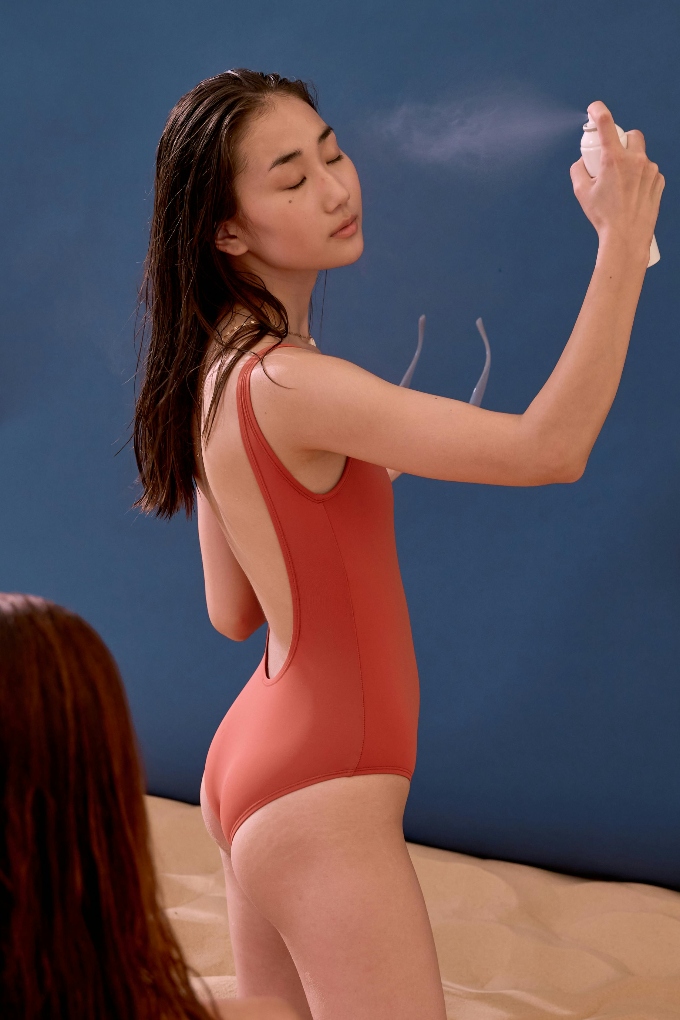
It’s easy to see why sunscreen remains a popular choice for touch-ups over makeup, and there are plenty of products formulated specifically meant for such use. These formulas are typically lighter, non-greasy and less likely to disturb your beat. For an even application, Dr. Yong suggests holding the spray about six to eight inches from your face and applying in a zigzag or circular motion to ensure all areas are covered, before allowing it to dry naturally.
How to maximise your SPF coverage with spray sunscreen
As mentioned above, the efficacy of spray sunscreens can often be undermined by its ease of application, as some of us end up applying far less product than we should be. When using spray sunscreen, Dr. Yong recommends spraying generously in one controlled, steady motion until your skin is visibly glossy or wet. Applying multiple layers in overlapping motions will also help ensure full coverage. Once applied, rub the formula in to help form an even layer of protection, even in hard to reach areas. Pay special attention to areas prone to burns, such as the nose, ears, shoulders, and tops of the feet. Follow up with frequent reapplication, and you’ll be good to go.
What to look out for when shopping for sunscreen
In sunny Singapore, one should always reach for broad-spectrum sunscreen with at least SPF30 (though SPF50 is ideal for outdoor activities) to defend against both UVA and UVB rays, no matter the type of sunscreen. Water-resistant formulas will also be particularly useful if you tend to sweat heavily, or intend to use it when swimming.
Spray sunscreens in particular often include alcohol to create a fine mist, so those with sensitive or dry skin should opt for alcohol-free formulas to prevent irritation. Decide between chemical, mineral or hybrid sunscreens based on your skin’s condition and needs—chemical sunscreens are more lightweight and seldom leave a white cast, making it suitable for deeper skin tones, but can irritate eczema or rosacea-prone skin. Meanwhile, mineral sunscreens are more gentle on the skin, but some formulas may leave a white cast.