Self-care might often get conflated with multi-step routines and arsenals of formulations, but in its most basic form, it starts in the shower: our hair washing routine. And while we may have learnt how to do it early on in life, it seems like the rules keep changing. For a time, it was all about ‘training’ our scalps to resist oil production; then it was conditioner first, before shampoo; the list goes on. More recently, as scalp care products started appearing at Olive Young in interesting new packaging, it opened up the conversation in a whole new way. Rather than generalised rules, we’re learning that our scalps have different needs—and our haircare routines should be tailored towards them.
Now that we understand the concept of hair porosities, we’re better equipped to find what works for our mid-lengths and ends too. Yet, there’s a critical part of the equation that we might still be neglecting: our hair washing and drying routine. Like a primed canvas for a painting, a clean and healthy scalp makes styling our manes a little more manageable afterwards. Breaking down the do’s, don’ts and everything in between are Jun Park, co-founder and director of Jo:Hwa Hair & Living, and Luna Chen, master trainer and hair educator at KOMO Wellness.
The scalp predicament
Living in this part of the world means greasiness is no stranger to us—and yet, Park notes, it might not mean that our scalps are oily. Chen explains that with the heat and humidity in Singapore, our scalps become more prone to oiliness, sweat, buildup, itchiness and dandruff. Simultaneously, it could also be that the scalp is dehydrated or sensitive, especially when the hair is frequently washed and heat-styled. Sometimes, the oily sensation on the scalp can be a result of excess oil, buildup and an imbalance in the scalp environment.
Then begs the question: should we be washing our hair every day? Park advises that it boils down to the climate we live in. In Singapore, it is perfectly okay to shampoo every day—granted that we use a product suited for our hair and scalp. Chen qualifies that it also depends on our lifestyle habits—if you have an oily scalp, exercise frequently or sweat heavily, then daily washing is appropriate. Folks with dry or sensitised scalps, however, may prefer to space out their hair wash days. “Rather than following a fixed rule, look at how your scalp feels. Excessive oil, itchiness, flakes or discomfort are signs that your current routine needs adjusting,” Chen highlights.
View this post on Instagram
How to wash your hair
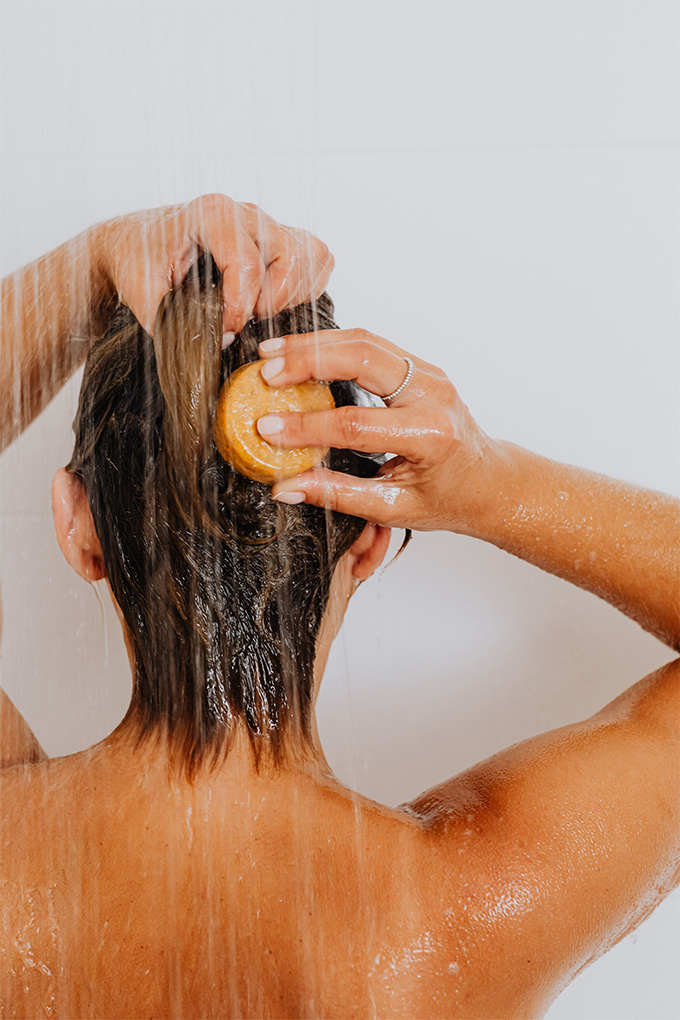
To start, Chen says, thoroughly wet the scalp and hair with lukewarm water. This step helps loosen sweat, oil and buildup before shampoo goes on. When it comes to dispensing shampoo, you don’t need a lot—take a small amount and lather it up in your hands first, with a bit of water. Focus on working it into the scalp, rather than spreading it over the lengths of the hair. Take care to use only the fingertips, not your nails, to massage the shampoo gently but thoroughly across the hairline, crown, sides and the back of the head. Park adds on that the shampoo shouldn’t be left on the hair for too long as it might dry out the scalp. The goal, Chen reminds us, is to cleanse instead of scrubbing aggressively. Thereafter, shampoo should be rinsed off thoroughly, as leftover shampoo can contribute to irritation or buildup.
For oilier scalps, Chen raises that a pre-cleansing step can be useful for some people. It’s important, however, to avoid aggressive scrubbing or harsh products, as this can damage the scalp’s protective barrier and cause greater discomfort instead. Double shampooing, she explains, can be helpful when the scalp feels particularly oily or sweaty, or if it’s been a few days since the last wash. The first cleanse helps to loosen and remove surface buildup, while the second helps to properly cleanse the scalp. Paying attention to how your scalp feels is key—if it already feels clean and comfortable, then there is no need to shampoo a second time.
After cleansing, the natural next step is conditioner. Designed as it is to soften and moisturise the hair lengths, it should be applied from the mid-lengths to the ends instead of the scalp. If you’ve heard someone recommend conditioning before shampooing, Park clarifies that it should be done with a hair mask instead—where the hair mask is applied on the damaged area first, before shampoo. This method prevents the damaged part of the hair from being dried out. There are also hair treatments designed to be used before shampoo, but the best way to use them is to follow the manufacturer’s instructions.
Picking the right products
When it comes to picking the right shampoo, Chen recommends making the decision based on your scalp’s needs, rather than your hair type.
- Oily scalp: Look for a good cleansing formula that removes excess oil and buildup without leaving the scalp uncomfortable.
- Dry scalp: Choose gentler, moisturising formulas and avoid harsh chemicals.
- Sensitive scalp: Keep the routine simpler and look for gentle, soothing formulations.
- Dandruff/flaky scalp: Look for products specifically formulated for dandruff or flakiness, rather than simply using a moisturising shampoo.
For his own clients, Park explains that there are two main types of shampoo and conditioner setups: a protein base and a moisture base. If your hair is chemically treated, he recommends a protein base that will usually be labelled with words like ‘repairing’, ‘restructuring’ or ‘restoring’. For hair that is naturally more frizzy, a moisture base is more appropriate—look out for words like ‘moisturising’, ‘smoothing’ or ‘hydrating’.
And if there’s one term that we have been taught to avoid over the years, it’s sulfates. Park and Chen agree, however, that sulfates aren’t inherently bad chemicals; they are cleansing agents that help remove oil, sweat and buildup from the scalp. The key is to see if the overall formulation suits your particular scalp needs—someone with an oily scalp may appreciate a stronger cleansing formula, for instance, while someone with a dry or sensitised scalp may need something gentler. Park emphasises that if sulfates are absent from the shampoo, there may be other chemicals that replace it—and you should test if those chemicals trigger an allergic reaction too.
How to dry your hair
As we all know too well, going to bed with wet hair is a major no-no. Park likens it to folding the laundry while it’s still wet—a damp scalp, especially over a prolonged period of time, becomes prime breeding ground for bacterial growth. Between airdrying and blowdrying your hair, blowdrying still emerges as the favoured practice. Chen recommends gentle towel-drying first, before blow-drying on a low to moderate heat setting. Park concedes that since blowdrying with cool air can be time-consuming, the best way is to alternate between cool and warm air to ensure that you’re not overheating your strands. The key is to keep temperatures controlled—and to tackle the process with patience.
View this post on Instagram
The order in which you dry your mane is important too. Always blow-dry the roots first, Park notes, as that smooths the cuticle in the natural direction of how it sits. You should also keep the hairdryer moving instead of concentrating the heat in one spot, says Chen, and it should be held at a reasonable distance away from the hair. A heat protectant can help minimise frizz and damage. When styling shorter hair, Park recommends tilting your head down, then directing the hairdryer towards your face in a downward motion to tuck in the hair.
Caring for sensitive scalps
Chen sums it up in two main words: ‘simple’ and ‘gentle’. A mild shampoo, not-too-hot water and gentle cleansing motions are more than enough. Instead of trying to follow a particular schedule, she advises washing your hair based on how oily or sweaty it gets. You should also avoid introducing too many new products at once, to keep irritation and allergic reactions to a minimum. If there is persistent itching or significant flaking, it’s advisable to seek a professional assessment over constant trials with products.
The right headspace
“Beautiful hair comes from a healthy scalp,” quips Park. Rather than trying to hunt down the best products or most premium scalp massages, he reminds us that it’s our daily hair washing and drying routines that matter. Consistency and identifying the right products for our needs can make a world of a difference, Chen elucidates. And there’s one more thing we should all remember: that our scalps change over time—in relation to weather, stress, hormones, lifestyle and even changes in products—so it’s worth paying attention to even the most minute shifts. Rather than seeing your next hair wash day as a laborious task for the arms, think of it as tending to your precious locks instead.