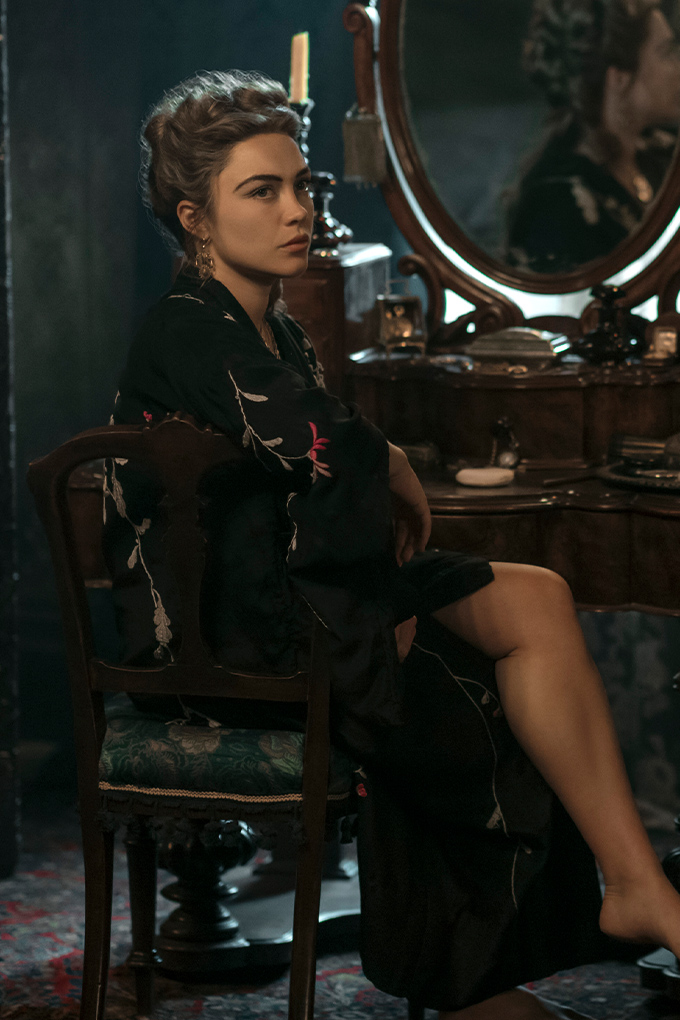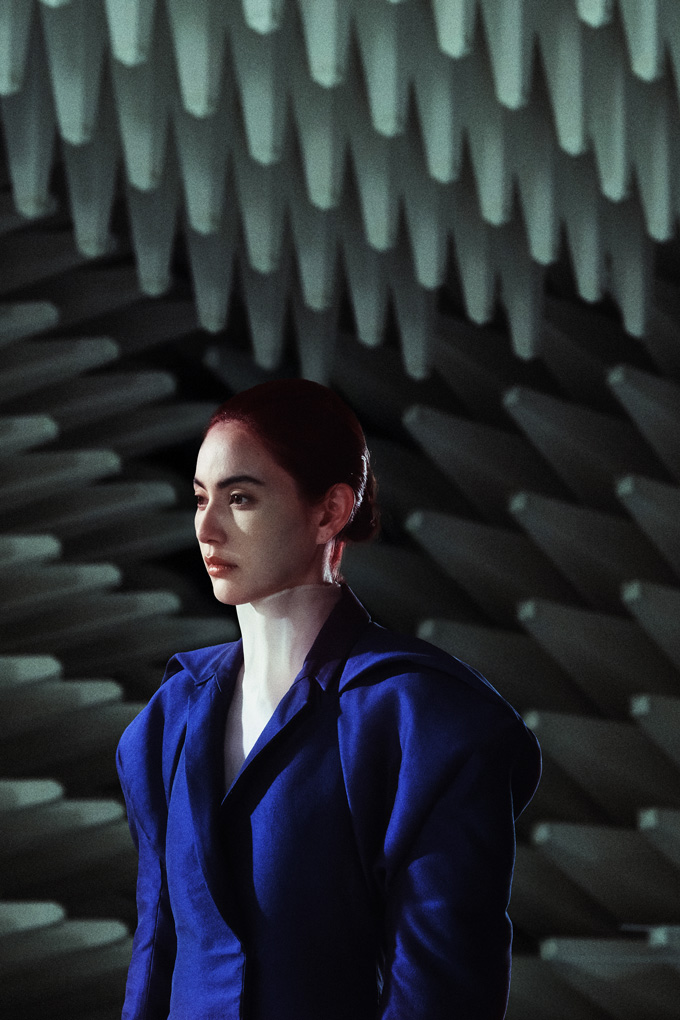
The protagonist of Ratchapoom Boonbunchachoke’s debut feature may be a ghost, but at least she’s a useful one. “Even ghosts need to work in this economy,” jokes the Thai director, who is in town for the 36th Singapore International Film Festival, for the premiere of A Useful Ghost. A zany tale starring Davika Hoorne as Nat, a ghost who is able to return to her husband’s side—via the sheer power of love—as a vacuum cleaner.

Told through the playful yet imperative lens of one Academic Ladyboy and his spontaneous lover, Krong, the silver screen feature achieves a wondrous meld of various themes that feel intrinsic to Thai cinema. A dusting of social politics here, some family drama there. Open conversations on homosexuality. But the show’s romantic core is apparent from the get go, as her husband, March (Witsarut Himmarat), is unable to move on from Nat’s death.

Cue an incredibly absurd series of happenings, starting with a vengeful ghost terrorising the factory of the family business currently being run by her mother-in-law, Suman—played by Apasiri Nitibhon—who is increasingly swayed by the whims of her ex-husband’s nosy relatives.
It’s not everyday that you meet a ghost who’s a vacuum cleaner, but when you do meet one—and an extremely nice one at that—A Useful Ghost tells us you could be fast friends with them. Here, in an exclusive interview for Vogue Singapore, Nitibhon and Hoorne share more about their part to play in this film, and the emotionally stirring relationship that comes to pass between their characters.
Congrats on the premiere of the film at SGIFF this year. How have you been feeling about the film’s reception all over the world?
DH: I’m happy for all the crew members, especially Ratchapoom because this is his first time. So yeah, he’s the one who is traveling the world right now, and I’m very proud of him, so I’m very honoured to be part of this project.
The film uncovers many different themes, from politics to romance. Was there a particular theme that really stood out to you?
AN: For me, it’s about the woman. Playing Suman, representing this role of a mother who suppresses a lot of her own feelings. She’s depressed and stressed enough, trying to be accepted into her late husband’s Chinese family as someone from the northeast of Thailand. She has to do everything in the family, run so many things in the family, but no matter what she does she fails to be accepted—not even by her own children.

Davika, there’s a part of you that has to be a bit distant and subdued as a ghost, but Nat is ultimately led by love. How did you make sure to reconcile those aspects within Nat?
DH: It’s actually the director’s decision and how he wanted to portray it. He wanted everyone to have the same rhythm of acting. He didn’t want a lot of facial expressions, but for the emotions to be more inward. It’s very hard when you cannot act it out physically as much, but you have to send that message to the audience. So that was very challenging. But we discussed the filming a lot together; what we have to do more of or what we have to do less of. It was very dependent on the director, and I respect him so much. To me, as an actor, my goal was to get the job done, and deliver the director’s vision.
Apasiri, would you say this is similar for Suman too?
AN: Yes, for my character, I tried to stabilise my voice, and keep it fairly monotonous. The depth of Suman had to be relayed in one way or another because I couldn’t really reveal how she feels as a character, but I had to try to make sure that the audience would be able to feel it on their own even though Suman doesn’t let on as much.

There’s so much emotion, but also so much humour. One minute you’re in sorrow, the next you’re conversing with a ghost like an old friend.
DH: Yeah, the way the director depicts how people react to the ghost is very different from other films. The ghost is like any normal being in this world, and it’s actually almost like people are sometimes more scary than ghosts in real life. Ghosts aren’t scary at all, they’re just friends.
Were there any particular scenes that you really loved from this film?
AN: The last one, between Suman and Nat.
DH: Me too. I love that one so much. It’s so emotional for me because when I first read the script, that was the scene that made me want to accept and work on this film. It’s because of that part. It’s very meaningful. When we were shooting the scene, I completely ignored everything else happening outside.They were actually having a concert next to our set and there were planes flying overhead, but for me, I was just Nat with Suman. I was so in character, and I couldn’t hear any of the surrounding noise. It was very stirring; just the line that he (March) was going to forget me. That sentence encapsulated how Nat felt and it was a very sad sentence. So it was very emotional for me, yeah.
AN: That scene was quite tough. I had to maintain my emotions, because the plane was coming and I had to keep my voice in check. I cried, stopped crying, cried again, stopped crying again. Maintaining my emotions during that scene was very hard. But that scene is so important because it shows that Suman is pretty much the same as Nat. They both would do everything to be accepted by the family. She was sharing how she felt with Nat, what she had experienced, and you realise that they’re not so different.
Did you have a soft spot for any of the other on-screen relationships in the film?
AN: I loved the one between Academic Ladyboy and Krong. The emotions conveyed through Krong; he was a mystery who didn’t really show a lot of emotions but the way he told the story was so interesting.
DH: For me, I think I had a great relationship with my vacuum cleaner. I had to stay with her, I had to walk with her, I had to see how she was controlled. Yeah, she’s important to Nat.

How did your character’s outfits help you get into character?
AN: I actually had like over 50 fittings.
DH: Oh wow. Fashion week Suman.
AN: There was one scene that I was wearing that felt quite youthful—it was the scene when my grandson was lying across my lap. It felt a bit odd, so the director told me to wear something that would make Suman look older (laughs).
DH: When I get into a character, the costumes matter a lot to me. It’s very important to know who you’re going to be and visualise your make-up and hair etc. So to be able to wear this amazing design, I loved it. This suit made sense to me for Nat’s character, so I think it really helped me get into the role more.
The film is concerned with how the dead are remembered and what the memory of them becomes. Do you have a personal interpretation of what’s happening to March’s memory of Nat at the end of the film?
DH: After he gets hit on the head by the statue of Nat, he needs to go to the hospital but it’s a very f***ed up moment because it started because she did this to others in the first place. And then it comes back to her, and happens to her. Like karma essentially. When you do something bad to others, it’ll come back to you. Everything happens for a reason.

To end off, what do you wish your audiences will take away from A Useful Ghost?
AN: It’s a new concept and something that has never really been attempted before. So I’m happy that so many people enjoy it and the reception for the film has been so good.
DH: What you get from the film is very dependent on who’s watching it. Because our film has so many layers and so much going on. You can take away the politics, you can get a love story out of it, you might feel for the family drama etc. It depends, but I think you’re going to get something for sure. Especially the creativity of it all. Because it’s not a film that has been done before. It’s very new and very brave for the director to do such an amazing story like this. And I hope that it will show people around the world that in Thailand, we also do a lot of great films. And I hope that more Thai films can go global—even more of them. It’s very real Thai content, so when people get it, we feel super proud because it’s inherently Thai.