I did not watch many movies or television shows growing up, but one of my fondest childhood memories is of seeing Disney’s Tangled for the first time in primary school. Seated next to my best friend at the cinema—the two of us still dressed in our school uniforms, overstuffed backpacks at our feet—I watched in awe as the music soared and golden lanterns filled the evening sky on screen.
For most, animation is something associated with childhood, tied to memories of afternoon programmes on television that you’d have to rush through homework in order to catch on time, or trips to the cinema on weekends with family. For a while, as we grew older, it seemed as though animation had taken a backseat, at least in terms of Western media. Even when consumed, it was considered something nostalgic. Yet, it’s become abundantly clear in recent years that this is not the case.

While animation has never just been for children, there has been a growing demand and appreciation for the medium in mainstream media as of late. Just take a look at Netflix’s upcoming line-up. Animation has been put in the spotlight, with a fresh adaptation of beloved anime Ranma1/2 alongside new shows such as Tomb Raider: The Legend of Lara Croft. And of course, who could forget the second season of Arcane, highly anticipated after its first season gained massive acclaim for its gorgeous animation, extensive world-building and deeply complex characters.
Animated films have also grown to become some of the biggest movies of the year. Inside Out 2 stands as the highest grossing movie of 2024 so far, and new film The Wild Robot has been garnering widespread praise.
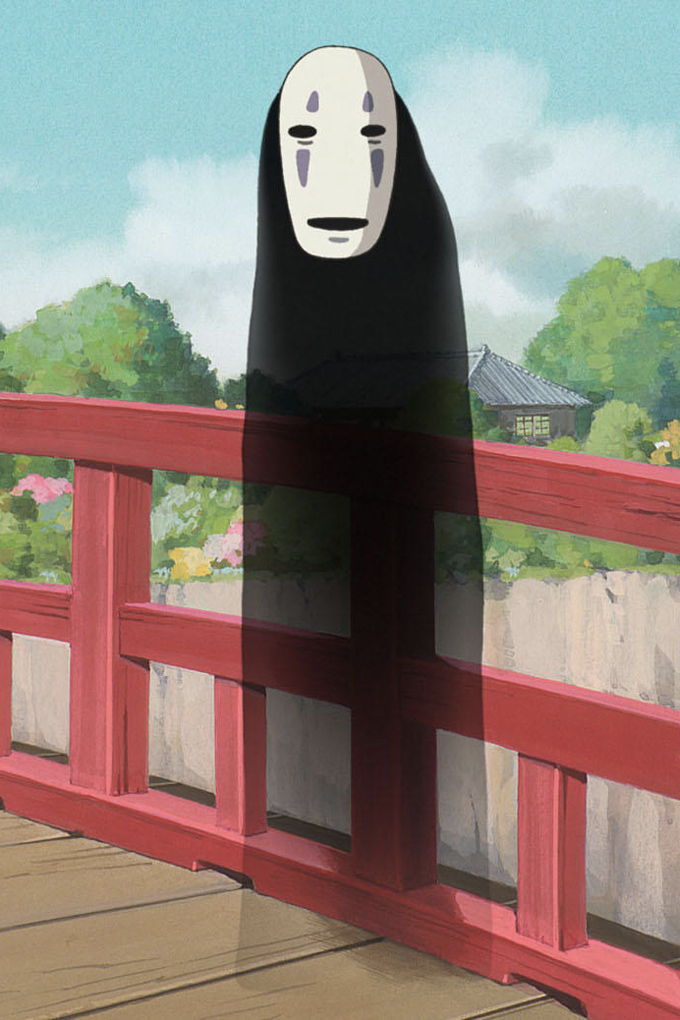
Then there’s Studio Ghibli, whose films have always been immensely beloved. Following the release of The Boy and The Heron which took home the Oscar for Best Animated Film earlier this year, the World of Studio Ghibli exhibition is set to arrive in Singapore this week—and the anticipation that surrounds it proves that it is not just critical acclaim that the studio’s films have received, but much affection and dedication from its audiences as well.

So what is it about animation that makes it so special?
Perhaps it is its endless potential, unbounded by what is achievable in real life. The goal of animation is not to make things look as realistic as possible. Rather, it is about immersing audiences in a world that has been built from scratch—every little choice, whether it’s the design of a character or the incorporation of different artistic styles, being an opportunity for imagination and creativity.
In the first season of Arcane, there is a fight scene between two old childhood friends, now on opposite sides. But just as the violence begins, the art shifts to take on a style reminiscent of graffiti, jumping between past and present to juxtapose the pair as young children playing and the same characters as adults in ferocious combat. The result is one of the most impactful and memorable fight sequences I’ve ever seen.

In some ways, I understand why animation is associated with childhood, not because it should be dismissed as a children’s genre, but because of the wonder that it holds. In the same way a child experiences everything through fresh eyes, animation is a medium that offers its audiences endless new ways to view the world. You won’t ever find two animated universes that look the same.
Even if the scenes are vastly different, the amazement I felt after watching that jaw-dropping moment in Arcane as an adult is similar to what I felt at 11, seeing the lanterns float up in Tangled. It’s the same sort of astonishment that so many have felt while wandering through the fantastical worlds of Ghibli’s films. And somewhere out there, in the future, I’m sure there are more stories waiting to be told, through art that looks like nothing we’ve ever seen before.