“When we see something, we’re very familiar with looking at it through the eyes of the present. If you consider Pomellato jewellery with contemporary eyes, it may not look so revolutionary. However, if you compare it with the jewellery of the time in the ’70s, it was very different. Pino Rabolini was extremely revolutionary in his time.” These are the words of jewellery curator extraordinaire Alba Cappellieri, who has just staged a new exhibition with the Milanese jeweller Pomellato. Cappellieri’s ideas and words may sound obvious, but a thoughtful look at this show, titled Pomellato, Le Joaillier Révolutionnaire and held at Paris’s Palais de Tokyo, proves her point.
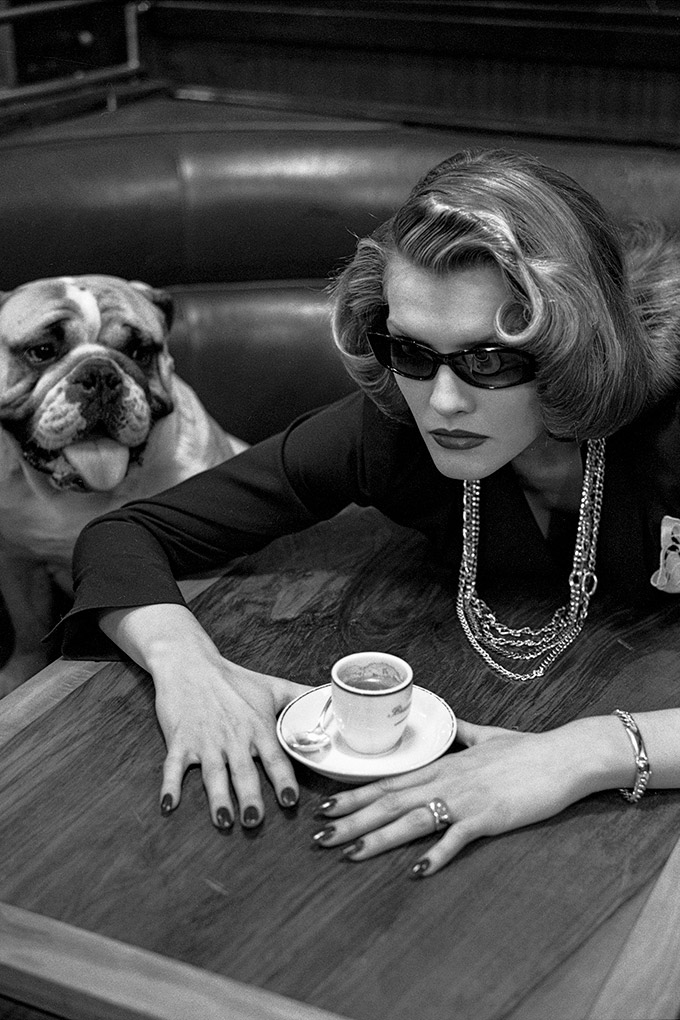
Since debuting its first ever brand retrospective in Shanghai in 2024, (also curated by Cappellieri), the brand has run with the idea and built on a through line of core themes around its identity. The first edition focussed on the impact of photography and how it told the story of Pomellato’s jewels, then a second chapter in Tokyo expanded on the visual narrative with a focus of Helmut Newton images. Le Joaillier Révolutionnaire, the third and latest edition of the brand’s exhibition, combines the visual strength of its predecessors—there are indeed many arresting photographs by Helmut Newton, Gian Paolo Barbieri, Lord Snowdon, Horst P. Horst, and, for the first time, Herb Ritts—with a more clear-eyed perspective on the larger impact and place that Pomellato has amongst the great modern jewellers.

The big idea is, essentially, more cultural and societal than it is merely about precious metals and gems. Pomellato was born in 1967, founded by Pino Rabolini, and came of age very quickly in the 1970s. “Across society, culture, and the arts, a new consciousness was emerging,” explained CEO Sabina Belli in a press statement. A new state of being in which “women claimed greater freedom, independence, and visibility.” Prêt-à-porter, or ready-to-wear, fashion was entirely reshaping how rapidly and how wide-spread style and fashion trends could reach women; and the emancipation of women meant a whole new class of people out at work, earning their own keep, and living lives on their terms.
For jewellery, this period also brought about an immense, well, revolution. Jewels were no longer family heirlooms passed from great-grandmother to grandmother to mother to daughter. Instead, modern women wanted jewels of their own that fit the fashions of the times they could wear out and about instead of leaving to gather dust in a safe. And women were starting to buy their own jewels too—a critical shift that allowed them to be their own tastemakers, and adorn themselves at their own pleasure.
Belli described this generational shift loosely as a cohort of women who were growing up without the need or pressure to recreate the roles and lives of their mothers. Girls, she said, who were “in rock bands in the ’70s, wearing frizzy hair, travelling to Asia and India, listening to The Beatles, burning their bras in UCLA.” Girls and women for whom prim, butt0ned-up blouses and grandma’s pearls simply would not do.

“The revolution was not just aesthetic,” explained Cappellieri when I spoke with her after a private preview of the exhibition. Though Pomellato’s big shift in perspective had to do with societal, cultural and artistic revolutions, she let on that the most important revolution had to do with the symbolism of jewellery for women. “What I appreciated most is the revolution in femininity, because Pomellato truly supported the evolution of women in society. That’s at the heart of everything,” she said.

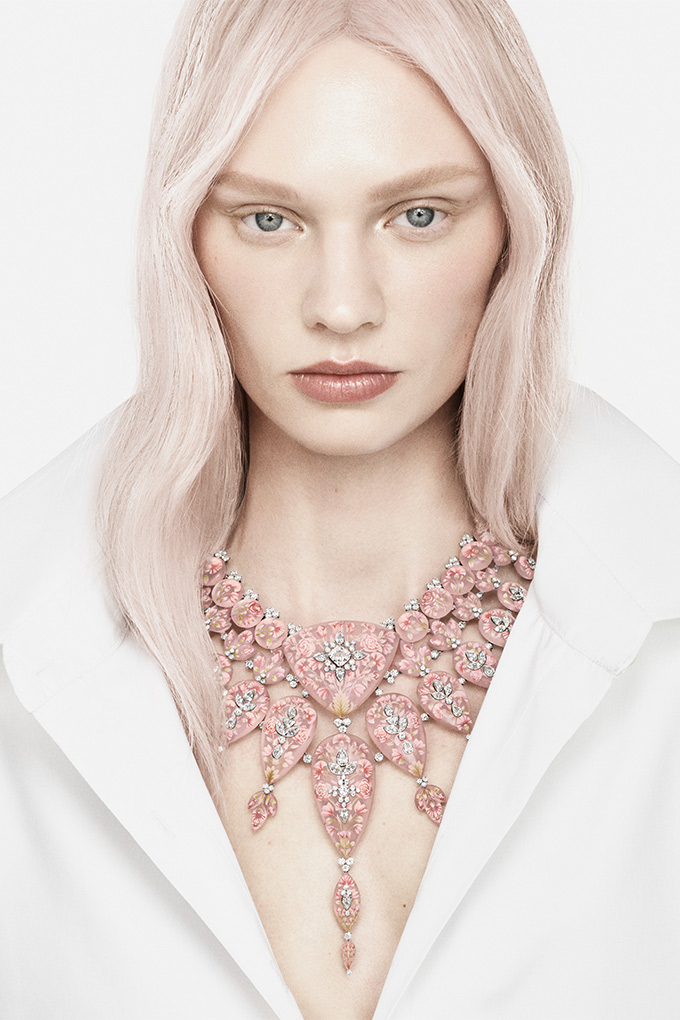
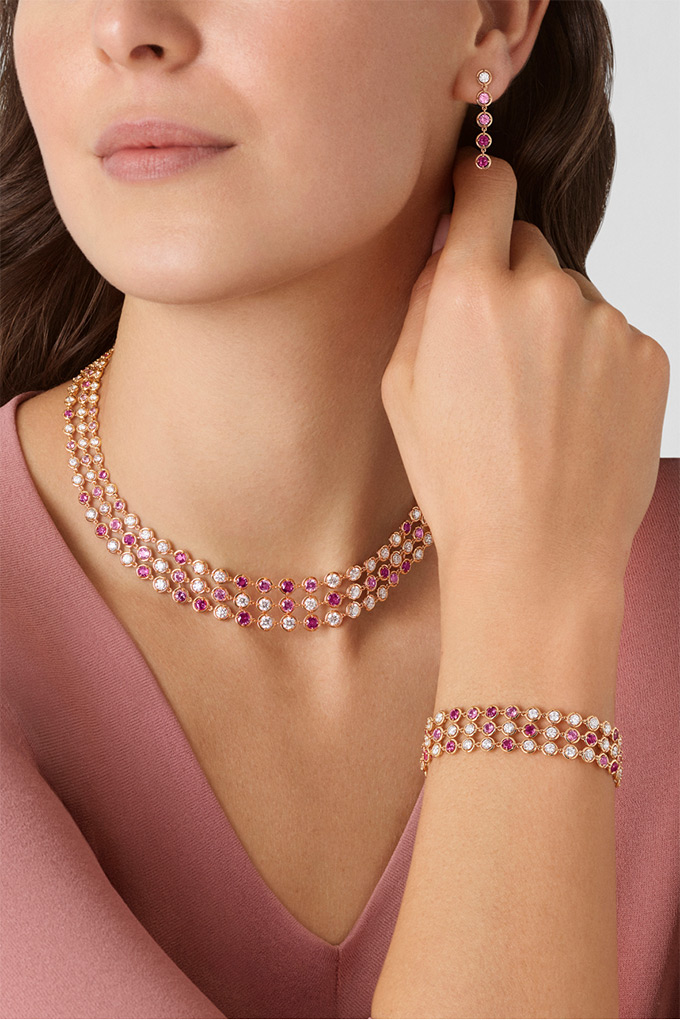
As far as its archival and historical jewels go, the exhibition is divided into three of the brand’s strengths: chain craftsmanship, colourful gemstones, and sensuous sculptural volumes. The connecting tissue—or should it be chain links?—throughout, though, are examples of vivid photography from the brand’s history. Women, pictured and envisioned through the lens of master photographers, as evocative living characters and published in the pages of fashion magazines.
One of the more audacious qualities of these images from the past, as CEO Sabina Belli pointed out during a panel discussion on the exhibition, is that though they were commercial images, the jewellery was often not in sharp focus. “It’s a sin,” she joked of the semi-sharp appearance of Pomellato’s chain necklaces and bracelets in these photos. “Because usually in jewellery communication, you have to showcase extremely legible images. That was a kind of audacity that we cannot replicate today, because there is this obsession over our internal investment, et cetera.”


Belli joked, but the effect of her point is potent. Witness the charged sexuality, sullen glamour, and sense of danger in the photos of Helmut Newton. Or the off-kilter glamour of a Horst P. Horst image, laden with voluminous, chunky necklace, bracelets and earrings where all the light is directed not at the jewels or the model’s face, but on the blank white pages of a book. That Pomellato worked with photographers of such a calibre and captured their jewels in such a way that highlighted the women first and foremost, rather than their adornments, speaks to the house’s brave spirit.

Pomellato is a relatively young brand, but with Le Joaillier Révolutionnaire, it makes clear its place in the history of jewellery. And credit must be given to Cappellieri for threading together a cogent story of this maison that gives a grounding to its heritage, even as it continues to shape itself in contemporary times—under the artistic direction of Vincenzo Castaldo—with those very same codes. Before leaving the preview, I asked Cappellieri to pick one thing from Pomellato that curators 200 years from now might choose to exhibit in, say, an exhibition of 21st-century jewellery. Her answer was quick and clear. “Not cabochons, not gemstones. Just the chain. Technically speaking, and from a manufacturing point of view, chains are extremely difficult to make; and Pomellato performed miracles in combining creativity with technique.” A revolution here, a miracle there—things we might miss in the present but that do indeed come into focus with the benefit of retrospection.
Pomellato, Le Joaillier Révolutionnaire is on view at the Palais de Tokyo in Paris from 24 June to 20 July 2026.