It’s virtually a given these days to see fabulous jewellery worn by celebrities on the red carpets of major events. Film festivals like Cannes and Venice have always held places of European distinction, where elegance is a mandate. Stateside, meanwhile, film, television and theatre award shows have far-reaching global influence. And in New York, of course, there is the Met Gala in May—perhaps fashion’s single most high profile event.
That’s all well and good, and every now and again there are some spectacular moments. A Cartier ambassador debuting new high jewellery designs is always a thrill. See: Italian actress Monica Bellucci at Venice recently wearing a hulking rubellite, chalcedony, onyx and diamond piece from the Nature Sauvage collection; or Demi Moore at the 2024 Met Gala wearing an emerald and diamond set made to look dandelions being swept by the wind.
Just as thrilling this year has been the uptick in men wearing jewels on the carpet. This has happened primarily in the form of brooches, an old school accoutrement that’s made a meteoric comeback. There isn’t an event these days, it seems, where you won’t see at least one brooch pinned to the lapel of a tuxedo.

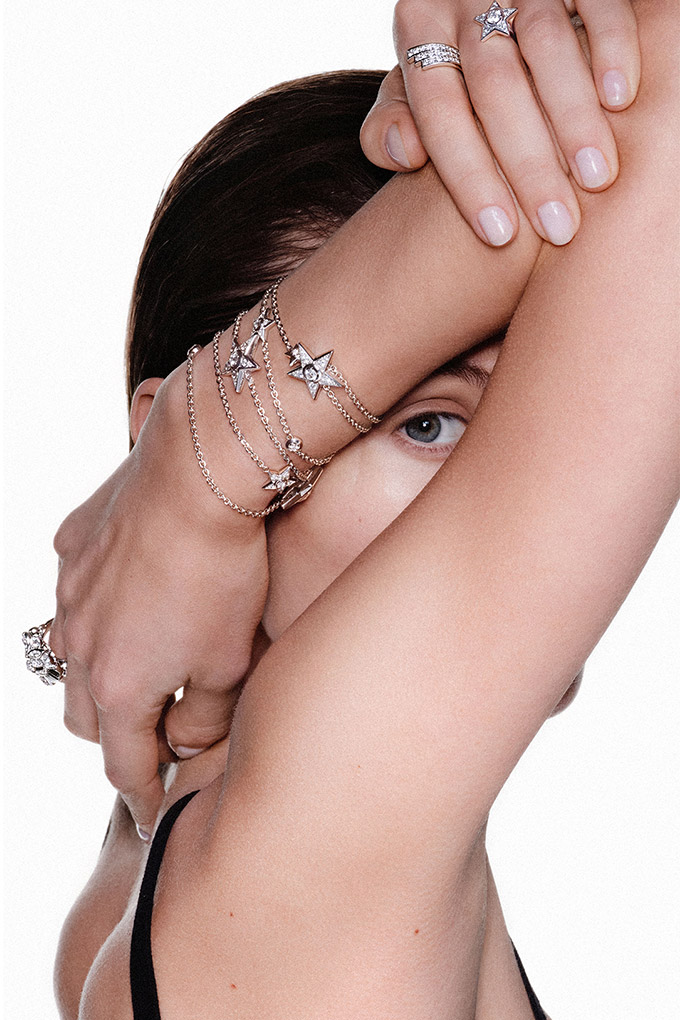
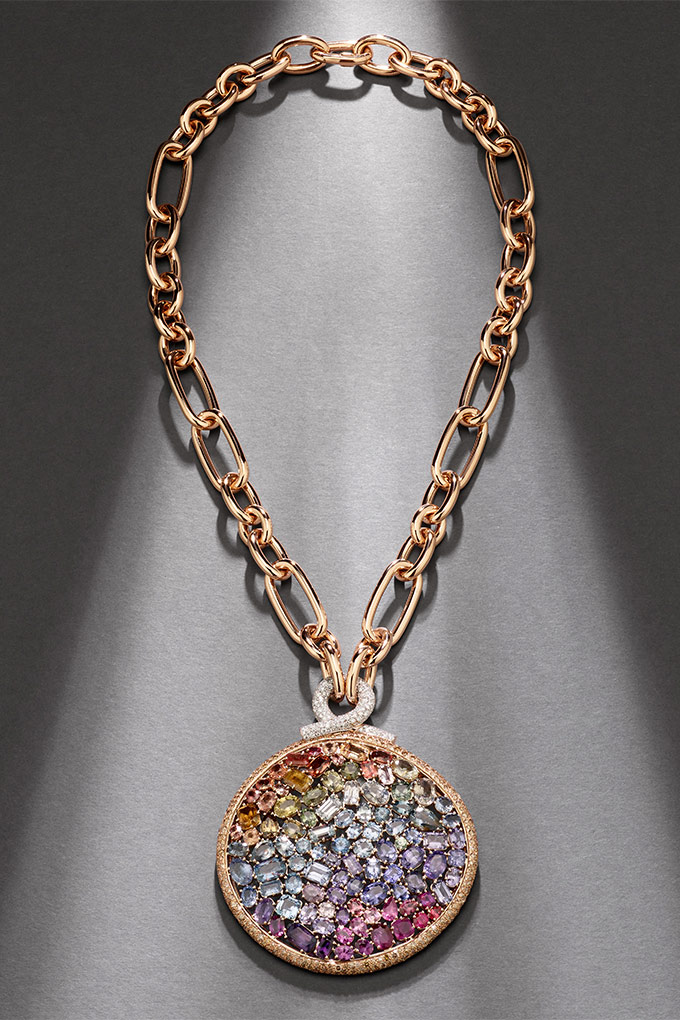
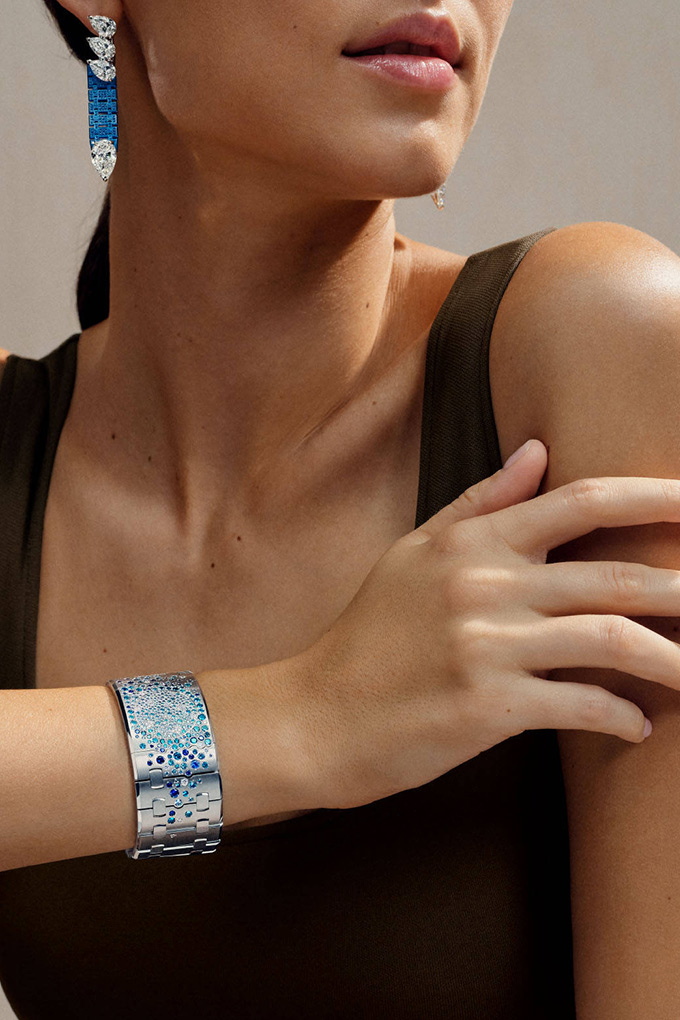
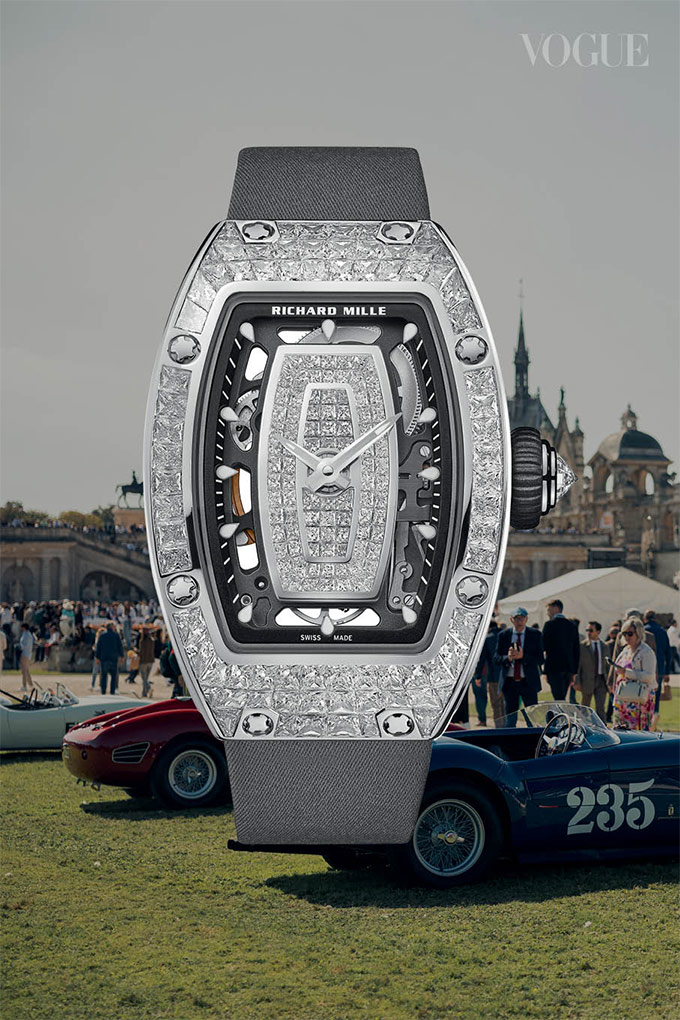
One trend that’s started to stand out, though, is the appearance of jewellery watches. It’s a category that haute horology and jewellery brands have a vested interest in: gem-set timepieces that gracefully do away with distinctions between a watch or jewel. These have become—in part because they are so much lesser seen—a rare treat on red carpets. Terrifically chic, they’re perhaps a new height of sophistication.
Take Elizabeth Debicki, for instance, who recently attended the 76th Primetime Emmy Awards—and took home the best supporting actress award for her role as Princess Diana in The Crown. Debicki wore a relatively simple outfit: a black velvet dress from Dior’s Cruise 2025 collection, and a smattering of diamond jewels by De Beers.

What really stood out about her look was on the wrist. Behold, a Vacheron Constantin Heures Créatives Heuere Discrète jewellery watch. The design was first unveiled in 2015, on the occasion of the brand’s 260th anniversary, as part of the Heures Créatives collection inspired by Vacheron Constantin’s women’s watches from the 1920s, ’30s and ’70s.


It takes, in this instance, inspiration from the Art Deco period of the ’20s. During this time, secret watches were the fashion because it was considered unseemly at the time for a woman to wear a wristwatch and check the time publicly. Instead, a lady’s timepiece was dressed in gemstones, and concealed on a bracelet that passed as a jewel.
The Heures Discrète makes use of the fan motif of the Art Deco period, turning it into a secret watch mechanism carved from filigreed white gold and set with diamonds. The fan can ‘unfold’ to reveal the mother-of-pearl dial of the concealed watch, which is powered by a diminutive manual-winding mechanical movement.

The smallness of the movement is an almost inherent fact of a jewellery watch—whether it’s a concealed ‘secret’ design or not. Besides the nonnegotiable of a time telling function and display, a jewellery watch is free to take on whatever form its designers can dream up. That’s where the broader appeal of its jewellery aspect comes into play: beauty and an aesthetic pursuit are vital.
In a funny way, many watchmaker brands of today are reviving this positively historical aspect of teeny tiny watchmaking. Take, for instance, Audemars Piguet which looked to its archives to reimagine a petite 23mm Royal Oak Mini for today. Crafted in full frosted gold, these small jewel-watches are perhaps the manufacture’s biggest, boldest release for 2024.
While discovering these new Royal Oak Minis in Milan, I had the chance to view some of Audemars Piguet’s archival jewellery watch creations. Some of the most impressive are from the late 1920s, equipped with the Calibre 5/7SB, the smallest movement ever produced by the manufacture.


Interestingly, enough, when I got to chatting about smallness with the brand’s heritage & museum director Sébastian Vivas, he told me that making an automatic watch at a size that remotely small is quite simply not possible at the moment. This, in part because our modern standards for accuracy of timekeeping, resistance to water and shocks, and more, have gotten far, far more stringent than they were a century ago when a watch would’ve been rather more fragile. Feminine, jewelled, glittering smallness, then, presents a fascinating technical challenge for watchmakers—an area and concern that might be typified as more masculine.


Not to say that it’s never been achieved before. Here’s a fun fact: the record for the smallest mechanical watch movement has been held since 1929 by Jaeger-LeCoultre. The maison made an incredible stamp on history when it introduced the Calibre 101 nearly a century ago. Baguette-shaped, and positively Lilliputian, this movement has powered many fine jewellery and cocktail watches. And incredibly, the 101 has held up even today.
Jaeger-LeCoultre, in fact, just recently announced a new interpretation of its 101 Secrets high jewellery watch. As its name suggests, the design takes inspiration from the secret watches of high society ladies in the ’20s. Discretion as a pinnacle expression of elegance, in an aesthetic sense.


On surface, the 101 Secrets is a four-row diamond bracelet. But this new model advances the concealment gimmick with not one but two hidden details. The first is the dial of the watch which can be revealed to see the time; and the second is the secret mechanism itself that controls the dial cover, in the form of a diamond ‘button’ that can be held down to pop the cover open.
What makes these jewellery watches so potent, of course, is the discernment taken to appreciate them. There is, obviously, the dazzling jewellery aspect with diamonds, gemstones and all. What adds to the allure is the knowledge that it also holds, or sometimes hides with a knowing wink, an equally precious and fully functioning piece of horology.