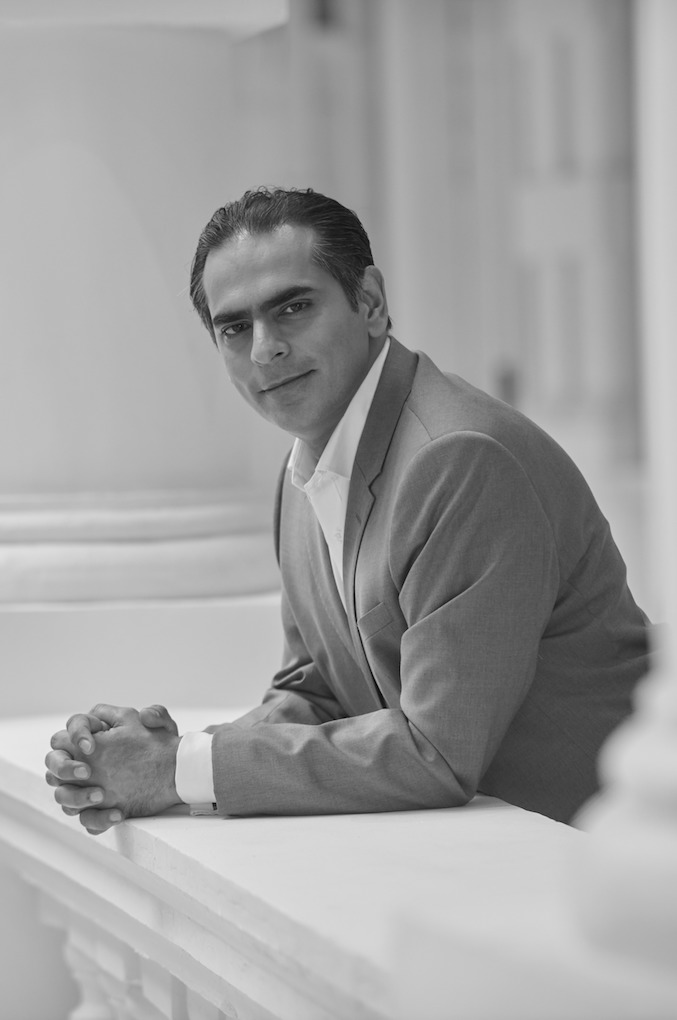
In his 29 years with Singapore Repertory Theatre (SRT), artistic director Gaurav Kripalani has produced over 150 works. His portfolio spans a diverse range, from original local scripts to theatre’s biggest classics. Under his helm, SRT was the first Singaporean theatre company on Broadway—as associate producer of the play Golden Child in 1998, which would then go on to be nominated for three Tony Awards. In addition, the importance that Kripalani places on arts education has seen SRT become one of the most prominent producers and commissioners of children’s theatre in Southeast Asia. A theatre veteran who has always championed the local arts scene, he was also the festival director of the Singapore International Festival of Arts from 2018 to 2021.
Tell us your origin story. How did you first fall in love with theatre?
I was seven or eight when I acted in my first play, and that was it. I was hooked. From that moment, I knew theatre was what I wanted to dedicate my life to. I pursued it in school, earned a degree in acting, and eventually, the opportunity at SRT came along. I count myself incredibly fortunate. Most people spend years searching for their calling, but I found mine early and never looked back.
How has your relationship with theatre evolved over the years?
These days, my role as artistic director doesn’t leave much time for acting, ironically, even though I could technically cast myself. But the evolution has been meaningful. I taught myself how to be a producer back when there wasn’t a playbook. Everything was trial and error. I had a mantra: if we were going to crash and burn, we’d do it in style. We took bold financial risks and thankfully, many of them paid off. That passion is still the same, but now it’s channelled through empowering others and building something larger than myself.
“We’re doing our part to shape a renaissance city, one where we not only feed minds but nourish souls.”
What is the biggest challenge you have faced throughout your career and how did you overcome it?
Working in the non-profit arts sector means challenges are a daily affair, but that’s part of the thrill. In the early days, we had no money at SRT. We’d use ticket revenue from one show to pay the debts of the previous one. If a production underperformed, creditors would chase us for months. Every morning, from 10am to noon, I was on the phone pleading for extensions. It was humbling and character-building. The turning point came in 2002 with Forbidden City: Portrait of an Empress, the opening musical at the then brand-new Esplanade Theatre. It was a huge leap of faith and it paid off. For the first time, we turned a profit. From then on, I made a promise: we would never operate in debt again and every actor, supplier and collaborator would be paid promptly. That commitment has never wavered.
As a leader in the scene, what do you think is the importance of mentorship and building a community?
Though I see myself as something of a maverick, I’ve reached an age—and a point in my career—where I’m probably considered a veteran in the Singapore theatre scene. SRT has grown into one of the country’s largest theatre companies, but our vision extends beyond the stage. A few years ago, we launched the Centre for Creative Learning to house all our education initiatives. We work with students and teachers in schools, train young actors and offer year-long paid residencies to those exploring different facets of theatre-making. It’s clear to us that investing in the next generation is as important as producing great theatre. Building a sustainable, inclusive and inspired community is now one of the core pillars of our work.
Looking forward, what is one change you hope to spark in the theatre scene in Singapore and how does this align with your vision for the industry?
My vision is simple: that one day, when people in Singapore have a free evening, their first thought isn’t, ‘What should I watch on Netflix?’, but rather, ‘Which play or musical should I see tonight?’. One way we’re working towards that is through The Little Company (TLC), our dedicated children’s theatre division. We believe passionately that if you introduce children to high-quality theatre at a young age, they’ll become arts lovers for life. Children who came to see our shows two decades ago are now buying tickets to Shakespeare in the Park and some are even bringing their own kids to TLC performances. It’s a long game, but a vital one. I like to think we’re doing our part to shape a renaissance city, one where we not only feed minds but nourish souls.
Pre-order your copy of the Vogue Man ‘Gold’ issue online or pick it up on newsstands from 13 June 2025.