It begins with the plight of one man; his immortality, a maddening prison of his own making. Bram Stoker’s Dracula has always been a cautionary tale—its many iterations and adaptations retelling the aftermath and psychosis of the man-turned-vampire who has condemned himself to a lifetime of despair. Francis Ford Coppola’s 1992 classic gave the Count a reason behind his monster; a tragic tale of love, and his inability to cope with the death of his dear Elisabeta. Led by grief, it is a tale of obsession that spirals out of control, and a love that poisons just as much as it bleeds—first and foremost affecting the lives of Jonathan and Mina Harker, Van Helsing, and Lucy when he meets them centuries later.

At its core is a classic tale that wrote the blueprint for the genres of gothic horror and dark romance. And it is here that Big Live Entertainment’s Dracula: Ballet at its Darkest finds its way to us. Within the confines of a narrative that is unfamiliar to none, the revered dance form unveils a haunting excavation of the beloved tale. You might ask: without the dialogue, without the action, where does the story take shape?
“We were most interested in showing the moments no other medium lingers on—the seconds before violence, the stillness inside obsession, the way desire and dread can occupy a body at exactly the same time,” explains Joel Burke, artistic director and choreographer of Dracula: Ballet at its Darkest.

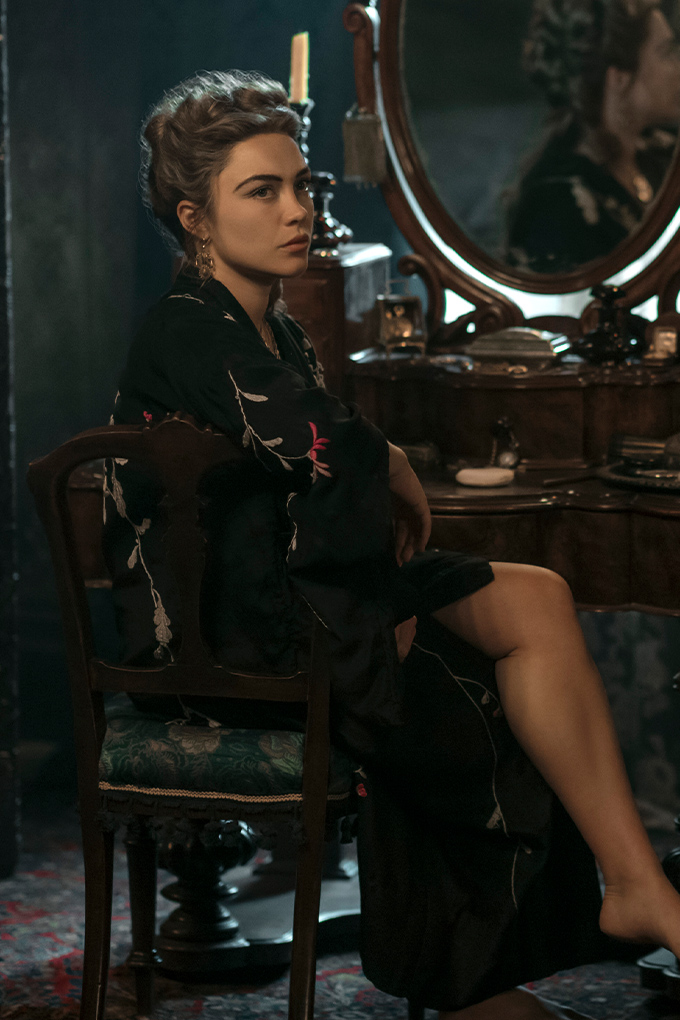
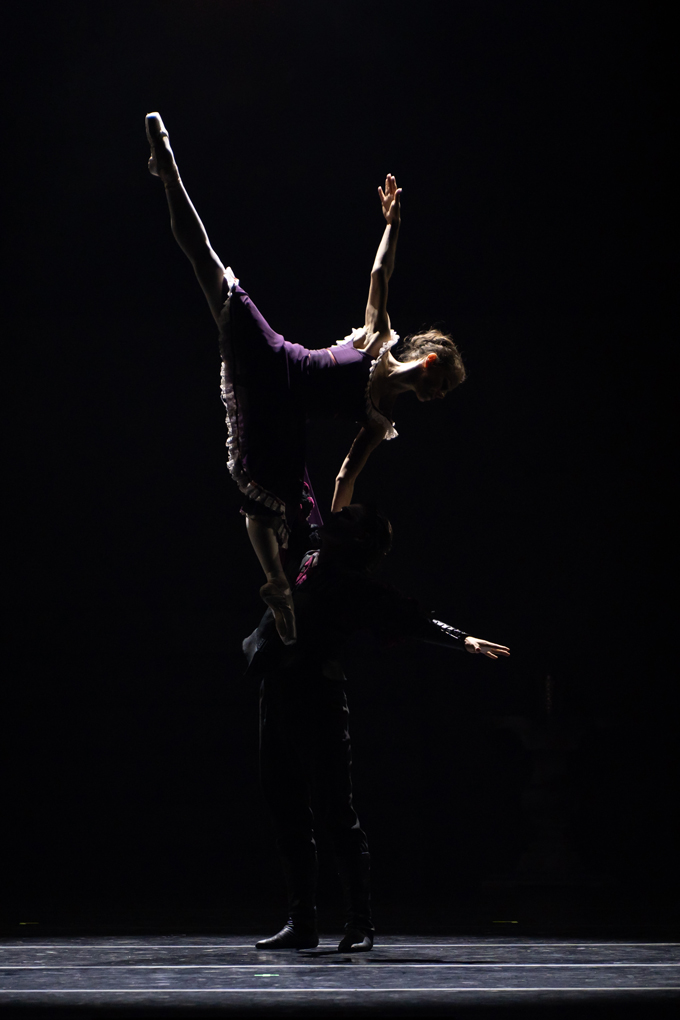
Without missing a beat, the ballet does exactly that. Enrapturing the audience every step of the way, the plot is distilled to something rather simple, yet still of Dracula’s essence. A just-married Jonathan and Mina slip into the Count’s castle during their honeymoon, Count D lurks in the shadows as he believes Mina to be Elisabeta’s reincarnation, and his marvellous ghosts—with their rickety, uncanny movements—dance in the shadows, cause the first rift, and tear them apart forever. At times, there are wonderfully staged ensembles embroiled in fanciful costumes, at others, a chill is sent down our spines as we witness the eerie congruency of Count D’s ghost quadrant. There are the anguished movements of the production’s tormented men: the vampire, and a bloodthirsty Jonathan, the newborn who fails to resist his bride. And then there is the beautiful Mina, the very epitome of grace herself.

By reimagining and watering down much of the original plot, the ballet tackles its emotional heart: one that is ridden with anguish and grief; desire and desperation; obsession and madness. It is furnished by lavish touches—a well-executed score, dramatic sets and immaculate lighting—which colour the production and brings it back from the dead.
And in doing so, it also does one splendid thing. It distills the ballet to its gripping essence: of sheer, sensual beauty.
Below, a conversation with Burke, as well as Khalid Tarabay, executive director of Dracula: Ballet at its Darkest, as they discuss the enchanting reimagining of a literary classic—and bridging the gap that has long alienated the dance form from the masses.
Ballet is one of the most revered art and dance forms—but there used to be a time when it was seen as ‘less accessible’. What has changed?
Joel Burke: Ballet’s reputation for inaccessibility came from treating it as a museum piece—untouchable, over-explained, and often presented as something you needed years of training to properly understand before you were “allowed” to enjoy it. What’s changed is a willingness to let ballet be entertainment again, not just an object of study. Shorter running times, stories with real stakes, scores audiences already recognise, and production values that borrow from film and theatre—all of that has opened the door. The audience has evolved alongside it: people are arriving expecting to be moved and thrilled, not simply to admire technique from a respectful distance. They want a night out that gives them chills, not homework.
Khalid Tarabay: What has changed is how productions welcome the audience. Historically, ballet relied on a very exclusive circle of traditional patrons. Today, contemporary productions are breaking those boundaries by presenting ballet as a dynamic, modern night out at the theatre rather than something rigid or intimidating.

Our own audience has evolved beautifully, with younger generations now forming a significant and highly enthusiastic part of our crowd. We’ve welcomed this new audience by focusing on clear storytelling and immense visual scale. People today want to see cinematic momentum, striking stage design, and real emotional stakes. By focusing on engaging, atmospheric themes and making ticketing accessible, we’ve successfully turned a general curiosity about ballet into a genuine, lifelong passion for a completely diverse community of theatre goers.
Bram Stoker’s Dracula is considered a literary classic. What does it take to adapt a story that has been retold countless times, and this time for the ballet?
KT: Adapting a classic like Dracula means working with a story that people already know and love. The advantage is that the audience already has a connection to the material; the real work lies in translating that familiarity into a powerful, high-quality stage production that feels fresh.
To make it resonate with broader audiences, we moved away from the idea that ballet has to be traditional or insular, creating a bold, cinematic experience instead. We anchored the production with exceptional creative elements: a powerful original score woven together with timeless classical masterpieces, spectacular West End set design, and striking choreography.
By focusing on the intense, dark romanticism of the story, we’ve created a production that speaks equally to long-time theatre goers, horror fans, and people experiencing ballet for the very first time.
Dracula‘s allure lies in the haunting and the gothic. What is it about ballet that makes it such a brilliant medium for an adaptation of the original?
JB: Ballet already lives in a heightened, transformed world—bodies doing things bodies shouldn’t be able to do, silence and music carrying emotional weight that dialogue usually handles, partnering that can look like tenderness or violence depending on a single change in weight. That’s precisely the register gothic horror needs. Dracula is a story about transformation, restraint and the loss of control, and ballet is, at its core, an art form built entirely on the tension between the two. There’s also something in the physical vocabulary of ballet—the extension, the lifts, the way a body can be made to look weightless or predatory in the same phrase—that lends itself naturally to the seduction and menace at the heart of the story.

What was the most important thing for you when attempting to bring such a classic to life?
TB: The absolute priority is balancing world-class artistic execution with genuine accessibility. For a long time, classical ballet felt like a gated community—elite, expensive, and out of reach for the general public. Our mission is to change that perception.
With Dracula, we bridge this gap by keeping ticket prices welcoming while maintaining the flawless technical skill the art form demands. We don’t compromise on quality; we recruit a powerhouse international cast of dancers from the world’s top institutions. By channeling their elite athleticism into a story that is naturally dramatic, atmospheric, and visually grand, we can show audiences that world-class ballet is thrilling, relatable, and truly for everyone.

In conceiving its choreography and physicality, what were you most interested in showing to your audiences? How can a ballet enunciate a narrative differently, in a way that other mediums like theatre or film cannot?
JB: We were most interested in showing the moments no other medium lingers on—the seconds before violence, the stillness inside obsession, the way desire and dread can occupy a body at exactly the same time. Choreography can hold two contradictory emotions simultaneously in a single gesture; film and theatre generally have to choose one, then cut to the other. That simultaneity, and the honesty of an unmediated body in space, is something only movement can give an audience. It also lets us skip explanation entirely—we’re not telling the audience what Dracula feels, we’re making them feel it in their own chest as they watch.
What is something you’re hoping the Singapore audience is going to take away from this?
JB: For our Asia debut at the Esplanade Theatre, we set out to have the Singapore audience walk away realising that ballet can be just as thrilling, fast-paced and visually spectacular as a great film, without losing any of its prestige. We wanted them to feel the incredible quality of the production—from the world-class talent on stage to the sheer scale of the set—while feeling completely welcome, whether it was their first ballet or their fiftieth. Above all, we hoped Singaporean audiences would leave the theatre knowing that the beauty and excitement of ballet belongs to them just as much as anyone else.
Judging by the reactions in the auditorium and as people were leaving, we believe we have done exactly that.