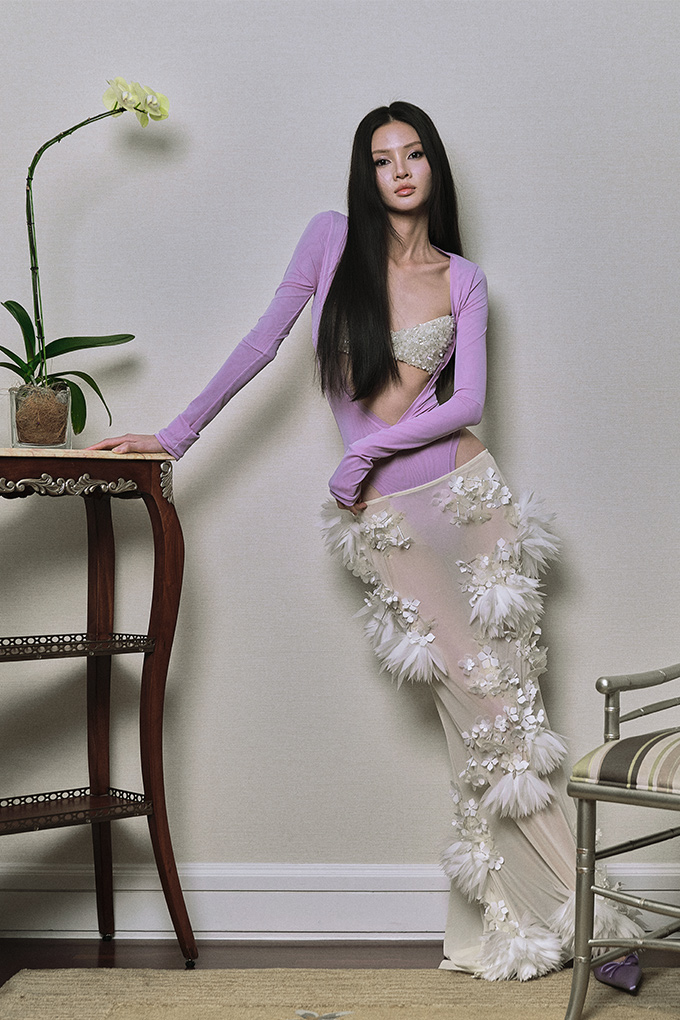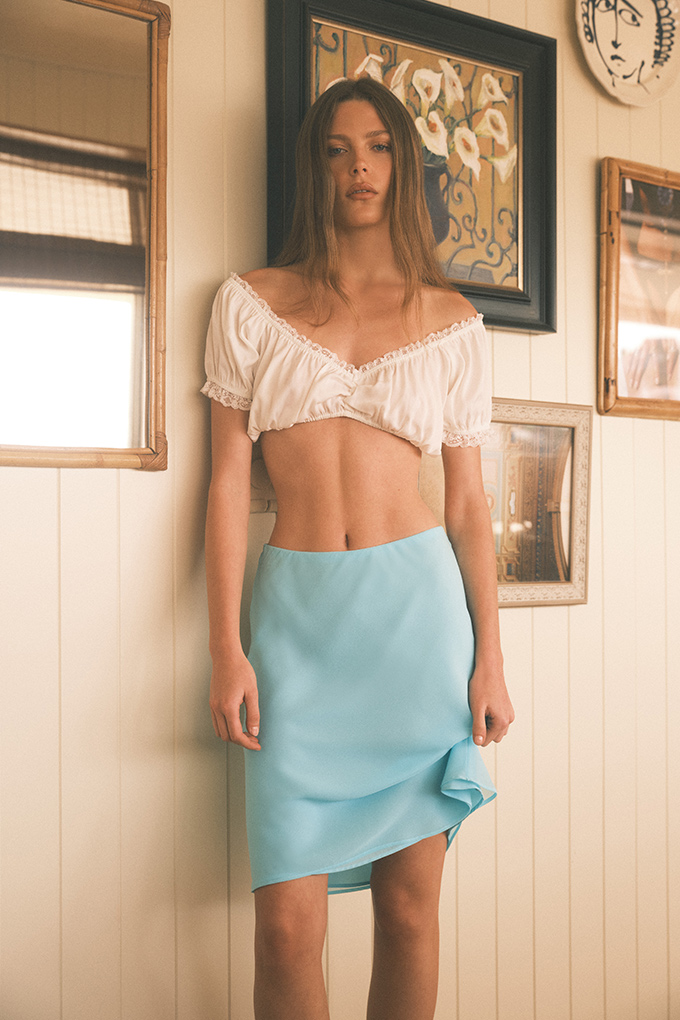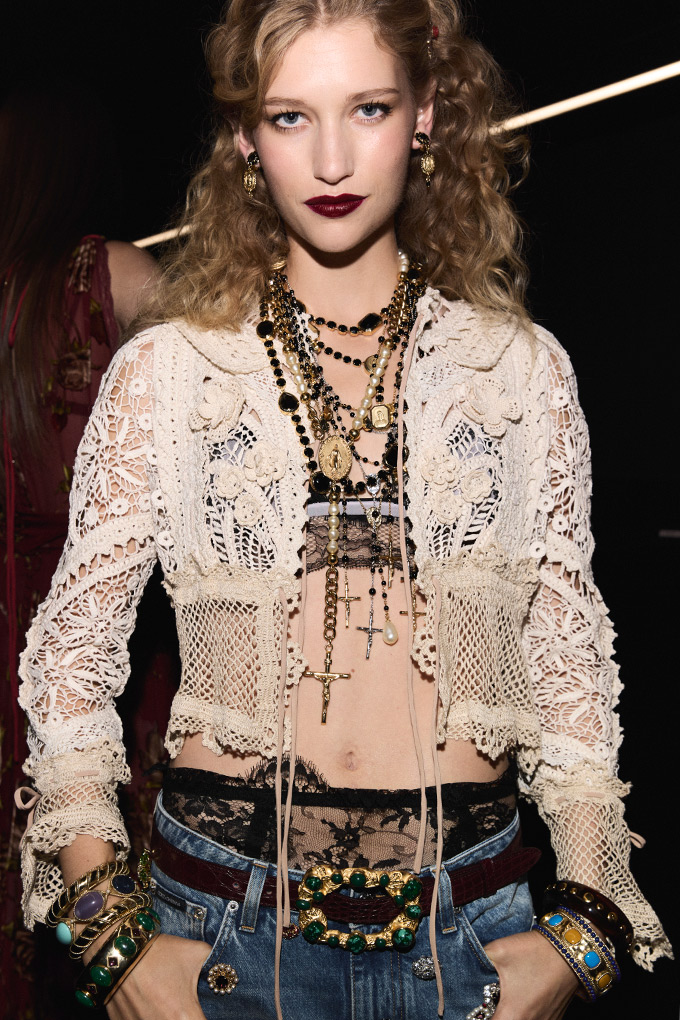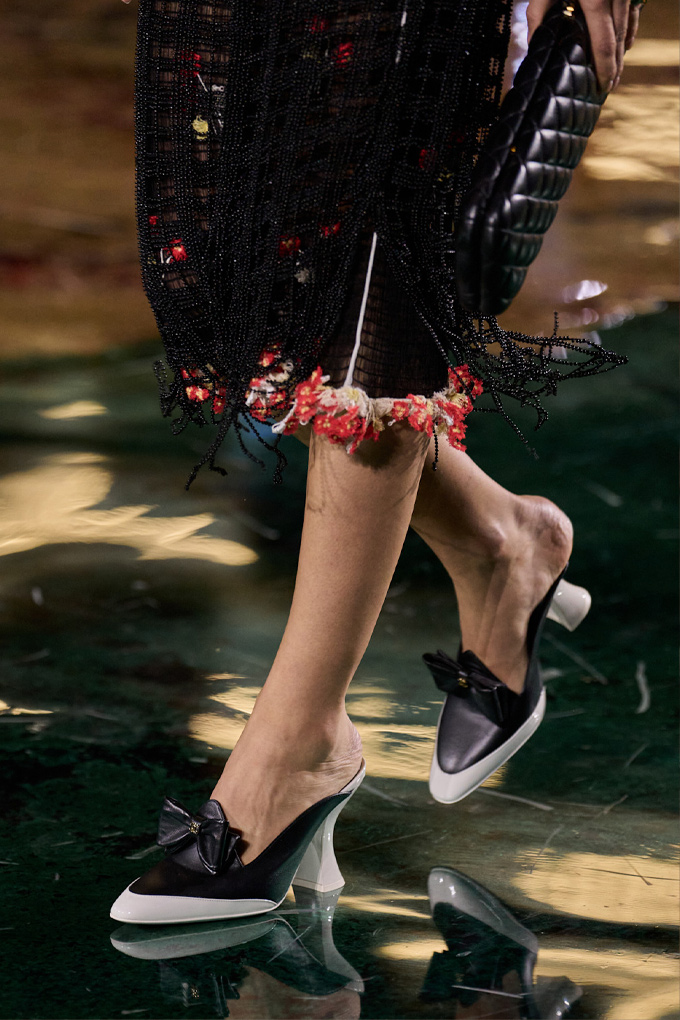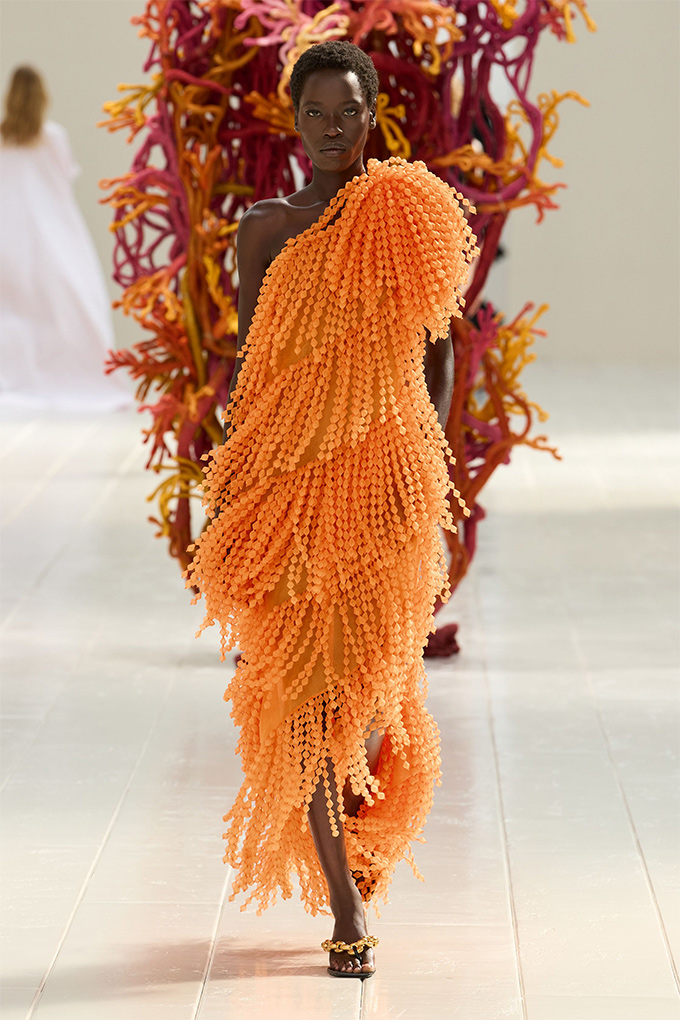
Pierpaolo Piccioli’s spring collection had, he said “a very personal feeling.” After only a year at Balenciaga, he’s needed to figure out where he stands between the monumental Cristóbal couture legacy and the monumental Demna social satirist street-style legacy, and to do so in real time. That’s no easy task for anyone, no matter how experienced they may be.
His show for his sixth collection was held in a white box in the Tennis Club during the day—a vast improvement on the dark dystopian late-night crowd-chaotic scenario in which he chose to launch his first Balenciaga ready-to-wear in March. In between, he’d shown his first Balenciaga vivid ball-gowned haute couture collection in midday sun and palatial surroundings. With this show, he was consciously seeking a logical balance between the two extremes, as he explained in a preview.
“To me, it was important not to just to do the couture show and then go to ready-to-wear with a different approach,” he said. His mission with this collection was to deploy Balenciaga’s couture, to “get it into the daily wardrobe. So I wanted to work on a pair of denims, a white T-shirt, men’s shirt, with the technique of couture, with the culture of couture, applied to contemporary, ordinary garments.”
Look one announced that theme: what had been a regular white shirt now had a peplum effect created by rows and rows of stitching. Look 40 transformed a white T-shirt with the same technique. The blue jeans in the same look were another source of pride for Piccioli: they were cut on the bias. “Cristóbal never used the bias if you look in the archive,” he observed. Demna didn’t have jeans cut this way, either. They’re a Piccioli novelty; a first for the brand.
There were many other moments where Piccioli asserted his own identity. As the memory of Demna at the house fades, to be overwritten by what he’s currently doing at Gucci, there’s more freed-up space for Piccioli to create in. That’s what it felt like anyway, especially for evening, when he sent out narrow black tailcoats, with duchess satin sashes knotted low on the hip, or even better, what looked like a pale pink metallised heavy satin T-shirt that had grown into a full length trapeze with a voluminous train—but worn with a regular pair of blue jeans.
Something else in the space read as very personal too. Piccioli wears a coral necklace every day. The central installation of a textile sculpture by Aude Franjou evoked coral, its fronds reaching skywards. Piccioli chose it as a symbol of his belief in protecting both the ecosystem of nature and the human one in the fashion system he’s loved to work in all his life.

1 / 17
Look 1

2 / 17
Look 5

3 / 17
Look 11

4 / 17
Look 16

5 / 17
Look 20

6 / 17
Look 21

7 / 17
Look 29

8 / 17
Look 31

9 / 17
Look 36

10 / 17
Look 40

11 / 17
Look 45

12 / 17
Look 50

13 / 17
Look 54

14 / 17
Look 63

15 / 17
Look 65

16 / 17