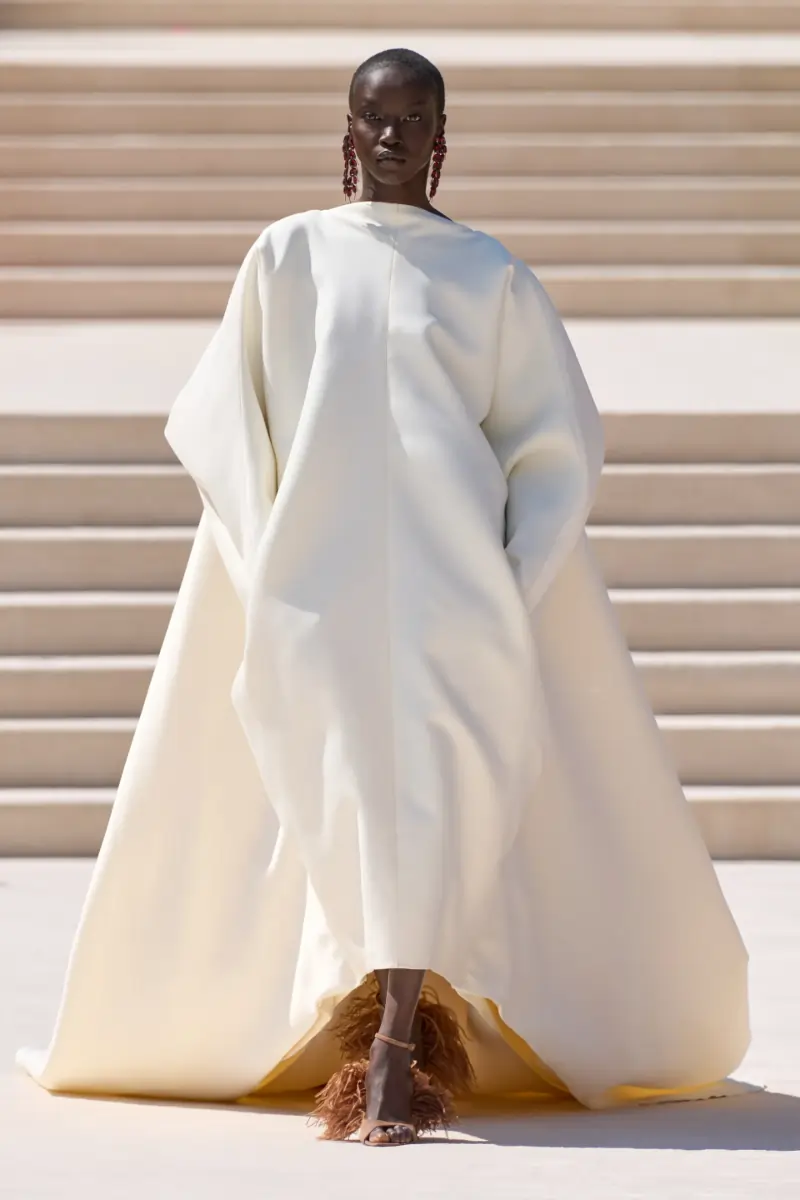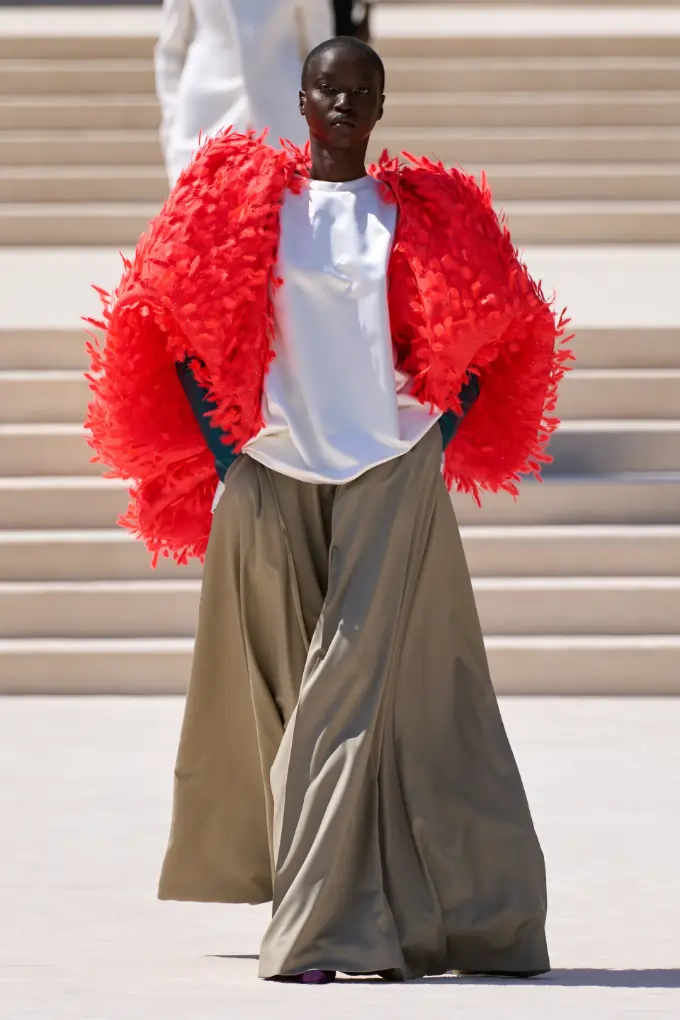
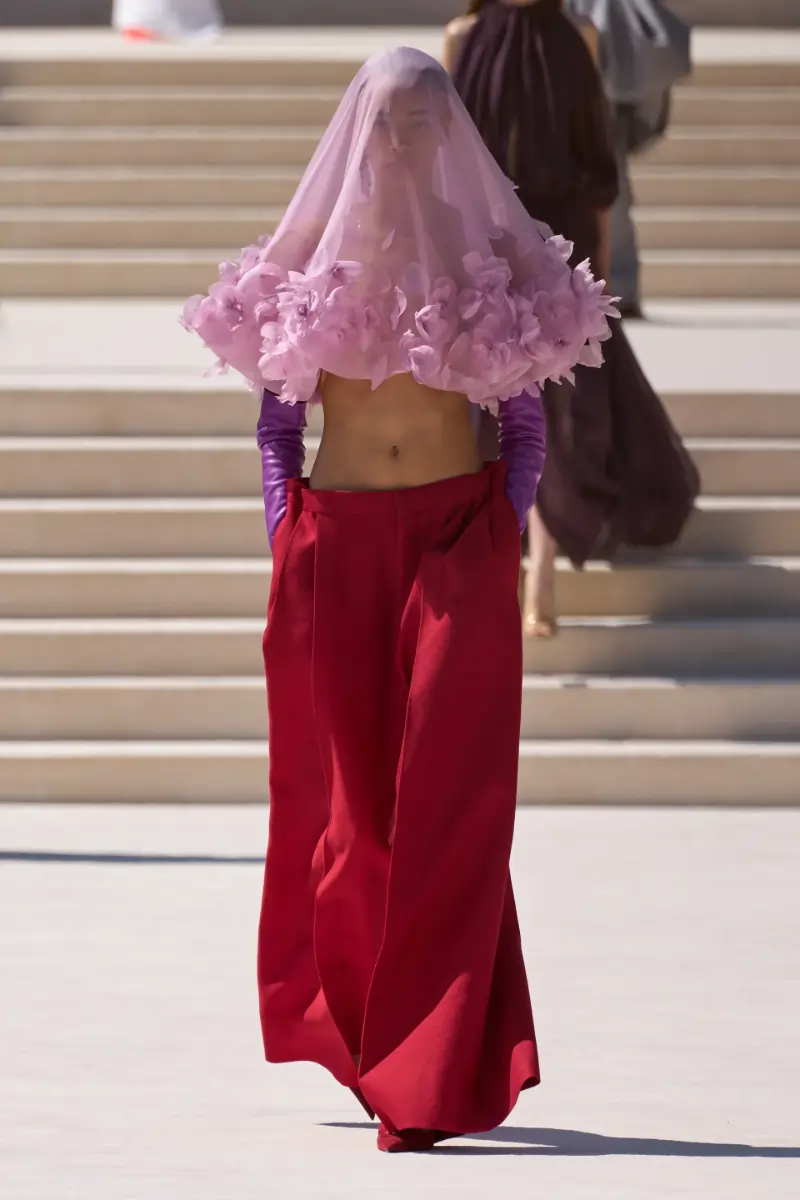
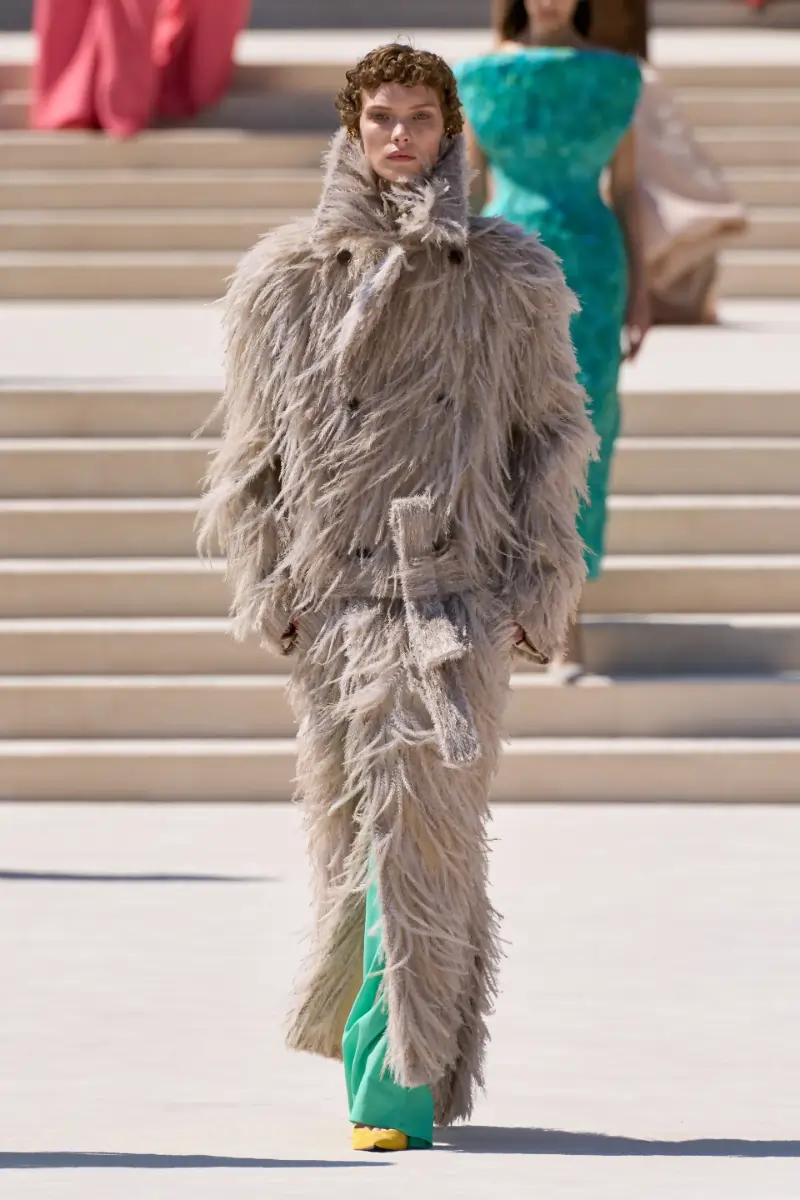
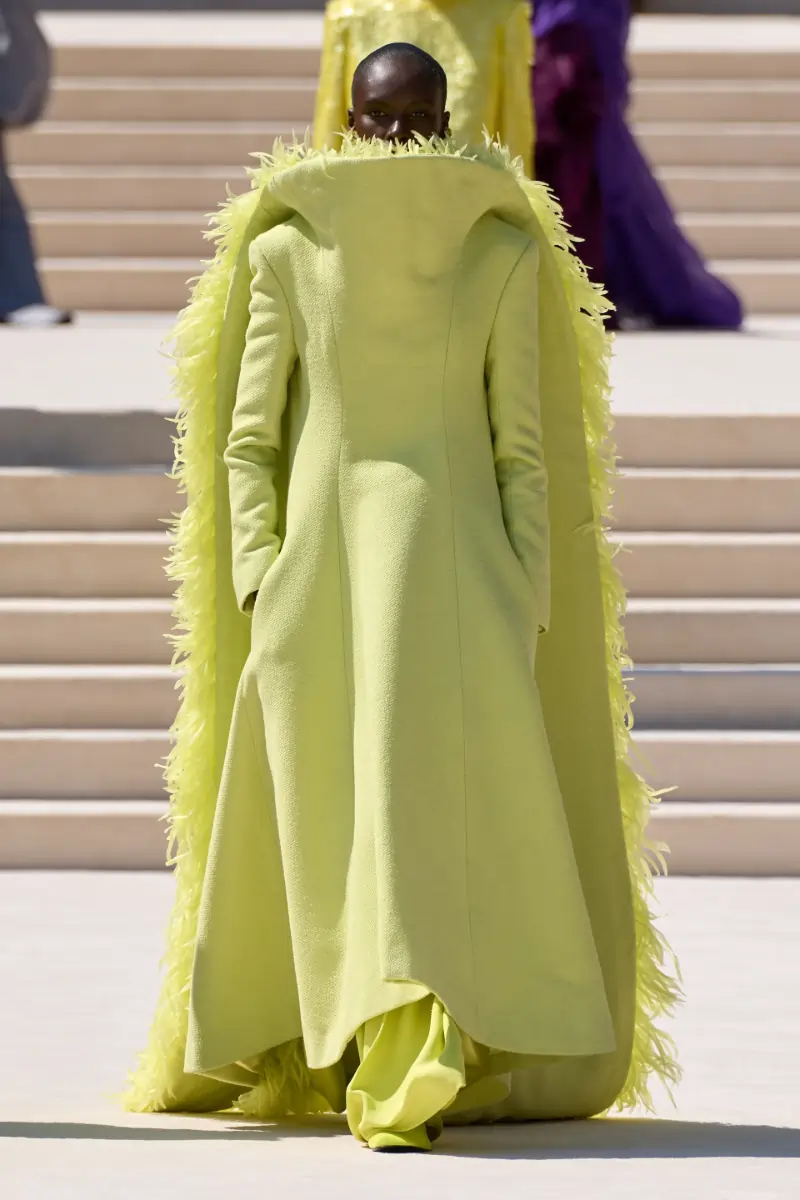
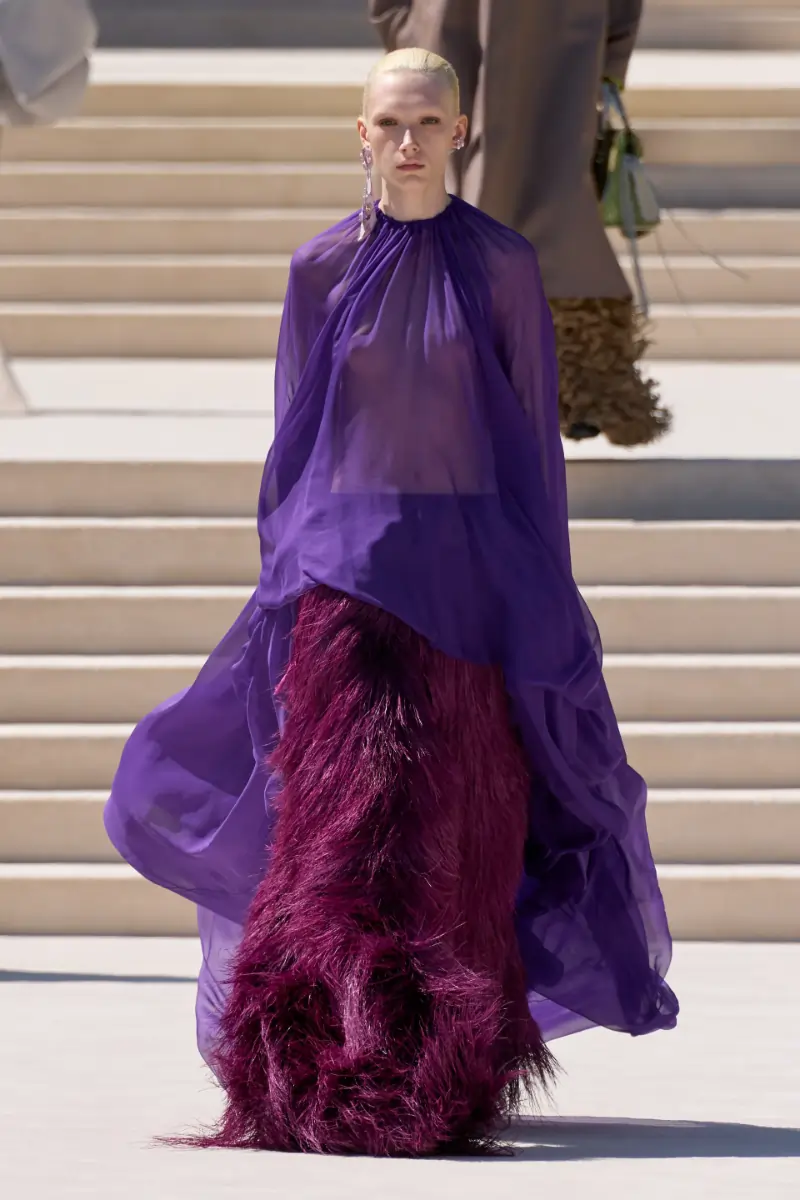
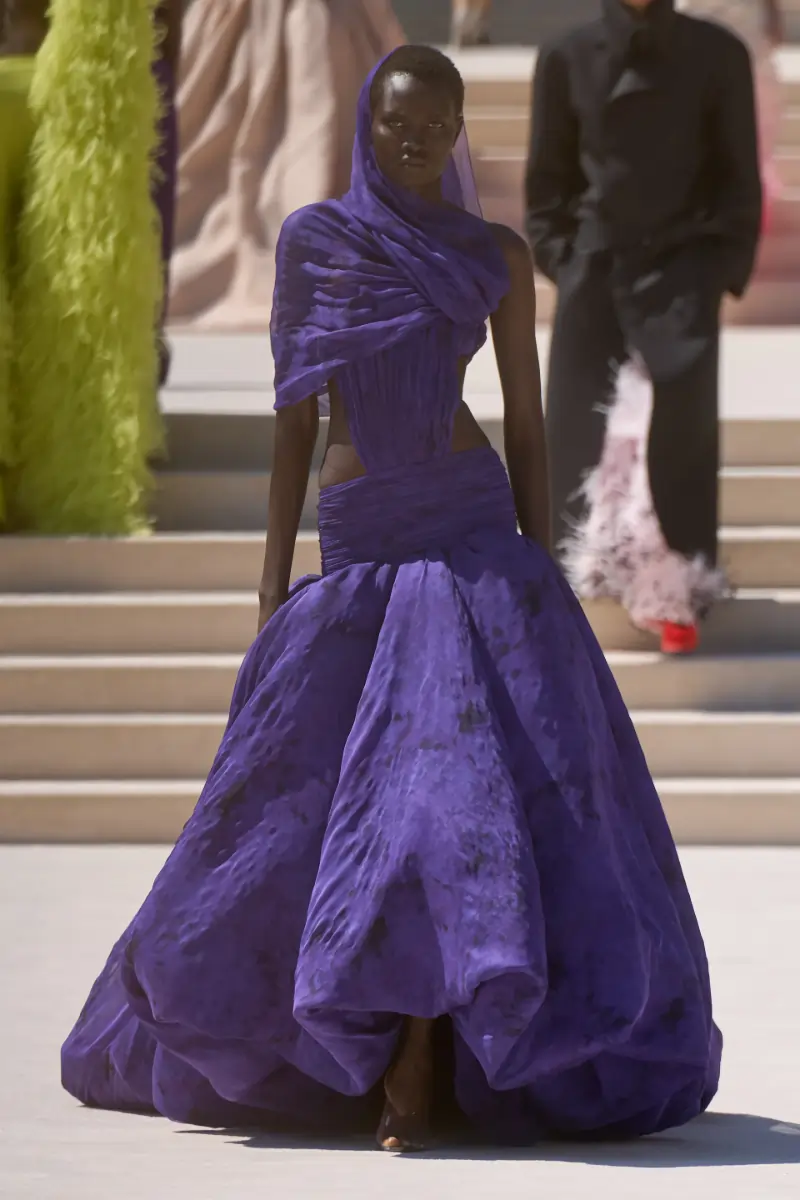
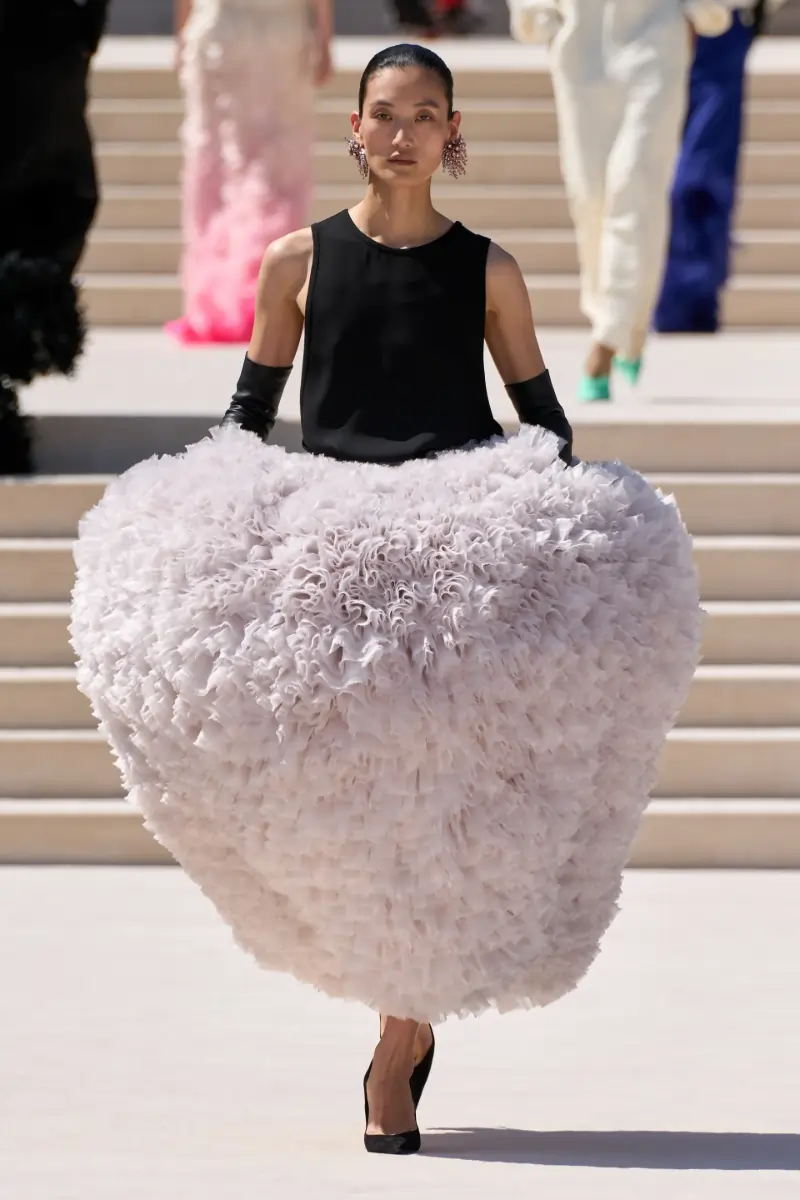
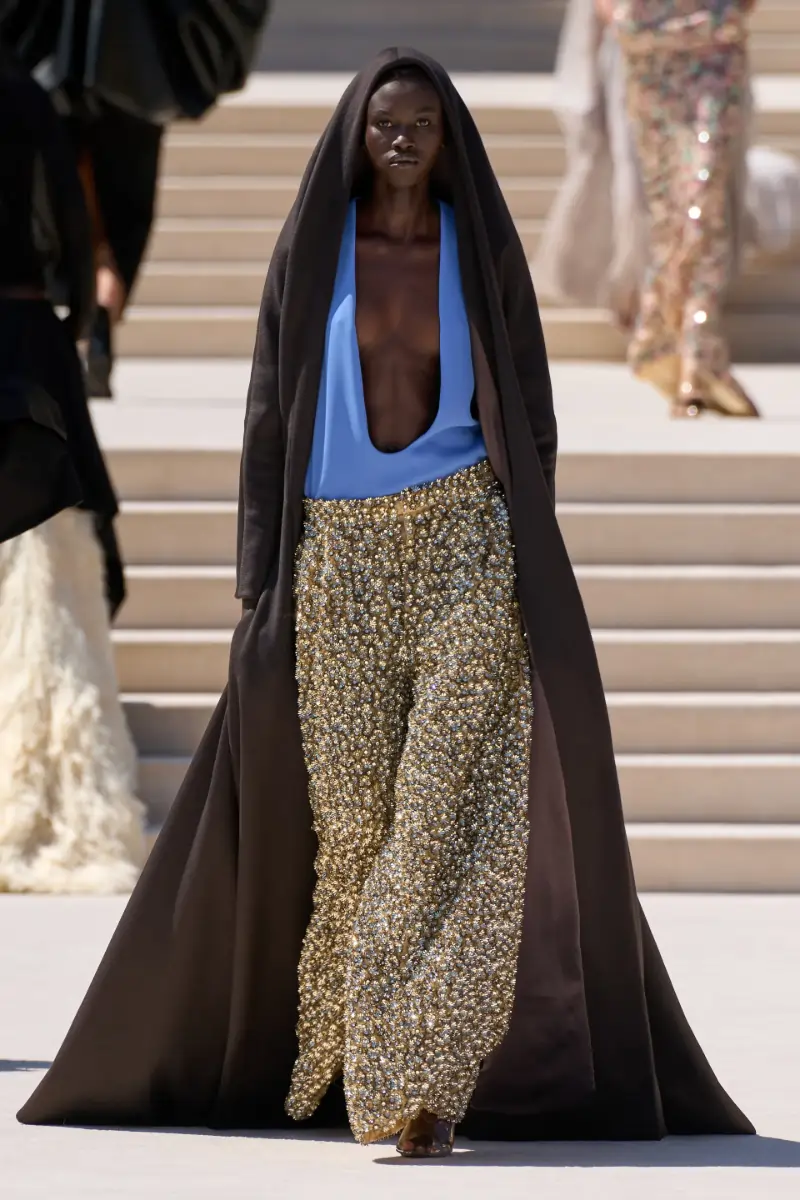
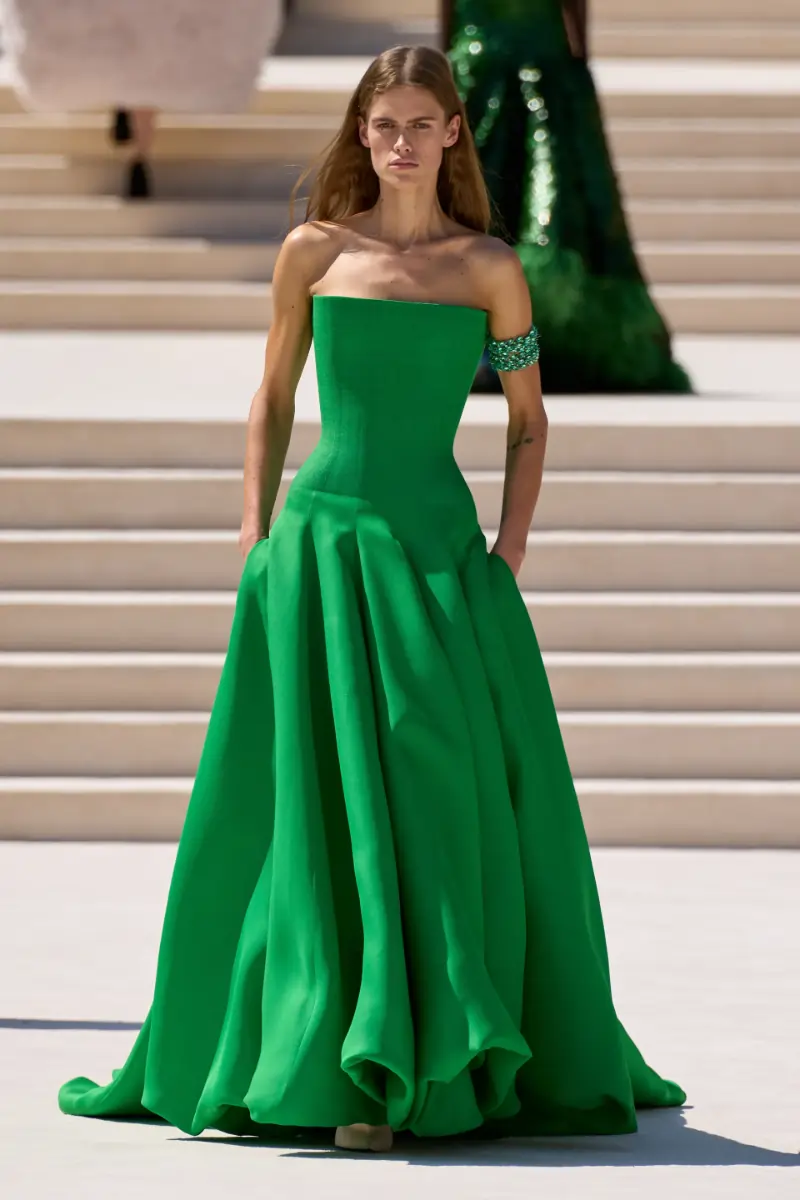
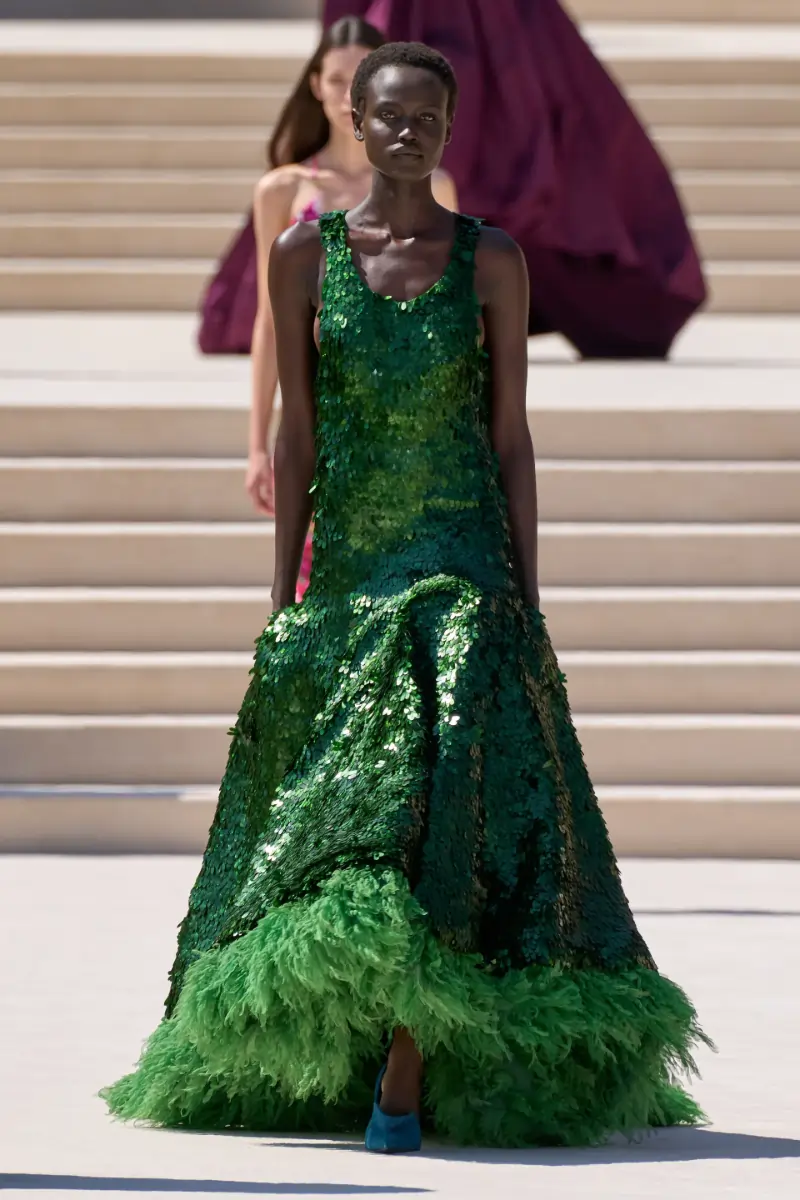
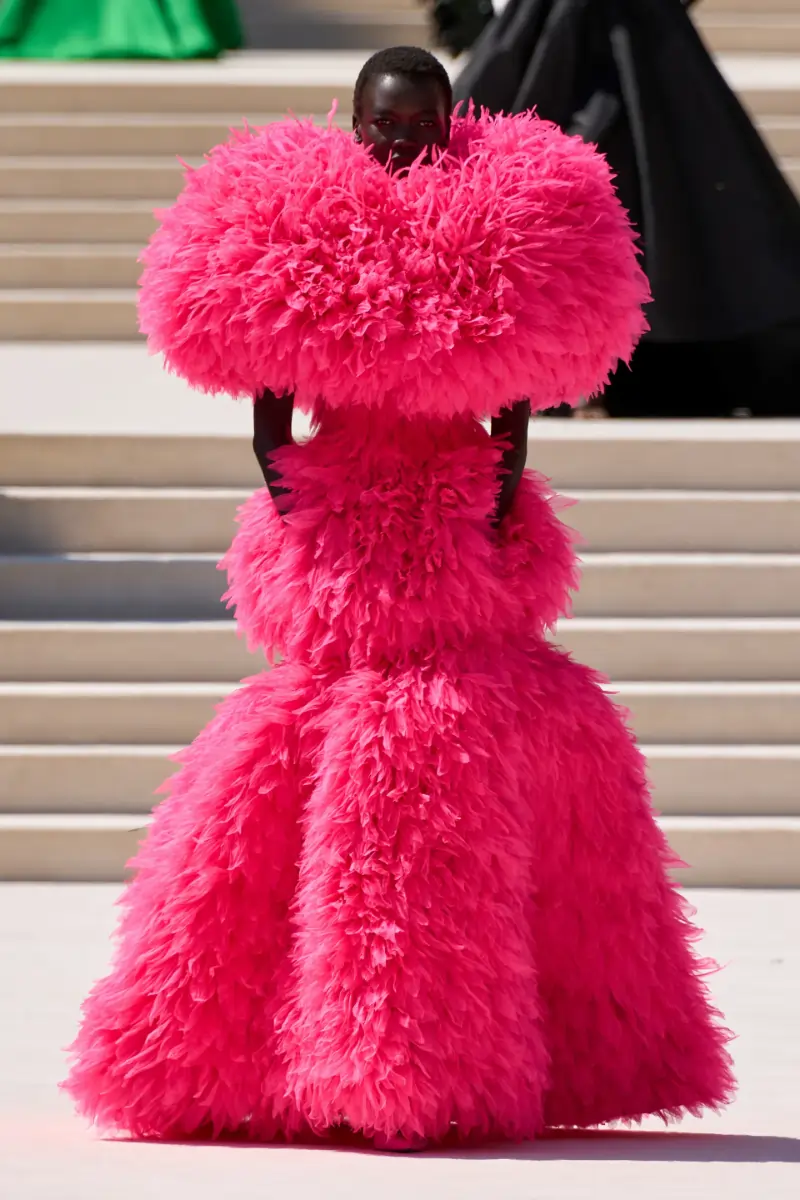
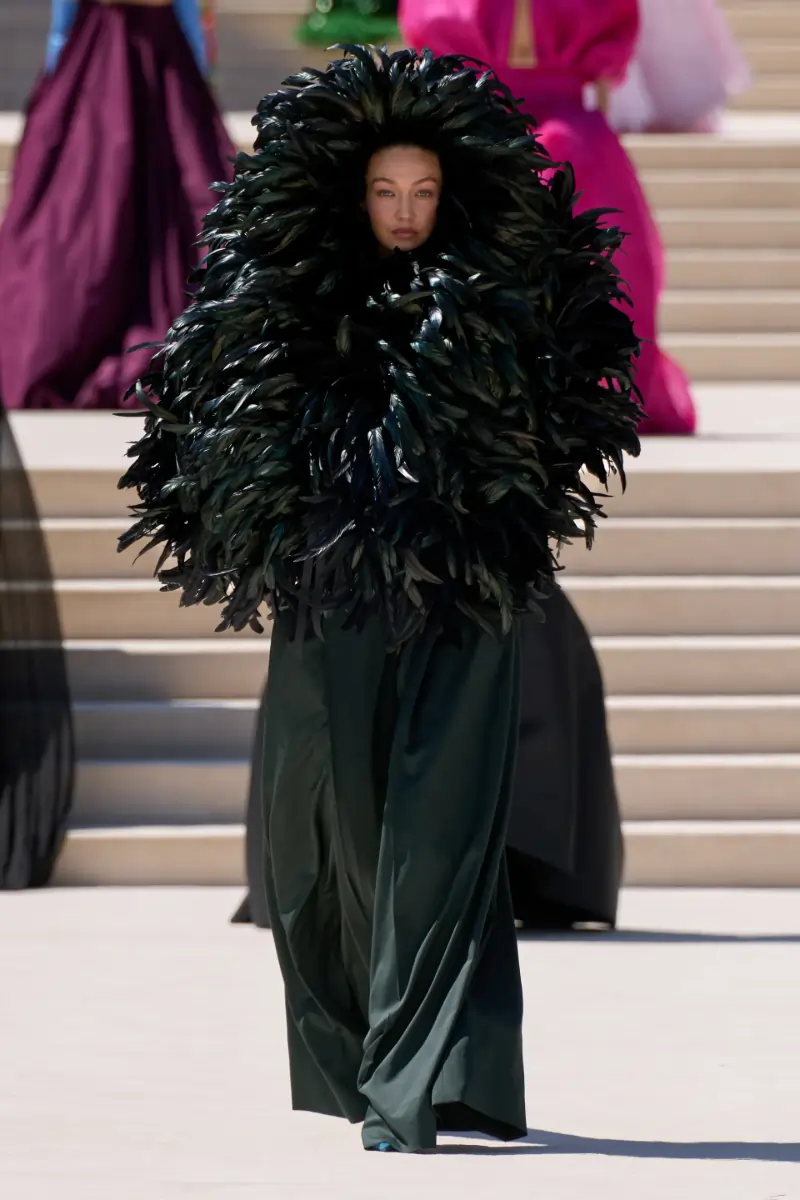
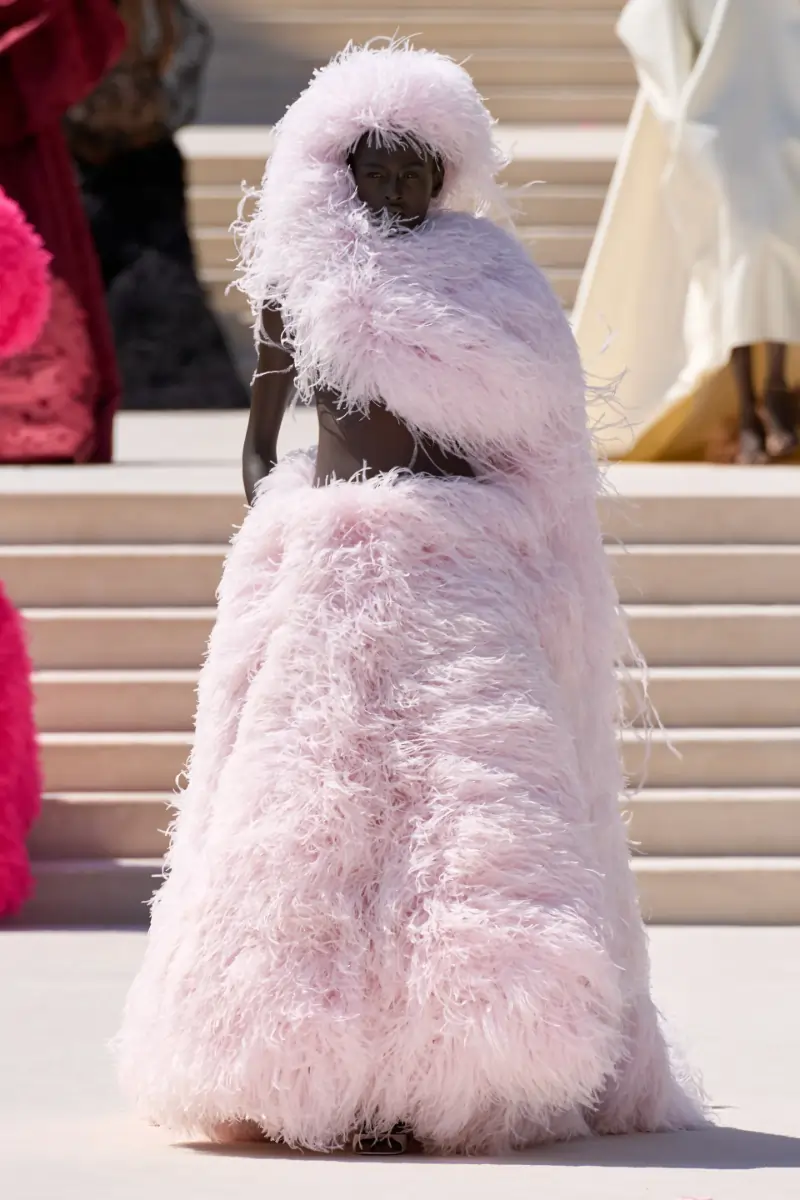
Sweeping shapes, retina-reverberating colour, and volume for miles: Pierpaolo Piccioli was showing the best of himself in his first haute couture collection for Balenciaga. We saw huge bubbles, plunging back-views, sculptural side-views, traily scarves, and an explosion of feathery things processing slowly down the grand steps of the Cité Universitaire and into the searing midday sun. Everyone had been advised to wear sunglasses.
First out was a giant pair of chinos and a white couture t-shirt topped by a bubble-bolero-bomber bristling with orange feathers. Following were the things you’d pick out according to taste and personality. A narrow, severely elegant black tailored dress with a white satin scarf trailing behind its neck. Perhaps a pistachio trapeze coat with a back-opening edged with neon green feathers. Possibly—should you be red-carpeting—something as insane as a pale pink ostrich type of trapper hat attached to a giant scarf-stole that twists around the torso, and ends up in a huge pouf of a skirt.
“Cristobal Balenciaga used to say that a couturier has to be an architect for the shape, a painter for the colours, and a philosopher for the way people feel in the clothes,” Piccioli had said in a preview at the house’s couture salon. Those are the values he studied and took to heart at Valentino. “So these are the shapes I’m doing. It’s about engineering the cut and giving shapes with the fabric itself.”
Since Demna’s revolutionary time at Balenciaga, the house’s couture shows have only been held annually. Piccioli’s hiring made every kind of sense on the couture level when Demna left; the emotional connection he’d made with a swathe of existing and new couture clients while he was at Valentino caused its own kind of fashion revolution, an uplift in delight. One of the progressive things he did was to puncture the pretentiousness of haute couture language. While knowing every possible technique of dressmaking, draping, tailoring, and embroidery, his attitude was that women should just feel crazily happy going out in it, whatever their age or the occasion. “Couture is still about a relationship with people, a conversation with a body,” he said.
To Piccioli, the way clothes turn out is ultimately in the hands of the workers. Who can handle an enormous black taffeta gown? Who can micro-stitch the bodice of a bright green dress, so it grips the waist and stands away from the décolletage without a corset? How is it possible to make a column dress whose top half is tailored like menswear, yet it seamlessly flows into a weightless silk skirt? Having been an in-house couture worker himself, his respect and understanding for these individual talents is on a level beyond that of most creative directors today.
He brought all of the atelier workers out at the finale. “I’m very happy, satisfied, because we know when you arrive in a new house, you need to learn and to know the people to create a sort of relationship, because this is what couture is about. For me,” he said, “it’s the human being that makes the show. You have to know them in order to use the right skills, the right hands, the kind of way of thinking.”
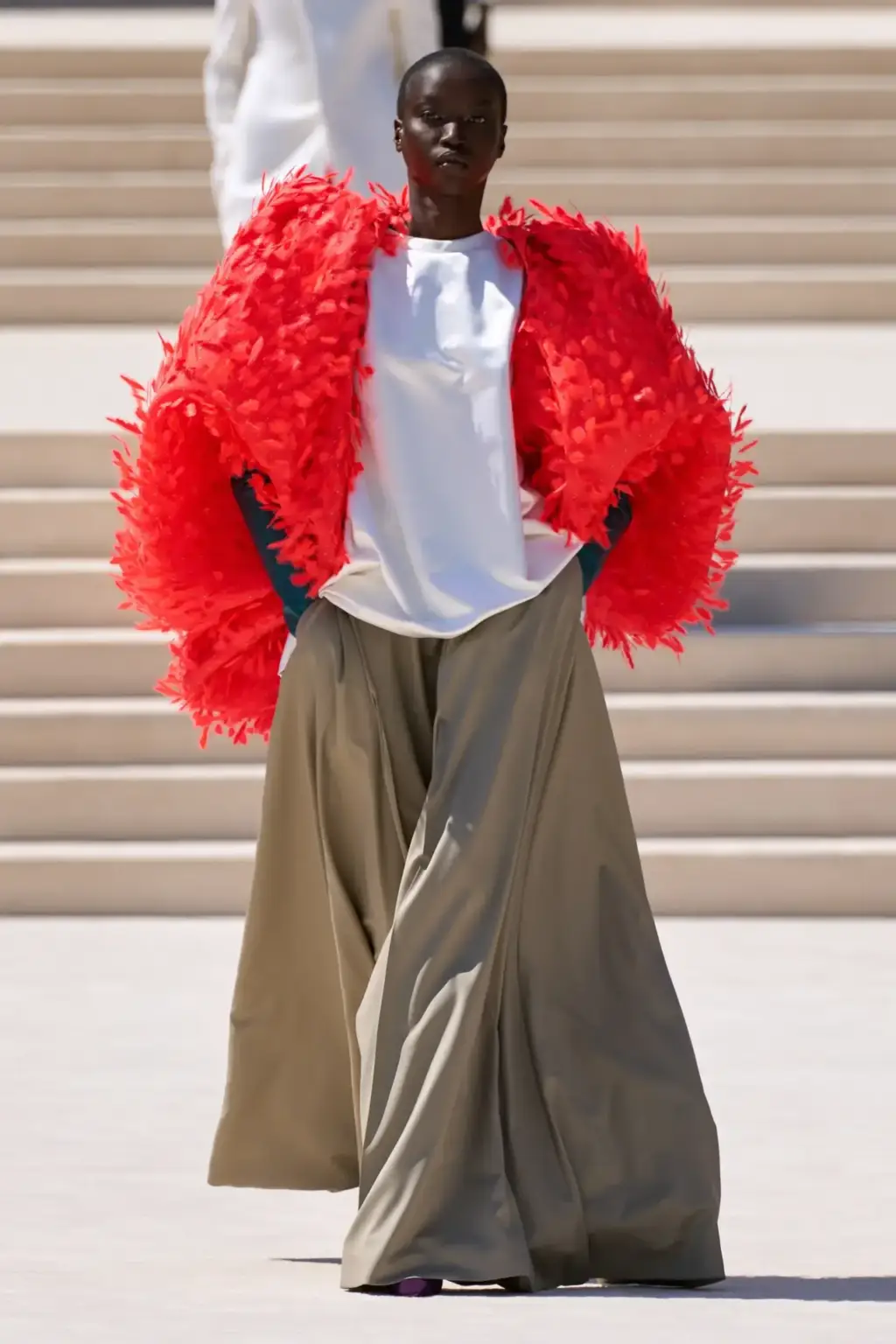
1 / 15
Look 1
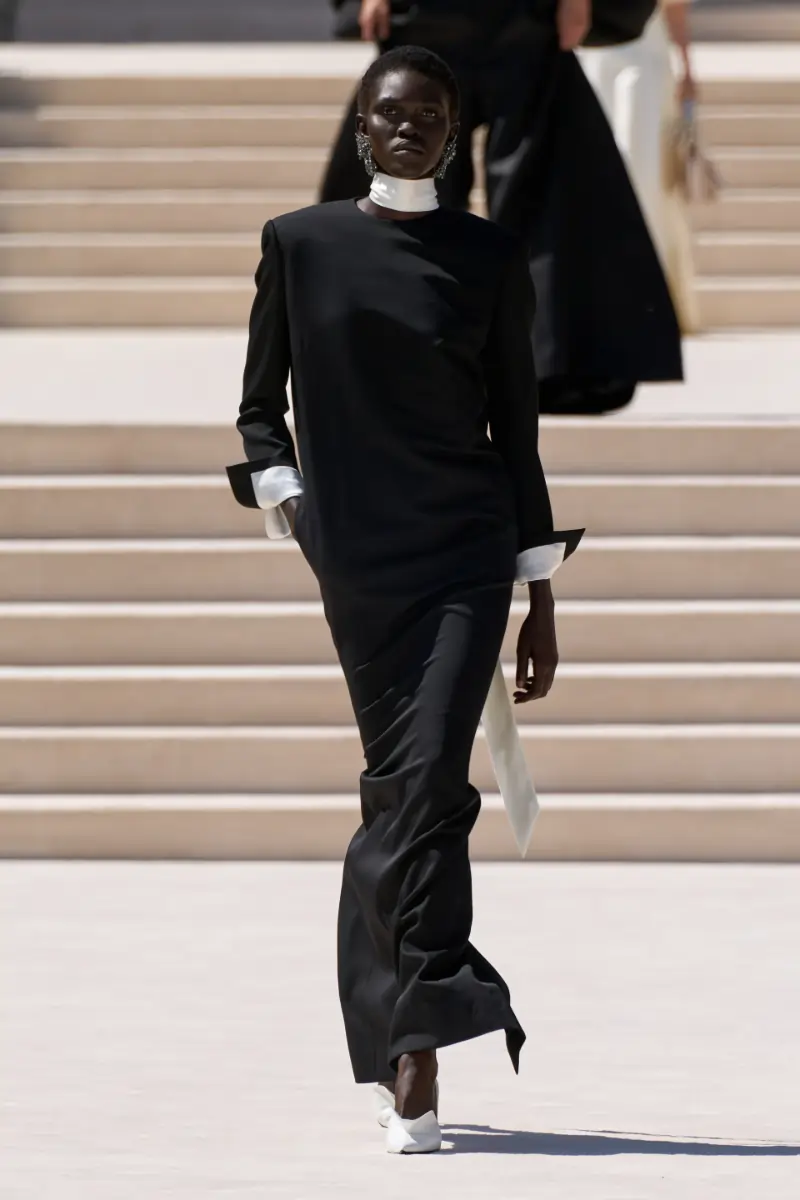
2 / 15
Look 3
3 / 15
Look 9
4 / 15
Look 14
5 / 15
Look 18
6 / 15
Look 20
7 / 15
Look 23
8 / 15
Look 31
9 / 15
Look 35
10 / 15
Look 38
11 / 15
Look 39
12 / 15
Look 45
13 / 15
Look 47
14 / 15