The beauty sphere is full of surprises—and if there’s one thing all beauty fiends can agree on, it’s the fact that there is always so much to discover. Formulations may excite us, but the packaging of something can really make us want it. Every so often, a new release pushes the boundaries of what we are already familiar with—and sparks debate in the process. When Rare Beauty first launched, its bulbous packaging became a topic of contention, until it was revealed to be designed with accessibility in mind. Having been diagnosed with lupus and arthritis, the tactile elements and soft-matte finish of Selena Gomez’s products helps her use them without too much strain.
Accessibility isn’t a new term, and yet it’s often misunderstood. It might often be thought of in relation to people with disabilities, but it doesn’t stop there. Individuals with chronic illnesses and neurodivergence might also experience limited dexterity and varying sensory needs, which affects the way they interact with products and their beauty routines. Beauty is a personal experience for everyone—and it can be alienating not being able to find something that works for you. It’s an experience that MOT, OTR/L—or licensed occupational therapist—Kailey Waskall witnessed through her client, who was a new graduate tackling her first big-girl job. As she tried to help them build an accessible beauty routine, they quickly realised that there was barely any support out there. What they did find was sterile and clinical.
“That experience made me realise no one was discussing inclusive beauty online through the lens of an occupational therapist, and there were no supporting resources,” said Waskall. Sharing adaptive strategies, accessibility reviews and more on her platform, Waskall is filling in the gap. Below, the occupational therapist and inclusive beauty educator unpacks accessible beauty and her favourite products, along with her recommended resources for anyone looking to adapt their beauty routines to their needs.
What would you say accessible beauty is characterised by?
The challenge with accessible beauty is that there are no hard and fast rules. Due to the variety of human experiences and abilities, no single product will ever work for every person, disabled or not. That being said, focusing on developing products, routines and experiences through an inclusive or accessible lens creates opportunities for easier use and better access. Considering the product’s entire lifespan, accessible beauty starts with marketing, extends through shelf display and secondary—external—packaging, and culminates in the product itself. Once the product is in someone’s beauty rotation, how do they use it? Is it easy to open, close, manage? Does it require precise movements, or can it be used in a variety of ways? Does its ease of use stay the same whether the product is full or half empty? If you apply the product in the middle of your routine with slick skincare-covered hands, will you still be able to manage the product? Is the product intuitive to use? Can it be differentiated from other products without sight? These questions and more can guide whether a product is accessibly designed.
View this post on Instagram
What are some brands or products on the market right now that are truly accessible?
No single product will be 100 percent universally accessible to everyone. That being said, brands designing with inclusion in mind and creating more accessible products include Tilt Beauty, Guide Beauty, and Rare Beauty. Tilt Beauty’s entire line is the Arthritis Foundation Ease of Use Certified. Rare Beauty’s perfume was created in collaboration with hand therapists to maximise inclusivity. Guide Beauty was created by Terri Bryant, a makeup artist diagnosed with Parkinson’s disease and includes products that are built to be easily used and opened. Recently, Sephora started offering ‘quiet hours’ to support anyone needing a less-stimulating atmosphere while shopping. This is a great step forward in increasing accessible shopping experiences.
Some of my favourite products include:
- The Rare Eau De Parfum was created in collaboration with hand therapists and designed for easier use. The bottle’s shape is easier to hold onto and the wider pump creates a simpler dispensing experience. It’s got a lock/unlock mechanism instead of requiring the cap to be removed.
- Rare Beauty’s Soft Pinch Liquid Blush cap is easier to open and the matte finish allows for a firm grip.
- The Lashscape Volumizing Mascara from Tilt Beauty is ergonomically designed to make it easier to hold, open and apply.
- Tilt Beauty’s Grip Stick Hydrating Lip Treatment is ergonomically designed with a magnetic cap.
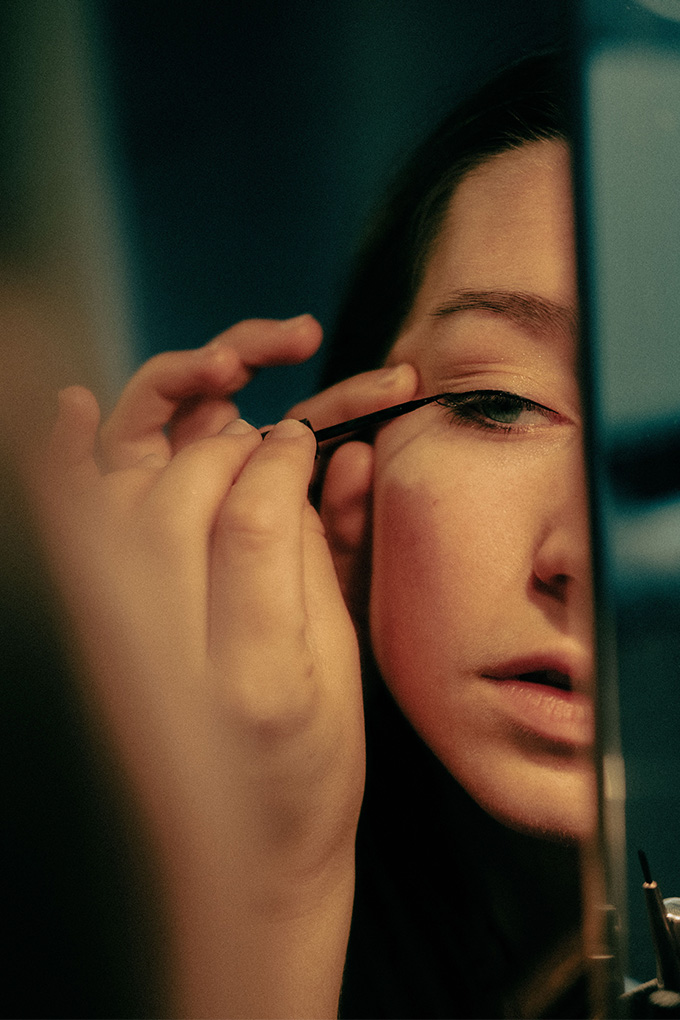
- Guide Beauty’s Guide Eyeliner Duo is a tool created to make eyeliner easier to apply by providing increased stabilisation. The duo includes the eyeliner in an easy-open cap and the guide wand for easy eyeliner application.
In broad strokes, what would you say is still missing from the conversation on accessibility right now, and what are the gaps you’ve observed in products?
Broadly, even with accessible products, the secondary—external—packaging is still sometimes a barrier to open. Many adaptations I recommend may still require set-up or help from a support person depending on someone’s abilities. The conversation often focuses on the product packaging itself, but I want more brands to consider how and when someone will use their products, as well as the product’s entire lifespan: from ideation and creation to delivery and integration into a person’s routine. In products, I’ve often noticed the opening mechanism may be easy, but once opened, the internal pieces may not be the same matte or silicone texture I often prefer. A great example is lip products: often, a lip product with an easy-open outer shell may still require pinching or twisting to dispense the product once the cap is removed. I can typically find some accessible makeup products, but inclusive hair styling products and fragrances are more challenging to find.
Generally, what should people look out for when shopping for accessible beauty?
General physical aspects I typically recommend include matte packaging for better grip, rounded corners or other grip points to facilitate opening, and an easy-open mechanism or dispenser.
- For those with low vision, finding products with distinctive tactile elements can help distinguish items.
- For those who fatigue quickly, choosing dual-purpose products or things that are easy to apply can support energy conservation.
- For neurodivergent individuals, finding products that don’t trigger sensory sensitivities is important.
- For those with executive functioning challenges or intellectual disabilities, finding products that include visuals and/or video tutorials supports remembering application steps.
There are so many different ways to quantify accessible beauty, but the important part is identifying what your own strengths and barriers are, and then looking for products or adaptations that will work for you.
View this post on Instagram
For anyone looking to make their beauty routines more accessible for themselves, what resources can they look to?
I offer one-to-one Routine Reset classes where we look at your entire beauty routine, determine what needs tweaking, and create a routine that works for you. I also created the Accessify Database, a live database full of the adaptive tools and inclusive products I typically recommend. For other resources, adaptive technology programmes can often support finding and identifying ways to create a more accessible routine. Looking up your specific disability can also lead you to supportive programs. Some recent ones include the adaptive beauty techniques class for those with low vision, organised by the Braille Institute. You can also look up YouTube tutorials or creators who share their disability experience online to learn new techniques or find new adaptations.