Listen to your body, goes the old adage, and even then, it’s not always the instinctive thing to do. Undetectable changes happen in our bodies all the time, and it’s hard to hear them through the endless distractions and goings-on of everyday life. Certain conditions complicate this mind-body relationship even further—and with Global Accessibility Awareness Day just passing us by, it’s a reminder that closing the gap for individuals living with these conditions is crucial. Thankfully, as technology continues to advance and evolve, it can also personalise care in a way that integrates seamlessly into daily routines.
For Zoe Zora, a spinal cord injury and autonomic dysreflexia diagnosis meant that she had to re-learn how to live her life. Before the injury, tech was recreational—used to capture moments, stay connected socially and keep up with her coursework in school. Her iPad was always by her side. And when her body started going through changes, technology facilitated the transition. “It shifted from being helpful to something essential—supporting my independence, safety and ability to navigate life. It’s no longer just about productivity or creating memories, it’s about living with more ease, confidence and consistency—and being able to experience life just like everybody else.”
The necessity of re-calibration
Of all the changes to happen to her body, it was the element of unpredictability that Zora had to contend with most. “My energy, pain levels, blood pressure and even how I respond to medication can shift within the minute or the hour,” she explains. That meant she had to slow down and adapt, adjusting again and again because her body does not present itself the same way every day. “Disability is dynamic and it took me a while to understand and accept that. Pain is a constant part of that. Feeling unwell has become so normal that I can sometimes overlook when something is off, and that’s why I don’t rely purely on how I feel anymore,” elaborates Zora. “Wellness has become about awareness, adaptation, and continuing to live fully—even when things don’t feel ideal.”
View this post on Instagram
And here to take the mental load off Zora is her Apple ecosystem. Features like heart rate monitoring, ECG readings and resting heart rate metrics objectively measure her wellbeing, especially since she has now developed a high tolerance for discomfort and can sometimes overlook the irregularities. “With my history of blood pressure fluctuations, having notifications that alert me to potential hypertension also gives me peace of mind, especially in moments where I might not immediately recognise the symptoms.” To manage her medications, setting reminders helps her stay consistent so she doesn’t risk a missed dosage that might, in turn, disrupt her body or routines.
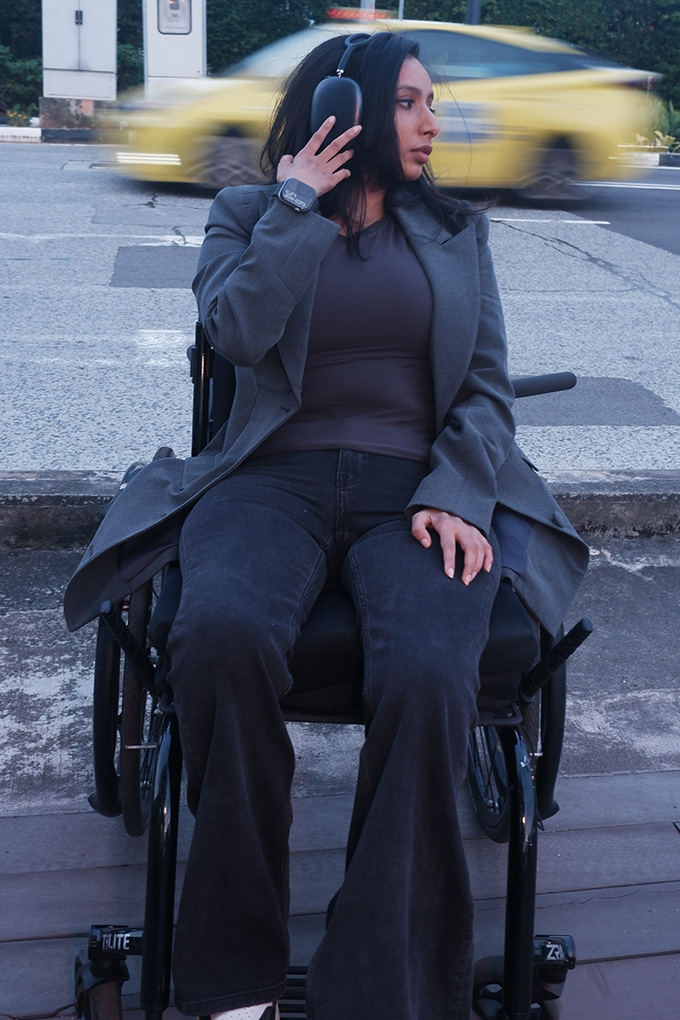
When asked about what she’s prioritising right now, it’s managing her energy—which is closely tied to both her sleep quality and pain levels. “Sleep is important, but for me, it doesn’t always translate directly to feeling rested. Pain and medications can affect the quality of my sleep, and even on days where I’ve rested, I can still experience fatigue,” reflects Zora. Sleep tracking gives her insight into her sleep patterns and the overall quality of her rest, which then helps her manage her energy levels better. It’s an area she’s still navigating: “It’s about pacing, balance and understanding my limits, so I can find a rhythm that allows me to stay active and engaged, while also giving my body the recovery it needs.” Even amidst the bustle of her everyday life, Active Noise Cancellation on her AirPods can grant her a moment of reprieve, creating a quieter, more controlled environment so she can reset and work in silence.
Staying active is another important facet of Zora’s life. “I’ve always had an athletic side, and maintaining that part of my identity keeps me motivated,” she asserts. Using features like wheelchair workouts allows her to stay active within her limits, track her progress and engage with fitness in a way that feels empowering rather than restrictive. On Apple Vision Pro, the newest feature even utilises precision eye-tracking to help power wheelchair users move around more freely.
View this post on Instagram
Independence as freedom
Beyond health, Zora emphasises, accessibility is critical to maintaining her independence. “As a quadriplegic with limited hand function, there was a time after my accident where I couldn’t even hold my phone to take a photo,” Zora recalls. Repeated swiping, pressing combinations of buttons and reaching certain areas of the screen can take more effort, time and energy for her. Over time, Apple’s accessibility features helped her to regain those everyday functions in a way that felt natural and empowering. AssistiveTouch, for one, can be used to customise gestures and shortcuts that help Zora navigate her phone faster and more efficiently. When the situation calls for it, VoiceOver is another option. “Having multiple accessibility options available matters because accessibility is never one-size-fits-all, even within the disabled community itself.” More than just any particular feature, Zora highlights that it’s about how everything works together. “The ecosystem reduces friction, supports consistency and gives me a reliable way to manage an unpredictable body. It’s allowed me to move through life with more confidence, awareness and ease—not just to function, but to continue living fully in the way I want.”
So even though accessibility might often be thought of in relation to ramps or physical access, Zoe Zora showcases that it’s more than those things. “I’ve realised that my independence isn’t defined only by my wheelchair. A lot of that freedom comes from being able to work, communicate and navigate daily life through technology in a way that feels seamless.” She reminds us all that accessibility is not a luxury, but a right. “True inclusion starts when accessibility is embedded into the way we design technology, workplaces, spaces and communities from the beginning.” Echoing that sentiment are Apple’s new enhancements with Apple Intelligence—including more intuitive usage of Voice Control, system-generated subtitles for videos, and a wider scope of functionality for VoiceOver and Magnifier.

1 / 10
Starting off the day by checking my Sleep Score! There’s been so much going on. #NoSleepClub

2 / 10
Clocking in my time in the gym with some weighted tricep extensions and my motivational Apple Music playlist in my AirPods.

3 / 10

4 / 10
Getting these ECG-related notifications reassures me throughout the day when I’m moving everywhere!

5 / 10
Replying to messages throughout the day through VoiceOver makes things really easy.

6 / 10
There are many Accessibility shortcuts available but AssistiveTouch is my favourite when it comes to being more efficient.

7 / 10
Doing a quick check on my heart rate. With my condition, it can be quite difficult to tell if there’s something wrong by feel alone so this helps me do easy and quick check-ins.

8 / 10
I usually take a few different medications daily, so it's useful to log and keep track of it all on my iPhone. Makes it easy for doctor’s appointments too.

9 / 10
Blocking out the haters before I go into my next event. Active Noise Cancellation on AirPods Max is amazing at this.

10 / 10